

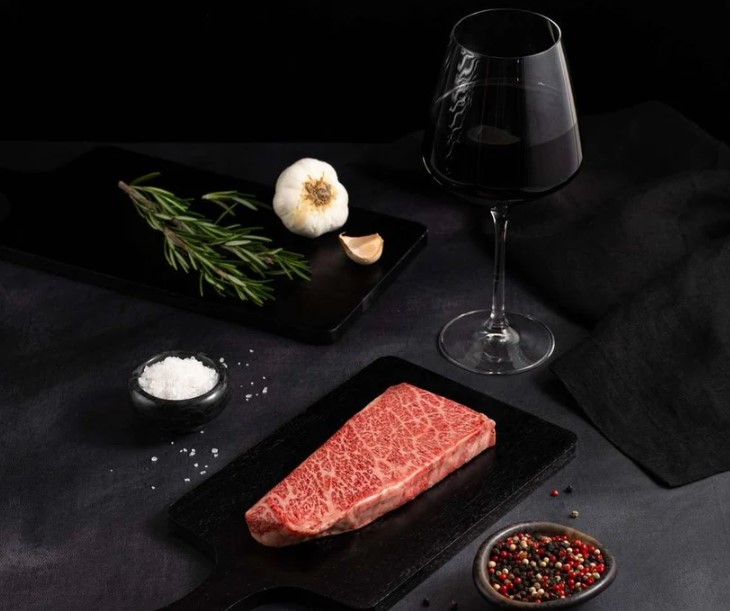
A5 beef from Japan has reached near-mythical status among food lovers. It represents not just premium meat but the highest possible expression of marbling, tenderness, and precision in animal rearing.
Yet beyond the price tag and prestige, there is a deep craft that gives A5 beef its unmatched flavor and texture.
What “A5” Actually Means
The term “A5” refers to a strict grading system established by Japan’s Meat Grading Association (JMGA).
Every carcass is inspected and scored according to yield, marbling, color, firmness, and texture. The grading tells you how much of the animal can be used and how fine the quality of that meat is.
| Grade | Meaning | Description |
| A | Yield Grade | Indicates a high meat-to-carcass ratio |
| 5 | Quality Grade | The top level for marbling, color, brightness, firmness, and fat quality |
To reach A5, a cut must score the highest across every metric. Even within that level, though, there are subtle differences depending on breed, region, and feeding practices.
The Breeds Behind the Flavor
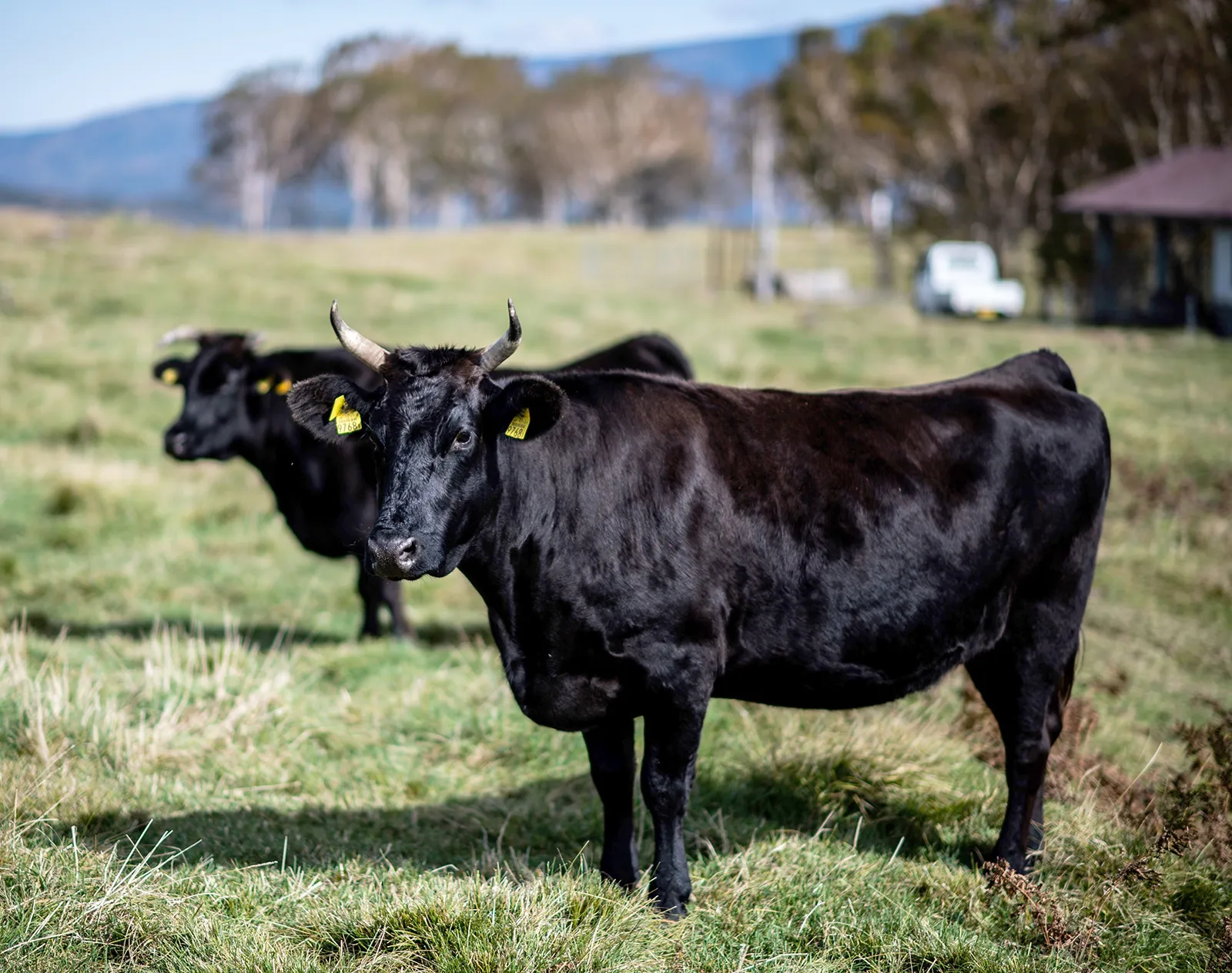
Japan’s Wagyu cattle are not one single breed but a group of four major genetic lines: Kuroge (Japanese Black), Akage (Japanese Brown), Nihon Tankaku (Japanese Shorthorn), and Mukaku (Japanese Polled). The most famous A5 beef, including Kobe and Miyazaki, comes from the Japanese Black breed, known for its ability to produce ultra-fine marbling.
- Japanese Black (Kuroge Washu): The most common Wagyu breed, prized for marbling density and balance of flavor and fat.
- Japanese Brown (Akage Washu): Leaner, with a clean, slightly nutty flavor.
- Japanese Shorthorn (Tankaku Washu): Rare, with deep umami and beefier texture.
- Japanese Polled (Mukaku Washu): Very limited in production, known for a more traditional beef profile.
Kuroge cattle dominate because they naturally deposit fat within the muscle fibers, not around them, creating the signature snowflake-like marbling that defines A5.
How Marbling Defines the Experience
When people talk about Wagyu, what they are really describing is intramuscular fat – the web of creamy fat that runs through the lean meat. In Japanese grading, marbling is rated on the Beef Marbling Standard (BMS) scale, from 1 to 12. A5 beef typically starts at BMS 8 and can go up to 12.
That marbling is more than just visual appeal. It affects everything about how the meat cooks and tastes.
- Mouthfeel: The fat melts at a low temperature (around 77°F / 25°C), so it starts liquefying almost as soon as it hits the tongue.
- Flavor release: The melted fat carries complex flavor compounds, spreading umami evenly across the palate.
- Juiciness: Even when cooked rare, the internal moisture remains stable, giving that soft, buttery texture.
Chefs often say it doesn’t feel like eating beef at all – it feels like it’s dissolving into flavor.
Feed and Care
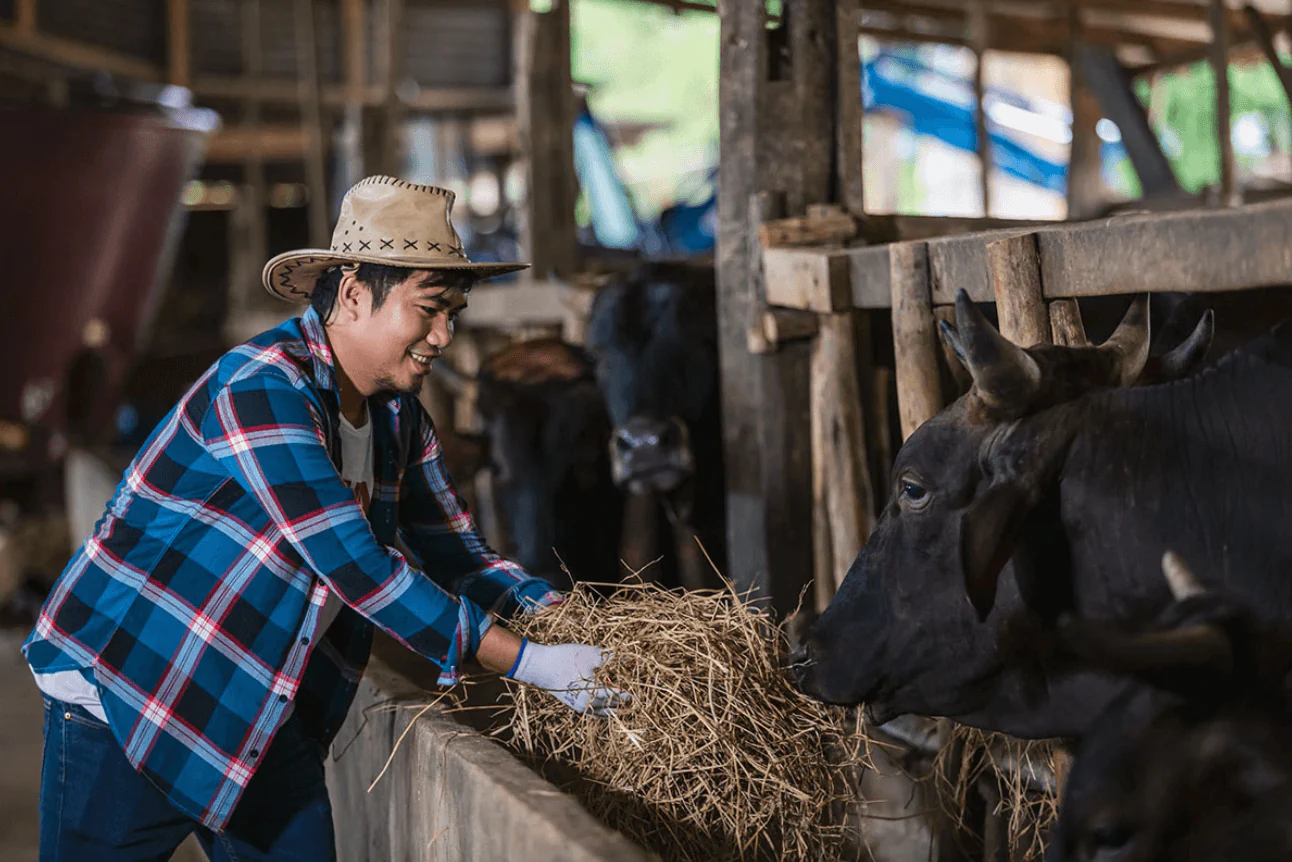
Raising cattle for A5 beef takes years of patience and attention. Farmers treat each animal as a living investment in precision.
Diet and Feeding Stages
A5 Wagyu cattle are typically raised for around 30 months, which is significantly longer than Western beef cattle. Their diets are carefully composed of rice straw, barley, corn, and sometimes beer lees or sake mash.
The goal is to promote slow, steady growth that encourages fat to build within the muscle rather than around it.
A typical feeding program includes:
- Calf Stage (0–10 months): Milk and forage, nurturing healthy digestion and early fat distribution.
- Growth Stage (10–20 months): Balanced feed of grains and roughage to support steady muscle and marbling development.
- Fattening Stage (20–30 months): Increased energy intake with monitored stress levels to maintain tenderness.
Stress and Environment
Stress management is central to A5 quality. Farmers reduce stressors by:
- Keeping herds small and stable.
- Minimizing loud noises and changes in routine.
- Providing temperature-controlled barns.
- Allowing enough space for free movement.
Stress causes the release of cortisol, which can toughen muscle fibers and affect flavor. Japanese farmers focus on calm, predictable routines that let the animals stay relaxed and metabolically efficient.
Why the Fat Matters
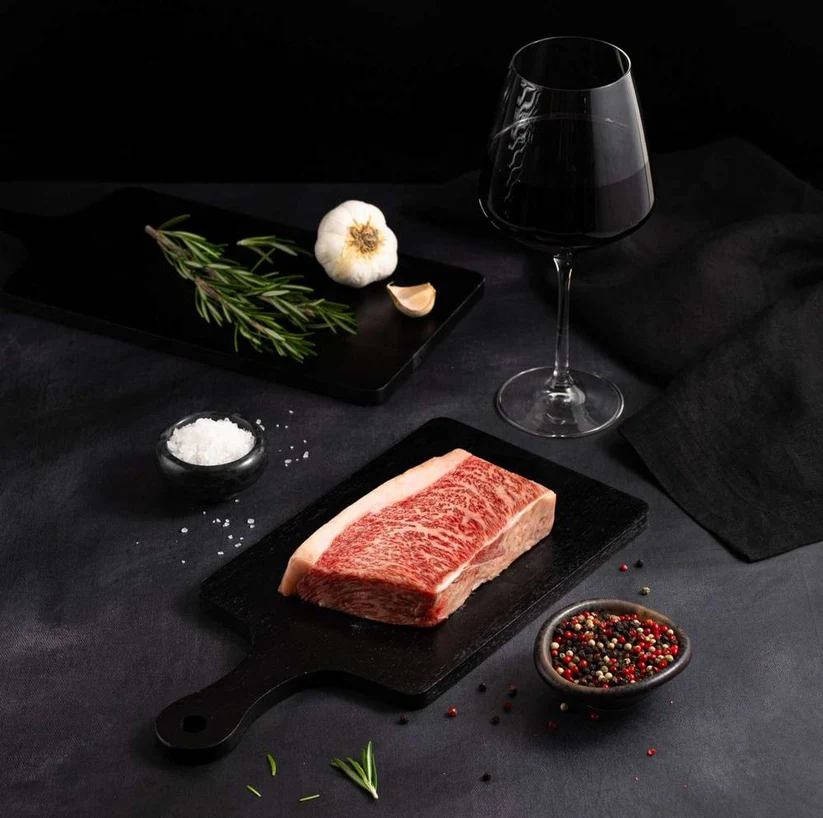
The magic of A5 beef lies in its fat composition, not just quantity. The fat in Wagyu is higher in monounsaturated fatty acids (MUFA) and lower in saturated fats compared to typical beef. It contains significant levels of oleic acid, which has a clean, almost sweet taste.
| Fatty Acid Type | Common in A5 Beef | Effect on Flavor |
| Oleic acid | High | Sweet, smooth flavor profile |
| Stearic acid | Low | Reduces waxiness |
| Linoleic acid | Moderate | Adds depth and aroma |
Because of the high oleic acid content, A5 beef doesn’t coat the mouth heavily – it melts cleanly and leaves a lingering, nutty aftertaste. That’s part of why Japanese A5 can be eaten in thin slices without feeling greasy.
How A5 Cooks Differently
Cooking A5 beef requires restraint. Because of its fat content, it behaves differently than leaner cuts. Overcooking can cause excessive fat rendering and loss of flavor.
Key Tips for Cooking
- Use low to medium heat. High temperatures can cause flare-ups and bitterness.
- Cook small portions. A few ounces are enough because of the richness.
- Rest briefly. Letting it sit for a minute or two allows the fat to stabilize.
- Avoid heavy seasoning. Just a pinch of salt before or after searing enhances the natural sweetness.
A cast iron skillet or flat teppan grill is ideal. Japanese chefs often cook A5 slices quickly on one side until the surface crisps slightly, leaving the inside barely warm. The goal is to highlight the melt-in-your-mouth effect.
Serving Methods
- Sukiyaki: Thin slices cooked in soy-based broth, balancing the fat with umami-rich sauce.
- Shabu-shabu: Quick swish in hot broth, then dipped in ponzu or sesame sauce.
- Teppanyaki: Searing on a steel plate for a caramelized edge and soft center.
Each method aims to release the fat gradually, never overwhelming the palate.
Umami Science Behind the Taste
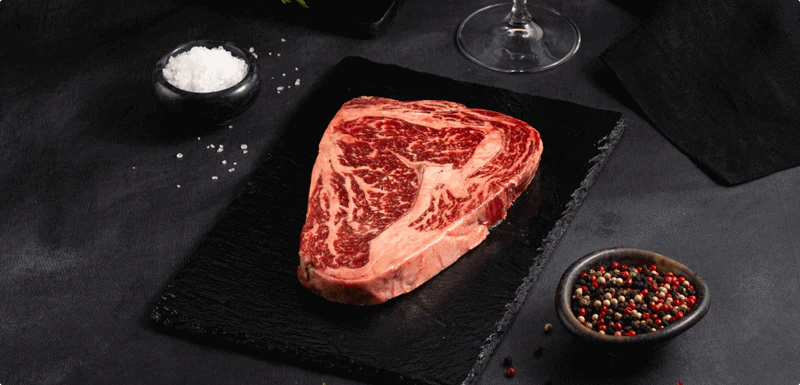
Japanese A5 beef ranks high in umami because of its amino acid profile. Compared to standard beef, it contains more glutamic acid and inosinic acid, which combine synergistically to amplify savoriness.
| Compound | Function | Effect on Flavor |
| Glutamic acid | Amino acid | Adds depth and savory tone |
| Inosinic acid | Nucleotide | Enhances meaty aftertaste |
| Guanylic acid | Nucleotide | Provides complexity and lingering flavor |
When these compounds mix with the melting fat, they form a balanced richness that doesn’t overwhelm. It’s the harmony between fat and amino acids that gives A5 beef its signature umami weight.
How to Recognize Authentic A5 Wagyu
Because of its popularity, A5 beef is often imitated. Real Japanese A5 Wagyu carries several distinct markers.
Authenticity Indicators
- Japanese export label: Every A5 cut shipped abroad has a certificate with a serial number linked to the animal.
- Chrysanthemum seal: Official mark of the Japanese government for genuine Wagyu exports.
- Prefecture stamp: Identifies origin, such as “Kobe,” “Miyazaki,” or “Kagoshima.”
- BMS score and grading chart: Some suppliers include detailed inspection data for transparency.
When buying, ask for the certificate or traceability number. Real A5 Wagyu is always traceable back to a single animal.
Where to Find Authentic A5 Wagyu
Consumers who are interested in experiencing the true culinary value of premium Wagyu often look to specialty retailers that focus on exceptional cuts and certified sourcing. Brands such as Destination Wagyu offer access to meticulously selected steaks, including high-quality A5 options that showcase the signature marbling, melt-in-your-mouth texture, and deep umami flavor Wagyu is known for.
Exploring a trusted source for authentic Wagyu helps buyers understand what separates an ordinary steak from a rare delicacy. Ingredient transparency and education play a critical role for discerning customers who expect excellence when purchasing luxury foods.
Cost and Rarity
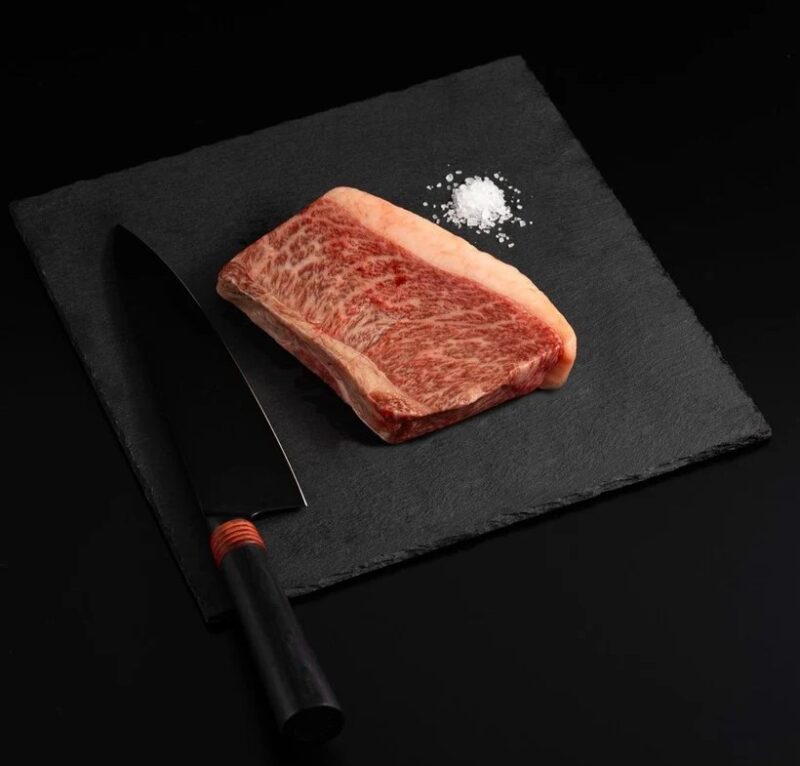
A5 Wagyu is one of the most expensive meats on the planet. The cost reflects not only quality but the care, time, and limited production capacity. On average, less than 1 percent of Japan’s annual beef output achieves A5 certification.
A 200-gram A5 ribeye can easily reach several hundred dollars internationally. Domestic Japanese markets, however, often treat it less as luxury and more as celebration – served for weddings, New Year’s feasts, and special family occasions.
Western Comparisons
While other countries produce high-quality Wagyu hybrids, Japanese A5 remains distinct due to genetics and oversight. True Japanese Wagyu cattle are registered and monitored by prefectural associations, ensuring purity.
Crossbreeds raised outside Japan, often labeled “American Wagyu” or “Australian Wagyu,” may carry partial genetics but lack the same fat distribution and melt profile.
They tend to be more robust in flavor but less fine in texture, serving a different culinary niche rather than competition.
Final Thoughts
Japanese A5 beef is the result of decades of selective breeding, meticulous feeding, and exacting inspection. Its flavor is a study in balance – rich but clean, indulgent yet precise. The texture feels almost unreal, the fat melting like cream while carrying layers of savory depth.
What sets it apart is not one single factor but the harmony between genetics, care, and respect for detail. Every bite reflects a national philosophy: that excellence lives in the smallest choices, repeated consistently over time.