

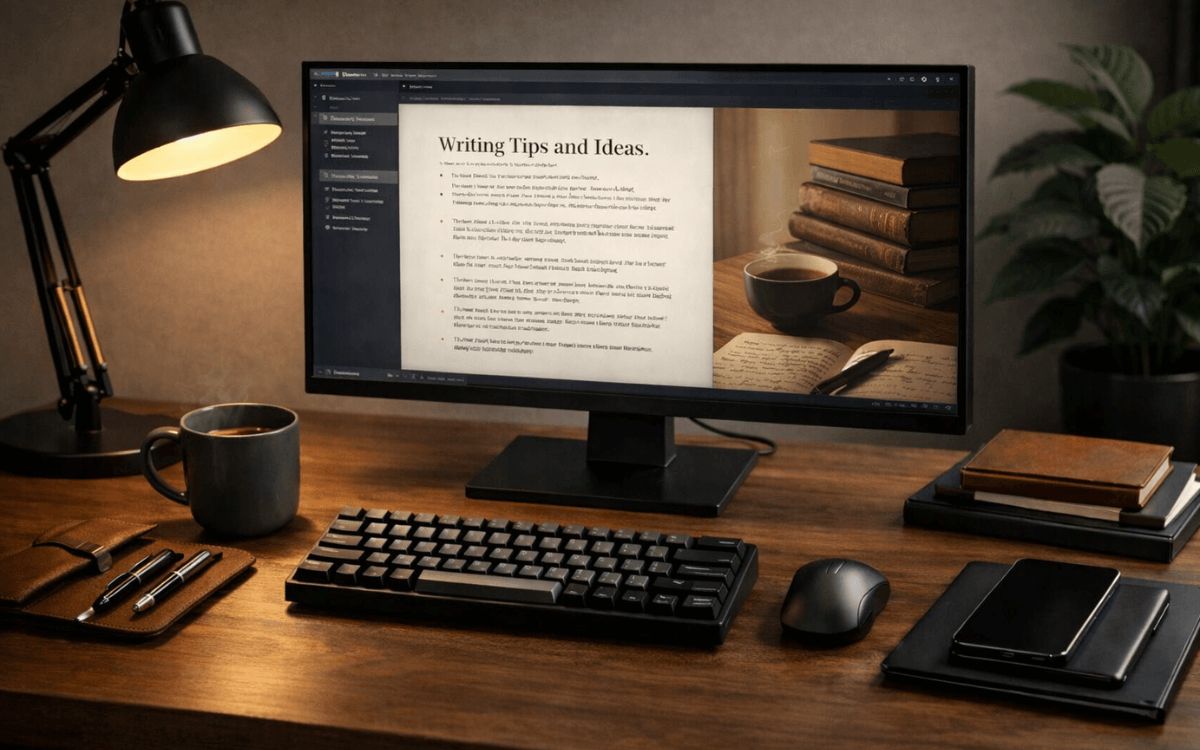
Most writers already own more notebooks than they can finish. Some are half-filled. Others are untouched but “too nice” to use. Buying another notebook rarely solves anything. It does not help when a pen leaks in a backpack, when a desk lamp creates shadows at night, when typing starts to hurt after an hour, or when distractions break focus every ten minutes.
Writing usually fails for practical reasons, not creative ones. A pen is missing. The light is wrong. The chair is uncomfortable. Tools are scattered. The setup takes longer than the writing itself. These small points of friction add up, and over time, they shorten writing sessions or stop them entirely.
A thoughtful gift for a writer addresses these problems directly. It supports the moments before and during writing, not just the idea of writing. It protects tools, improves comfort, and makes it easier to sit down and stay with the work. That is why the best gifts are not inspirational quotes or decorative stationery, but durable, functional items that quietly improve daily writing habits.
1. An Adjustable Desk Lamp With Real Color Accuracy
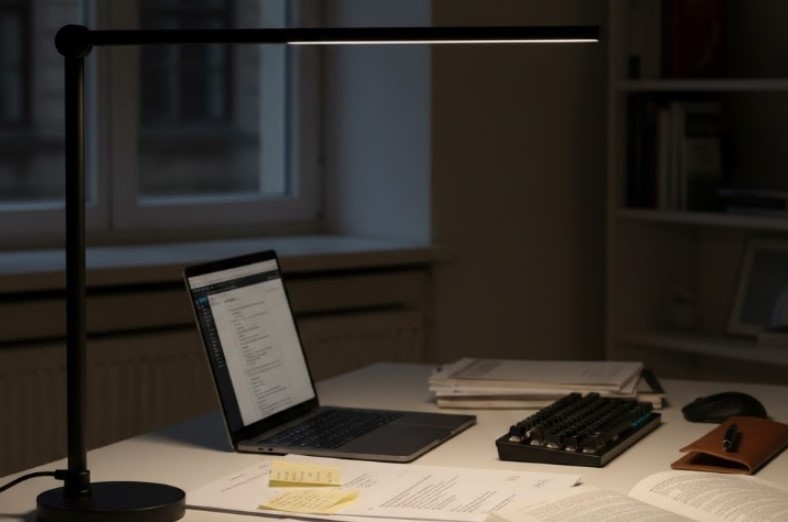
Poor lighting is one of the most common reasons writers experience eye strain and early fatigue. Many rely on overhead lights or decorative desk lamps that look good but cast uneven shadows or overly warm light. This becomes a problem during long writing sessions, especially when reading printed drafts or handwritten notes.
A proper writing lamp should have three features: adjustable arm positioning, a wide and even light spread, and a neutral color temperature close to daylight. Lamps with adjustable brightness and color temperature allow writers to adapt lighting to different times of day without changing their setup.
Color accuracy matters more than most people realize. If the light is too yellow or too blue, contrast on paper suffers, and eyes work harder to maintain focus. Over time, this affects productivity more than typing speed or keyboard choice.
This gift works for both digital and analog writers. It improves comfort immediately and remains useful regardless of changes in tools or writing habits.
2. A Mechanical Keyboard Designed for Long Writing Sessions
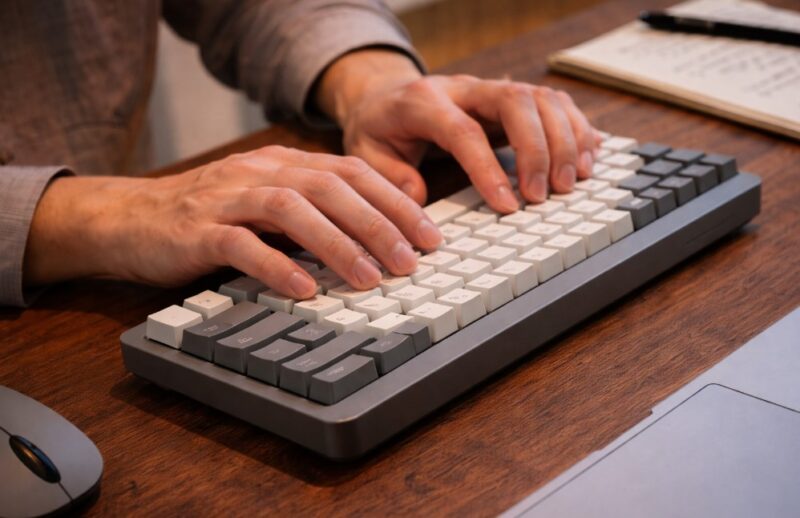
Writers type differently than gamers or programmers. They need consistency, low fatigue, and predictable key travel. Many default laptop keyboards are shallow and cause finger strain over time. On the other hand, loud or overly stiff mechanical keyboards can be distracting.
The right keyboard for a writer has moderate tactile feedback, quiet operation, and a layout that supports touch typing. Switches that are too heavy slow down writing. Switches that are too light increase errors. The goal is balance.
When keystrokes feel consistent and reliable, writers stay in flow longer and stop thinking about the tool itself.
This is not a flashy gift, but itchangess how writing feels every single day.
3. A High-Quality Pen Case That Protects Tools, Not Just Holds Them
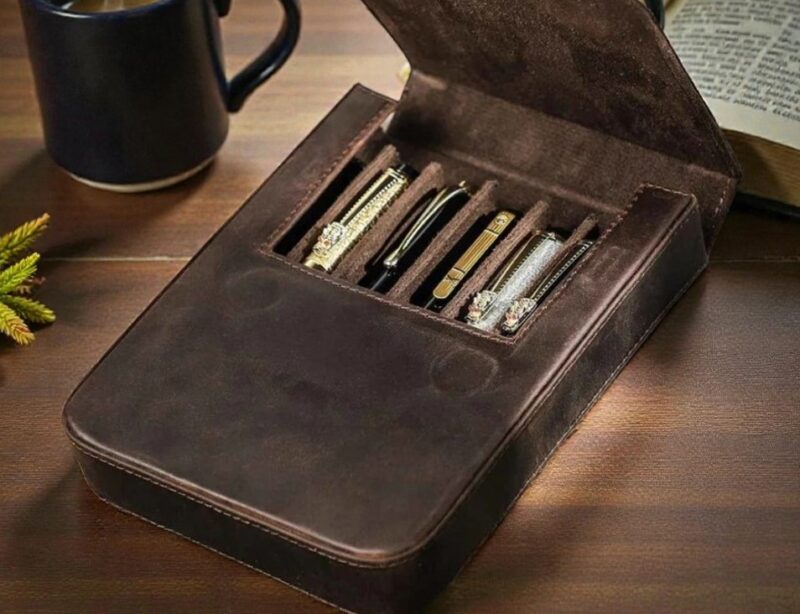
Writers rarely use just one pen. Many rotate between fountain pens, rollerballs, pencils, and highlighters depending on paper type, mood, or task. The problem is that most pen storage is either too flimsy or too bulky. Cheap fabric cases collapse, expose pen tips, and stain easily. Hard cases protect pens but take up too much space and discourage daily carry.
A well-made leather pencil case solves this problem by balancing structure and flexibility. Leather cushions pens without crushing them, protects nibs from impact, and ages without falling apart. Unlike synthetic cases, leather does not fray at the seams or develop permanent creases that weaken the structure.
A good pen case also supports routine. Writers who keep their tools organized are more likely to sit down and write instead of searching for a working pen. This is why a product like a leather pencil case works well as a gift. It is not decorative. It is functional storage designed to be used every day, whether at a desk, in a backpack, or while traveling.
This is a gift that quietly improves consistency. Pens stay protected, visible, and ready. Over time, the case develops patina instead of wearing out, which aligns well with how writers tend to use their tools long-term.
4. A Physical Timer for Focused Writing Blocks
Digital timers exist everywhere, but they often live on the same devices that distract writers. Notifications, browser tabs, and background apps compete for attention. A physical timer removes that conflict.
Writers often work best in defined time blocks. Whether using a 25-minute or 45-minute session, a simple physical timer helps structure work without adding cognitive load. There is no app to open, no screen to check, and no temptation to multitask.
The value here is psychological.
This gift is especially effective for writers who struggle with consistency or who work from home. It supports discipline without adding complexity.
5. A Portable Lap Desk for Writing Anywhere
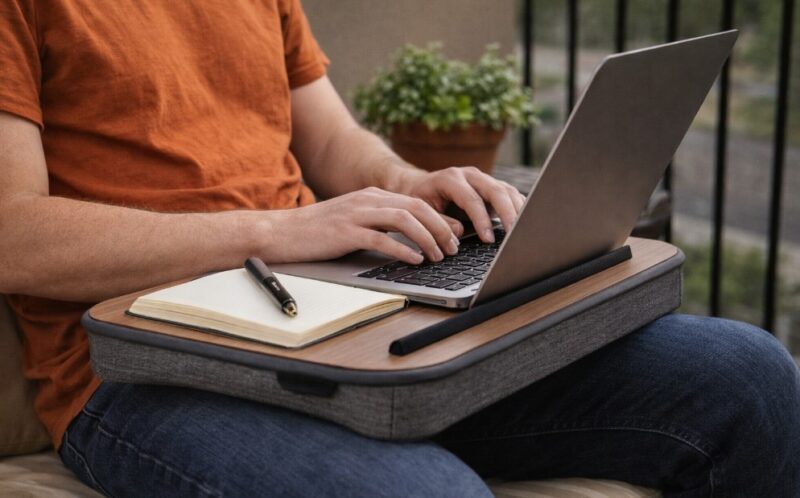
Not all writing happens at a desk. Many writers think best on couches, balconies, trains, or in cafés. Laptops overheat. Notebooks slide. Poor posture creeps in quickly.
A solid lap desk with a stable surface and light padding allows writers to work comfortably outside a traditional setup. The best ones are rigid enough to support typing but light enough to move easily. Some include a small lip to prevent devices or notebooks from sliding.
This gift increases writing time indirectly. By making it easier to write anywhere, it removes the excuse of needing the perfect setup. Writers who feel physically comfortable are more likely to keep working.
It is a practical gift that adapts to different lifestyles and spaces.
6. Noise Isolation or White Noise Tools for Focus

Silence is rare. Writers often work around traffic, conversations, or household noise. While music works for some, many need a neutral sound to block distractions without engaging their attention.
Noise-isolating headphones or a dedicated white noise machine can dramatically improve focus. The key is consistency. Tools that create a stable auditory environment help writers maintain concentration longer, especially during deep work.
Unlike entertainment-focused audio gear, focus tools should be comfortable for long wear and simple to operate. No complicated settings. No distractions.
This gift is especially valuable for writers who share living spaces or work in unpredictable environments.
Why These Gifts Work Better Than Notebooks
Notebooks are already abundant. Writers buy them themselves, often with strong preferences. The gifts above work around the notebook instead of replacing it. They protect tools, improve comfort, support focus, and reduce friction.
Each item contributes to one of three outcomes:
- Longer uninterrupted writing sessions
- Less physical or mental fatigue
- Better organization and readiness
These outcomes matter more than inspiration. Writers do not need motivational gifts. They need systems that make writing easier to sustain.
Final Takeaway
The best gifts for writers are not symbolic. They are functional. A well-chosen pen case, lighting solution, keyboard, or focus tool supports the writing process quietly and consistently. These gifts respect the craft by improving the conditions under which writing actually happens.