

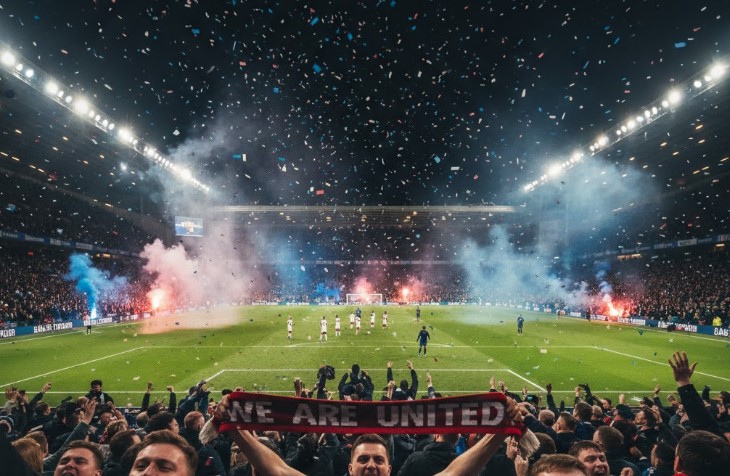
There is a distinct shift in energy when football is played under floodlights. A Premier League night match feels heavier, louder, and more intense from the moment supporters arrive. Streets glow, voices carry further, and anticipation builds in a way daytime fixtures rarely replicate. Everything feels sharpened, as if the occasion itself demands more attention.
For many fans, night games represent the Premier League at its most immersive. The darkness, the lights, and the concentrated focus on the pitch turn an ordinary fixture into something far more memorable.
The Build-Up Feels Different
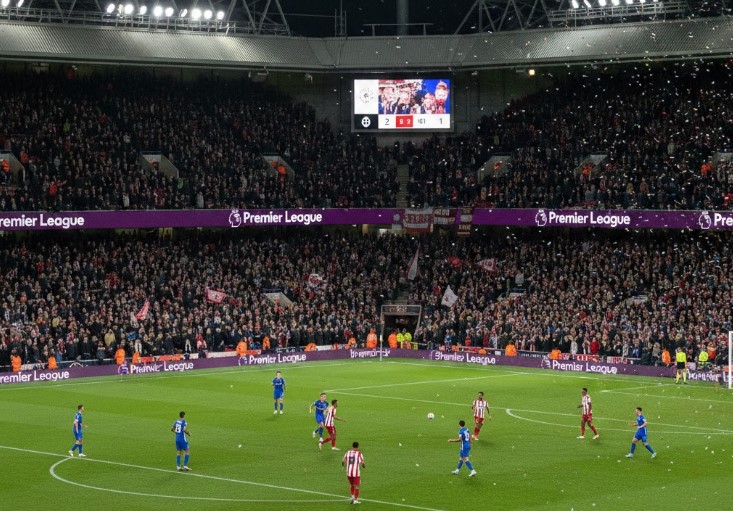
The experience of a night match begins well before kick-off. Supporters arrive after work, routines are condensed, and the pace feels urgent. Stadium approaches are busier later, pubs fuller, and conversations more animated as the clock ticks closer to kick-off.
Under floodlights, even familiar stadiums feel transformed. The surrounding areas fade into the background, and attention narrows. For those planning to experience this atmosphere first-hand, tickets for attending night fixtures can be found here, offering a practical starting point before stepping into one of football’s most intense settings.
Sound Carries Further After Dark
Noise behaves differently at night. Chants feel sharper, reactions quicker, and silences more dramatic. A misplaced pass draws an instant response, while a goal unleashes a surge of sound that feels almost physical.
Floodlights focus attention inward. With fewer external distractions, supporters become more engaged, feeding off one another and amplifying the emotion inside the stadium. The result is an environment where every moment feels heightened, from the opening whistle to the final stoppage.
Light, Shadow, and Visual Intensity
Visually, night matches create a unique contrast. The pitch glows, players stand out sharply, and the crowd becomes a moving backdrop of colour and motion. Shadows stretch, movements feel faster, and the game appears more dramatic than under natural light.
These visual elements combine with sound to create a sense of spectacle. Even routine moments take on added weight, and key incidents linger longer in memory because of how vividly they are experienced.
Players Feel It Too
Supporters are not the only ones affected by night matches. Players often speak about the added intensity, the noise pressing closer, and the feeling that mistakes are magnified. Tackles feel heavier, celebrations more explosive, and pressure harder to escape.
That dynamic feeds back into the crowd. When players respond to the atmosphere, supporters respond in turn, creating a loop of energy that defines the night match experience.
Why Night Matches Stay With You
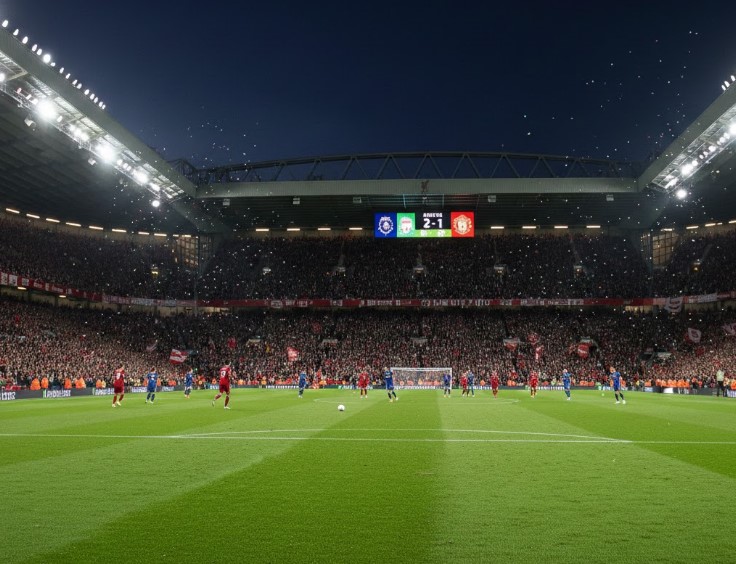
Ask fans about their most memorable matchdays, and night games feature heavily. There is something about leaving a stadium late, voice gone, adrenaline still high, that makes the experience linger.
The walk home feels quieter, the contrast sharper, and the memories more vivid. Night matches are not just watched, they are absorbed, leaving impressions that last far beyond the final whistle.
Structural and Commercial Scale of the Premier League
The intensity of a night match is not accidental. It is shaped by the scale of the competition itself. The Premier League is consistently among the highest attended football leagues in the world. During the 2022–23 season, average match attendance exceeded 40,000 spectators per game, with overall stadium occupancy rates often surpassing 95 percent.
At venues such as Old Trafford, which holds more than 74,000 supporters, and Anfield, with a capacity above 53,000, evening fixtures gather tens of thousands of fans inside a compressed visual and acoustic space. That density intensifies the atmosphere in measurable ways.
Financially, the league operates on a global scale. Its domestic and international broadcasting deals for the 2022–2025 cycle are worth over £10 billion combined. Night fixtures are frequently selected for prime-time television slots, reaching audiences across Europe, Asia, Africa, and North America. The spectacle inside the stadium unfolds under the awareness that millions are watching simultaneously.
This commercial weight increases the sense of occasion. Players and supporters both understand that these are often the most visible matches of the week.
How Evening Kick-Offs Influence Performance
Beyond spectacle, timing can influence performance. Studies across various leagues have suggested subtle variations in home advantage depending on kick-off time. While football outcomes are shaped by countless variables, night fixtures often amplify the effect of crowd pressure.
In packed stadiums, sound intensity can rise dramatically following key moments such as goals or contentious decisions. Research into crowd dynamics shows that collective vocal surges can affect perceived referee decisions and player momentum, particularly in enclosed stadium environments.
Managers frequently reference the psychological weight of evening fixtures. The build-up throughout the day extends anticipation. Players arrive knowing the atmosphere will be at its peak. Mistakes feel magnified, while moments of brilliance resonate longer.
The cumulative effect is not mystical. It is environmental. Density of sound, visibility contrast, and global attention combine to create conditions where emotional intensity is measurably higher. Under floodlights, the margins feel thinner, and the stakes feel heavier.
More Than Just Football
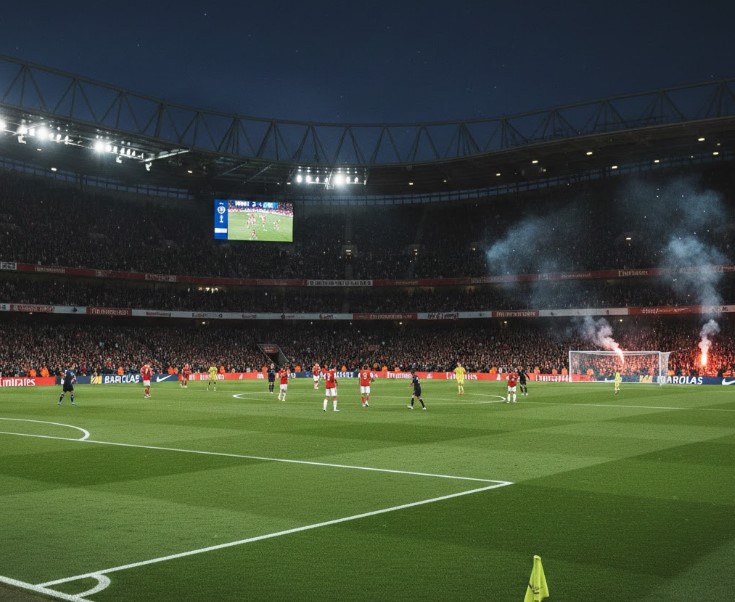
A Premier League night match is not simply a fixture scheduled for television. It is a sensory experience shaped by sound, light, emotion, and shared anticipation. The floodlights do more than illuminate the pitch, they intensify everything around them.
For those lucky enough to be inside the stadium, these evenings capture football at its most powerful. They remind supporters why seeing the game live, especially after dark, feels unlike anything else