


Have you ever noticed how the same destination can feel completely different depending on the month you visit?
In a country as vast and varied as Saudi Arabia, timing shapes everything, from the weather you walk through to the festivals you experience and even how easily you move between cities.
Many first-time visitors focus on visas, flights, and itineraries, but overlook seasonality. That choice can quietly determine whether your trip feels comfortable and immersive or rushed and physically demanding.
This guide looks closely at weather patterns, cultural seasons, and major events to help you decide when Saudi Arabia truly fits your travel style.
Saudi Arabia’s climate zones and travel reality
Saudi Arabia’s size creates distinct climate experiences rather than one uniform “desert weather” pattern. Coastal regions, interior cities, and mountainous areas behave differently throughout the year. Knowing this helps travelers align expectations with reality, especially when building multi-city itineraries.
The western coast along the Red Sea tends to be humid, while central regions experience dry heat with sharp temperature swings between day and night. Southern highlands bring cooler air and occasional rain that surprises many visitors. These differences matter because travel comfort depends not only on temperature but also on humidity and wind.
Key climate factors that influence travel planning include:
- Daytime heat levels and how long outdoor sightseeing remains comfortable.
- Nighttime cooling, which affects walking and evening activities.
- Seasonal wind and dust conditions that can limit visibility.
Understanding these zones early helps you choose the best months rather than relying on general assumptions.
Winter months from November to February for comfortable exploration
For many travelers, winter is the most balanced and forgiving time to visit Saudi Arabia. Daytime temperatures are mild enough for walking tours, outdoor markets, and archaeological sites without physical strain. Evenings feel cool but pleasant, especially in inland cities.
This season suits travelers interested in heritage, urban exploration, and intercity travel. Popular routes between major destinations feel easier when heat is not a constant concern.
In Jeddah, winter and early spring aren’t just about cooler weather but also coincide with cultural highlights you may want to plan around. The Red Sea International Film Festival fills early December with international cinema premieres, turning historic districts into lively cultural hubs. You can take Jeddah to Madinah train and visit the Prophet’s Mosque which is especially poignant during Ramadan, while fall and winter months offer the most comfortable climate for extended mosque visits and historic site exploration.
Winter travel advantages include:
- Ideal conditions for desert excursions and historical sites.
- Cooler evenings that support cultural events and city walks.
- Better tolerance for long travel days between regions.
Because winter is popular, booking accommodation early is strongly advised.
Spring season from March to April for cultural energy and warmth
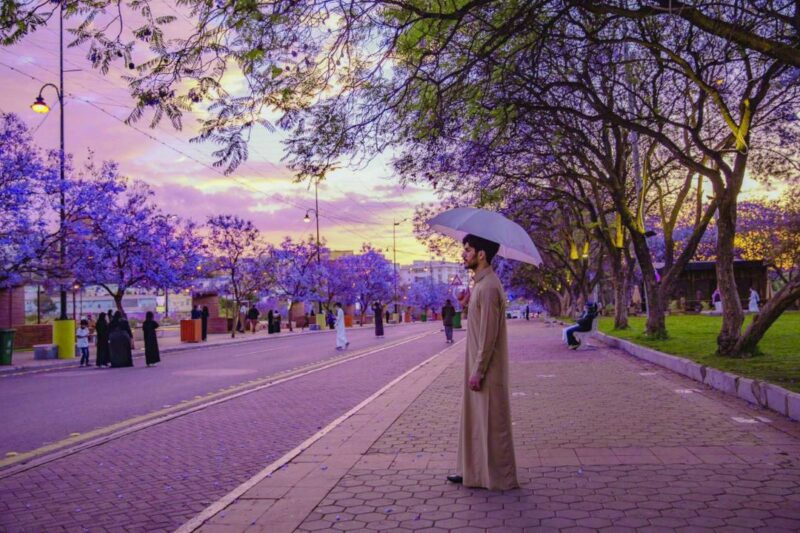
Spring brings a noticeable shift in atmosphere across Saudi Arabia. Temperatures rise gradually, but most days remain manageable, especially in March. This period blends comfortable weather with increasing cultural activity as the country prepares for summer rhythms.
Spring appeals to travelers who enjoy active itineraries without peak-season crowds. Outdoor festivals, heritage events, and open-air dining become more common, particularly in major cities. Landscapes in the southern regions briefly show greenery after seasonal rain, adding contrast to typically arid scenery.
Travelers during spring should consider:
- Midday heat that increases by April, requiring pacing and hydration.
- Strong sunlight that makes shaded routes more comfortable.
- Flexible scheduling to balance mornings and evenings outdoors.
Spring offers a lively but still accessible travel window, especially for those who prefer movement and variety.
Summer months from May to September for focused indoor experiences
Summer in Saudi Arabia demands realistic planning. Temperatures often exceed comfort thresholds, especially in central and eastern regions. Outdoor sightseeing becomes limited to early mornings and evenings, while midday hours are best spent indoors.
This season works best for travelers with specific goals rather than broad exploration. Museums, shopping centers, modern attractions, and business travel remain fully functional and air-conditioned. Coastal areas add humidity, which some visitors find more challenging than dry heat.
Important summer travel considerations include:
- Limiting outdoor activities to short, planned intervals.
- Prioritizing accommodations with reliable climate control.
- Scheduling transportation carefully to avoid peak heat hours.
While summer is not ideal for first-time exploration, it can suit experienced travelers who plan strategically and focus on indoor experiences.
Religious seasons and their impact on travel planning
Religious observances significantly shape travel conditions in Saudi Arabia. Ramadan and Hajj influence daily routines, crowd levels, and service availability across the country. These periods require thoughtful preparation rather than avoidance.
During Ramadan, daytime dining options become limited, and activity slows until evening. However, nights come alive with social gatherings, markets, and extended business hours. For culturally curious travelers, this offers a unique perspective on daily life.
Key impacts of religious seasons include:
- Adjusted opening hours for shops and attractions.
- Increased domestic travel near holy cities.
- Heightened spiritual atmosphere, especially in the evenings.
Understanding these rhythms helps travelers respect local customs while planning realistic itineraries.
During Ramadan, many cities shift to a night-focused schedule, with restaurants and shopping centers operating late into the evening, creating a completely different travel rhythm.
Festival calendar and cultural events by season

Saudi Arabia’s cultural calendar has expanded rapidly in recent years, offering visitors new reasons to plan around events. Music festivals, heritage celebrations, and national observances are now spread throughout the year, especially during cooler months.
Winter and spring host the majority of large-scale festivals due to favorable weather. These events often blend traditional culture with modern entertainment, appealing to a wide range of travelers. Attendance can significantly increase accommodation demand in host cities.
When planning around festivals, consider:
- Higher hotel rates and limited availability during major events.
- Crowded transportation routes between key cities.
- Opportunities to experience local culture in a structured setting.
Aligning travel dates with festivals can enrich your visit, but only with early planning.
Best travel months by traveler type and interests
Not every traveler seeks the same experience, so the “best” time depends on priorities. Some value comfort above all, while others focus on culture or business efficiency.
For first-time visitors, cooler months offer flexibility and ease. Cultural travelers benefit from festival seasons, while business travelers may prefer quieter summer periods with less tourism pressure.
General recommendations by travel style include:
- Sightseeing and history focused travelers: November to February.
- Cultural and festival-focused visitors: February to April.
- Business or short urban trips: Year-round with seasonal adjustments.
Matching season to purpose ensures your trip feels intentional rather than compromised by climate or crowds.
Practical planning tips for choosing your travel window
Selecting the best time to visit Saudi Arabia means balancing weather, events, and personal tolerance. No single month suits everyone, but informed choices prevent disappointment.
Start by defining what matters most: comfort, culture, budget, or schedule flexibility. Then match those priorities with seasonal realities rather than marketing promises. Accommodation availability, transportation comfort, and daily pacing all depend on timing.
Before finalizing travel dates, review:
- Average daytime and nighttime temperatures for each region.
- Major religious dates and national events.
- Your planned activities and how weather affects them.
Careful timing transforms a demanding destination into a deeply rewarding one.
Traveling through Saudi Arabia becomes far more satisfying when seasonality guides your decisions. Weather, festivals, and cultural rhythms shape not only what you see, but how you feel while seeing it. By choosing your travel window intentionally, you allow the country to meet you at its most welcoming pace