

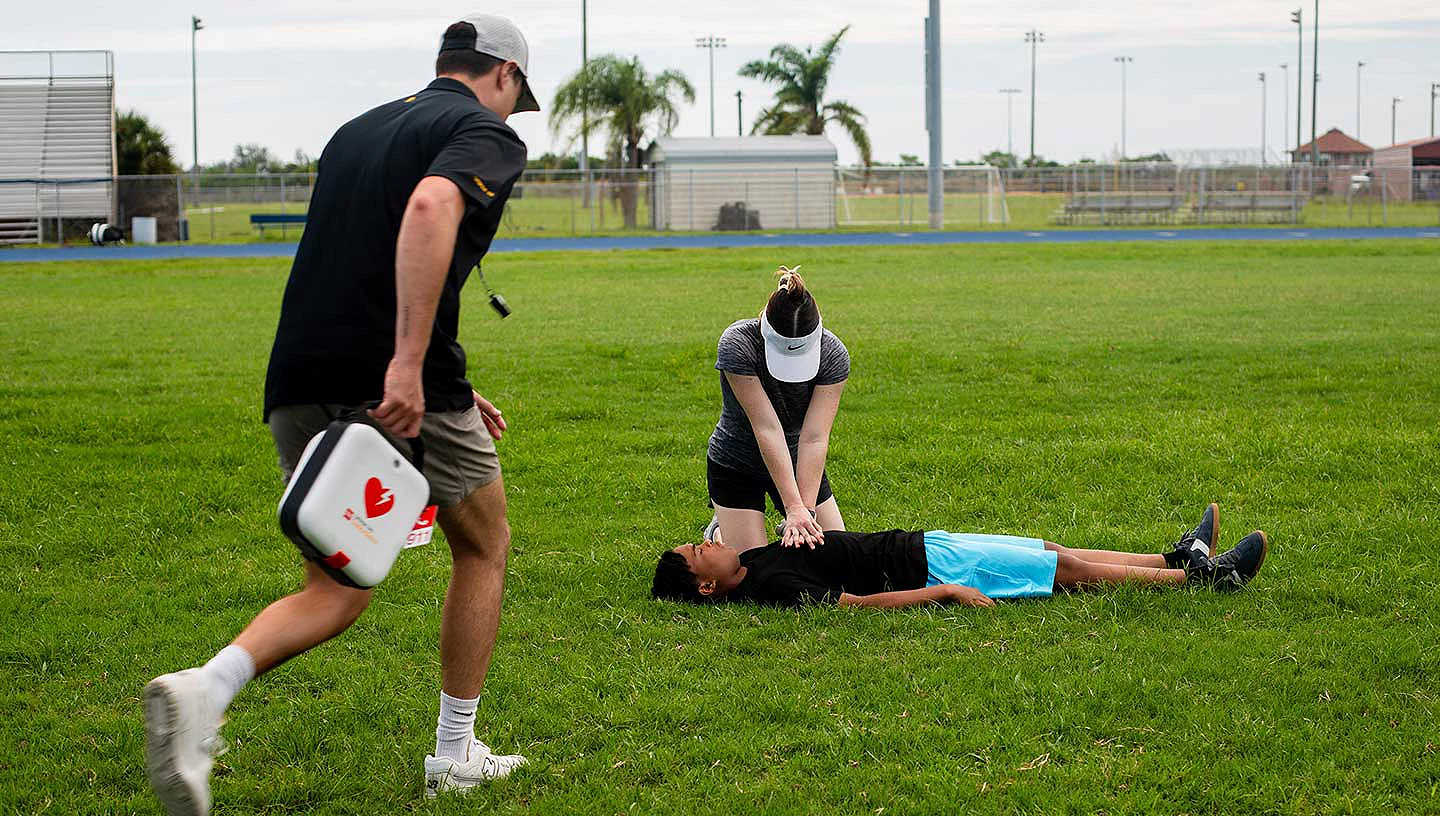
Every year, hundreds of thousands of people experience cardiac arrest outside a hospital. It happens in coffee shops, on busy streets, at the gym, and in crowded shopping centers.
Most bystanders freeze, not because they don’t care, but because nobody clearly taught them what to do in those first critical minutes. Here’s the truth: you don’t need a medical degree to give someone a real chance of survival.
You need to know the signs, follow a clear sequence of actions, and be willing to step forward when it counts. If you’ve ever thought “I wouldn’t know what to do if someone collapsed near me,” this guide was written for that exact moment. Keep reading.
What You’re Actually Dealing With
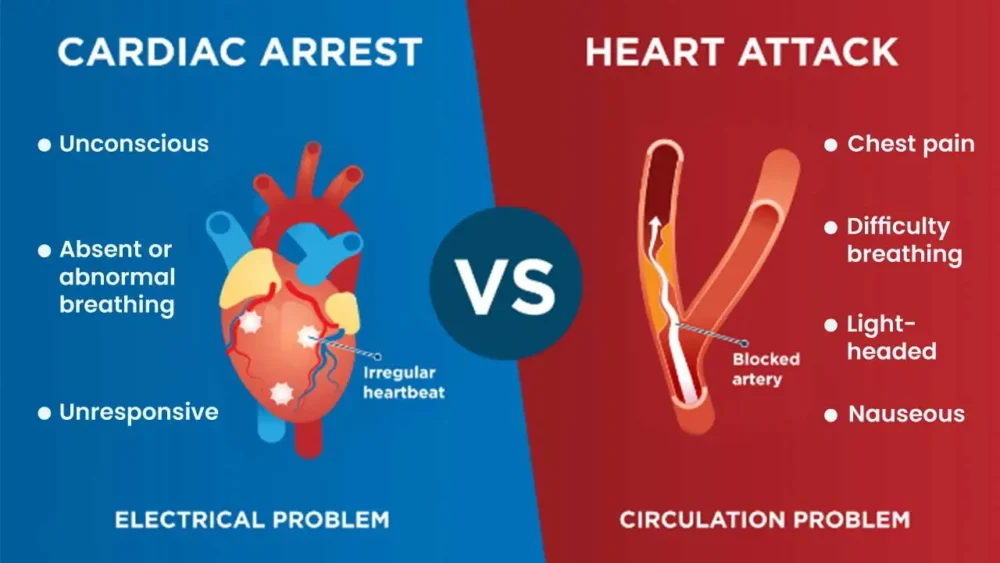
Cardiac arrest and a heart attack are not the same emergency, even though people use the terms interchangeably all the time. A heart attack is a circulation problem, where a blockage cuts off blood flow to part of the heart.
Cardiac arrest is an electrical failure, where the heart stops beating entirely. It can strike anyone, regardless of age, fitness level, or medical history. Without intervention, brain damage begins within four to six minutes, and death follows quickly. T
his is why bystander action in those early minutes is so critical. Companies like Kuteras Teknoloji are working to bring smarter emergency preparedness tools into everyday public environments, but the most powerful first responder on scene is still a calm, informed person who is ready to act.
Recognizing Cardiac Arrest in a Busy Public Space
Being able to identify cardiac arrest accurately is what separates someone who helps from someone who stands frozen. In real life, it doesn’t always look dramatic. Someone might slump in a chair, lean against a wall, or go very still. In noisy, crowded spaces, people tend to hesitate and wait for someone else to move first. That hesitation costs precious time the brain simply doesn’t have. The moment something looks wrong, go over and check the person directly. Don’t wait for permission.
Signs That Demand Your Immediate Attention
The two most reliable indicators are complete unresponsiveness and absent or abnormal breathing. Tap the person’s shoulders firmly and shout. No reaction at all? That is your signal. Look at their chest. If it isn’t rising and falling, or if you hear a slow, gurgling gasp, that is not normal breathing. It’s called agonal breathing, present in roughly 40% of cardiac arrests, and it gets misread constantly.
Did you know? Agonal breathing sounds like a deep, rattling gasp or an irregular snore. Emergency dispatchers are specifically trained to ask about it because bystanders so frequently mistake it for normal breathing and delay acting. If you see it alongside complete unresponsiveness, begin your response immediately. Do not wait for confirmation.
Also check for pale, gray, or bluish skin around the lips and fingertips. When these signs appear together, stop analyzing and start moving.
A Step-by-Step Response When Someone Collapses
Once you’ve confirmed someone is in cardiac arrest, you move through a clear, structured sequence of actions.
Each step is designed to keep the person alive until professional help arrives, and each one directly improves their odds of survival.
You probably won’t feel ready when the moment comes. That’s okay. Act anyway. Here’s exactly how to move through it.
Step 1: Call for Help and Find an AED
- Shout for someone nearby to call emergency services immediately, or make the call yourself if you’re alone.
- Tell the dispatcher clearly that the person is unresponsive and not breathing.
- At the same time, send another bystander to search for an AED.
These devices are now installed in most major public spaces, including airports, gyms, shopping malls, train stations, and large office buildings. Many are wall-mounted in clearly labeled cabinets. Getting one on scene early dramatically increases survival odds.
Make a habit of noticing where AEDs are installed in places you visit regularly. That small awareness could matter enormously one day.
Step 2: Start Chest Compressions Without Delay
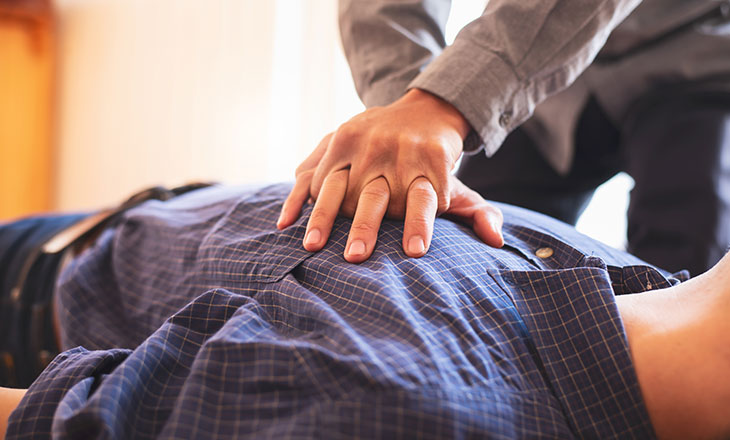
Place the heel of your hand on the center of the person’s chest, with your other hand on top and fingers interlaced. Push down firmly and quickly, using the guidelines in the table below as your reference.
| What to Control | Target |
| Compression depth | At least 2 inches (5 cm) |
| Compression rate | 100 to 120 per minute |
| Hand position | Center of chest, lower sternum |
| Rescue breaths (if trained) | 2 breaths per 30 compressions |
Don’t stop repeatedly to check for a pulse. Don’t ease up out of fear of hurting them. Imperfect CPR is vastly better than no CPR, and the body is more resilient than most people think.
Keep going until professional help arrives or the AED is ready to use.
Step 3: Apply the AED as Soon as It Arrives
Modern AEDs are designed specifically for untrained bystanders.
Turn it on and follow the voice prompts.
They will walk you through placing the electrode pads correctly and tell you clearly when to stand back. The device reads the heart’s electrical activity and only delivers a shock if one is actually needed. You cannot accidentally harm someone who doesn’t need it.
Once the shock is delivered, or if the AED advises no shock, return immediately to chest compressions.
Keep cycling between CPR and the AED prompts until paramedics take over. Don’t stop. Every moment of sustained action matters.
Common Mistakes That Reduce Survival Chances
Even well-meaning bystanders can make errors that work against the outcome. The most important ones to know in advance:
- Waiting too long to start CPR because you’re unsure what you’re looking at
- Stopping compressions repeatedly to check for signs of life
- Pressing too lightly out of fear of breaking a rib or causing pain
- Assuming someone else in the crowd has already called emergency services
- Misreading agonal breathing as evidence the person doesn’t need help
Here’s the perspective worth holding onto: ribs can heal. The brain cannot recover from minutes of lost oxygen. If you start CPR on someone who didn’t technically need it, the consequences are minor. If you don’t start CPR on someone who did, those lost minutes are irreversible. A
ct first. Let the professionals assess later.
Why Preparation Before an Emergency Makes All the Difference
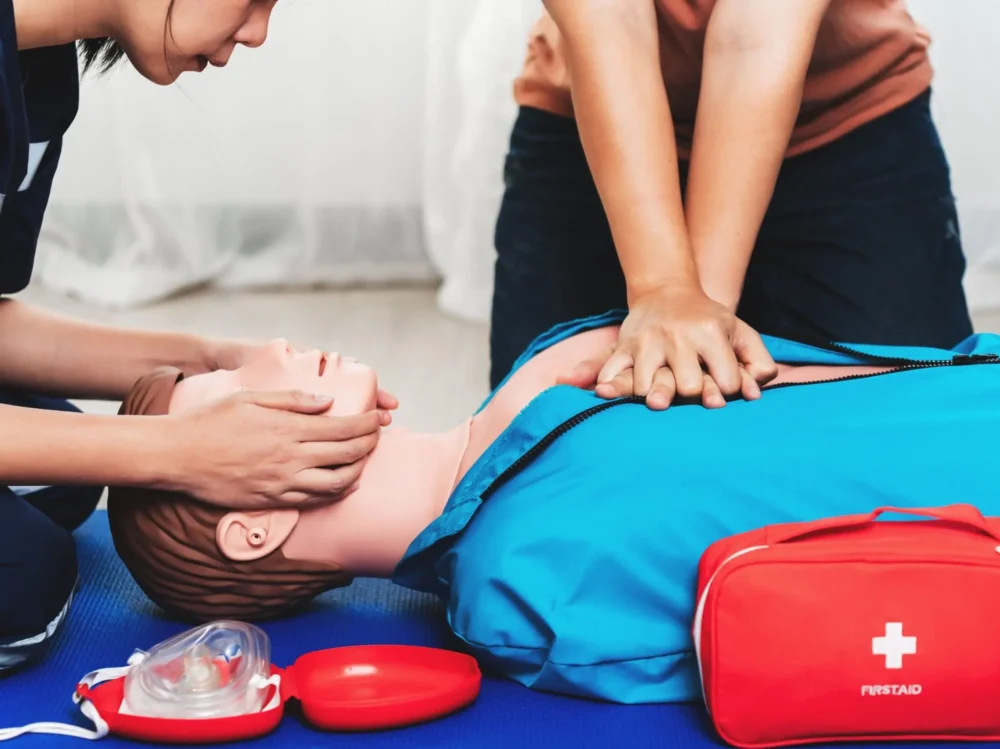
The most effective version of this guide is the one you absorb before you’re ever standing next to someone who isn’t breathing.
Consider enrolling in a certified CPR and first aid course near you. Hands-on practice changes how you respond under real pressure in ways that reading alone simply cannot replicate.
Make a habit of noticing where AEDs are installed when you walk through airports, gyms, train stations, and offices. These small acts of preparedness cost almost nothing.
Cardiac arrest does not discriminate by age, fitness, or circumstance. It can happen to a stranger or someone you love, and it can happen today.
The more people who know exactly what to do, the more lives get saved.
You now know more than most. That matters.