

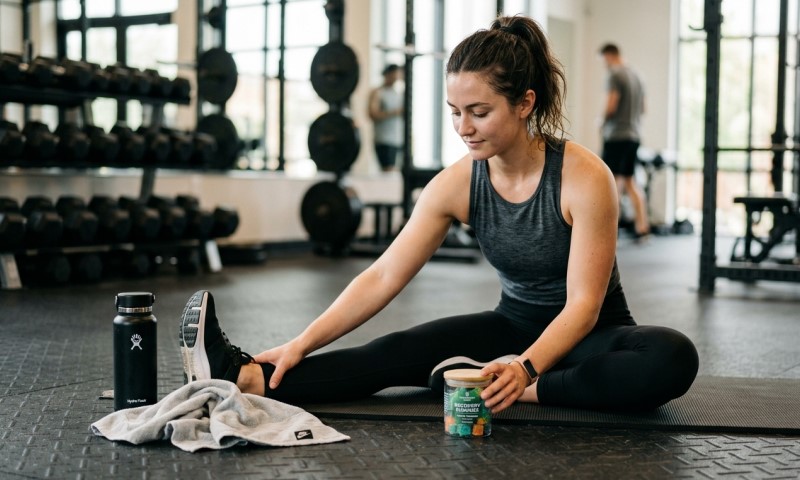
Recovery often determines how effective a training program becomes. Many people focus on workouts themselves, but what happens after exercise plays an equally important role in muscle growth and long term performance. Studies show that intense exercise creates microscopic muscle damage and inflammation that trigger the repair process responsible for stronger muscle tissue.
Because of this biological repair cycle, athletes commonly rely on nutrition strategies, stretching routines, or sleep optimization to support recovery. In recent years, another option has entered the conversation: CBD products. Edible formats such as gummies are widely used because they are simple to take and easy to dose.
The question many active individuals ask is straightforward. Can CBD gummies actually support recovery after a workout, or is the interest mostly driven by wellness trends?
Key Factors That Influence Workout Recovery
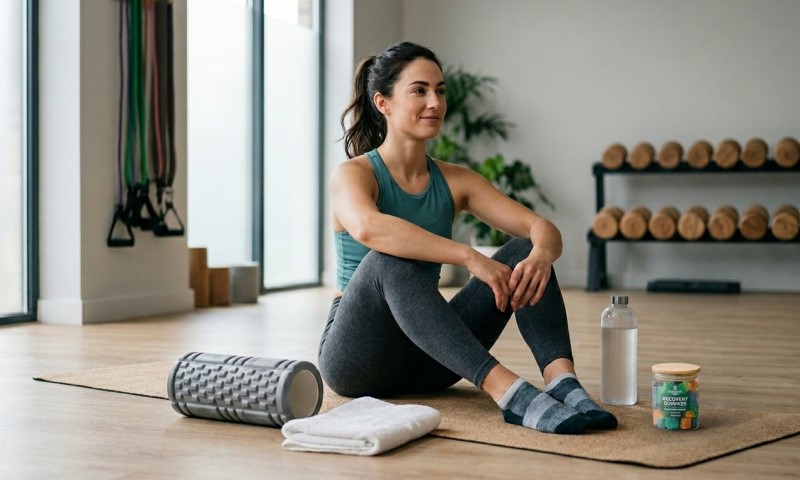
Recovery after exercise involves several interconnected physiological processes. Muscle repair, inflammation control, sleep quality, and nervous system balance all contribute to how quickly the body adapts to training.
The table below summarizes several factors that researchers often examine when evaluating recovery strategies.
| Factor | Why It Matters |
| Muscle inflammation | A natural response that initiates tissue repair |
| Pain perception | Influences how soreness is experienced after exercise |
| Sleep quality | Supports hormonal balance and tissue regeneration |
| Stress regulation | Helps the body recover between training sessions |
Each of these factors may theoretically be influenced by compounds that interact with the body’s regulatory systems, including the endocannabinoid system.
What CBD Gummies Are
CBD gummies are edible supplements that contain cannabidiol extracted from hemp plants. Unlike tetrahydrocannabinol or THC, CBD does not produce intoxicating effects and is generally used for wellness related purposes.
Edible products such as gummies differ from inhaled or sublingual CBD forms because they pass through the digestive system before entering the bloodstream. This route of absorption typically means slower onset but longer lasting effects compared with inhaled formulations.
Many people choose gummies for practical reasons. They are portable, discreet, and allow consistent dosing. For readers curious about the different formulations available, examples of edible products can be found here: https://medterracbd.com/collections/cbd-gummies
In sports and fitness communities, these products are often used after training sessions with the goal of supporting relaxation or reducing post exercise discomfort.
How CBD Might Support Post Workout Recovery
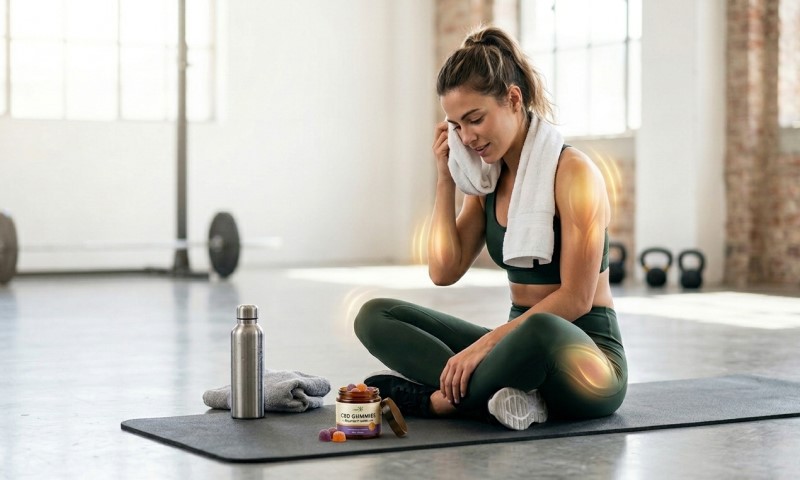
Researchers have been studying how cannabidiol interacts with the body’s endocannabinoid system, a regulatory network involved in pain signaling, immune responses, and stress regulation.
The potential recovery related effects of CBD are usually explained through three biological mechanisms:
- Inflammation signaling – Some studies suggest CBD may influence cytokines, molecules involved in the inflammatory response following exercise.
- Pain modulation – Cannabidiol interacts with receptors that influence how pain signals are processed in the nervous system.
- Sleep and stress regulation – Some athletes report improved relaxation and sleep after using CBD products, both of which are important for tissue repair.
Research reviews describe CBD as having possible anti inflammatory, analgesic, and anxiolytic properties that could theoretically support athletic recovery.
Did you know?
The endocannabinoid system helps regulate functions such as immune activity, mood, appetite, and pain perception, which is why researchers are studying cannabinoids for several health related applications.
While these mechanisms appear promising, biological plausibility does not automatically translate into measurable recovery improvements.
What Scientific Studies Currently Show
Scientific research on CBD and exercise recovery has increased in recent years, although results remain mixed.
A systematic review examining several studies involving physically active individuals reported that evidence for recovery benefits is still limited. Some trials suggested small improvements in physiological markers, but overall results were inconsistent.
Individual experimental studies have produced similarly varied findings.
- Nutrients published a study, a controlled trial which observed modest reductions in markers of muscle damage after 72 hours when CBD was used following heavy squat exercise.
- The Journal of the International Society of Sports Nutrition (JISSN) wrote that taking CBD for several days had no measurable effect on muscle damage markers after eccentric exercise.
- Research involving trained athletes also reported no significant improvements in fatigue, inflammation, or strength recovery after CBD supplementation.
These conflicting results highlight an important point. CBD’s biological mechanisms are still being studied, and current data cannot confirm clear performance recovery benefits.
Potential Benefits Reported by Users
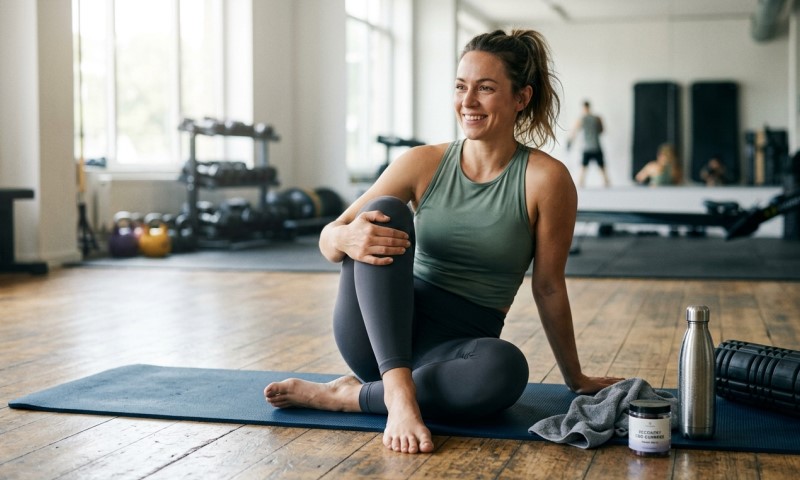
Despite limited scientific consensus, surveys and observational studies show that many athletes use CBD as part of their recovery routine.
A study of athletes published in Frontiers in Nutrition reported that many users believed CBD helped improve sleep, reduce training related pain, and support relaxation after exercise.
People who choose CBD gummies after workouts often cite several perceived benefits:
- Reduced soreness after intense sessions
- Relaxation and stress relief following training
- Improved sleep, which may indirectly support recovery
- Convenient dosing compared with oils or capsules
It is important to remember that self reported experiences can differ from controlled research outcomes. Placebo effects, training routines, and lifestyle factors may influence how people perceive recovery improvements.
Limitations and Important Considerations
Several factors explain why CBD research in sports recovery remains uncertain.
First, most human studies have small sample sizes, which makes it difficult to draw firm conclusions. Many trials also use different doses and timing protocols, making comparisons challenging.
Second, individual responses to CBD can vary significantly. Body weight, metabolism, and product formulation all influence how cannabidiol is absorbed and processed.
A few additional points are worth keeping in mind:
- Optimal dosage for exercise recovery has not been established
- Product quality and CBD concentration vary across brands
- CBD should not replace fundamental recovery strategies
Sports scientists consistently emphasize that recovery depends primarily on sleep, nutrition, hydration, and appropriate training load management.
How CBD Gummies Compare With Other Recovery Methods
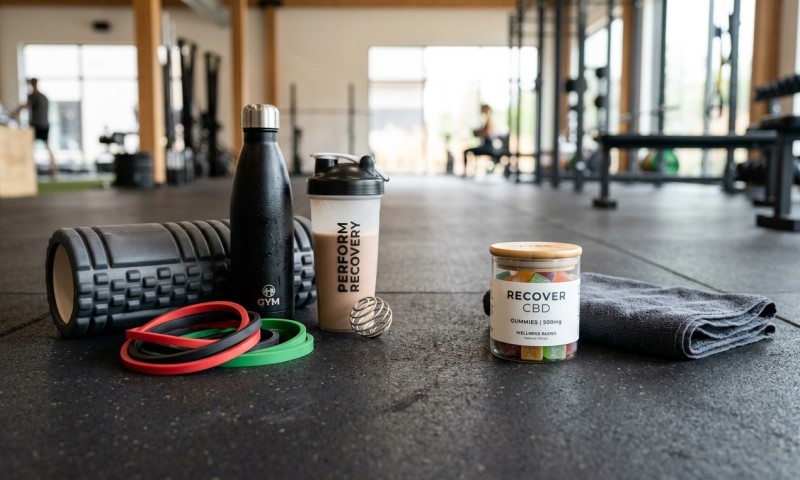
Even if CBD offers some supportive effects, it represents only one component of a broader recovery strategy.
Common recovery tools supported by stronger evidence include:
- Proper sleep duration and sleep quality
- Adequate protein intake for muscle repair
- Mobility work such as stretching or foam rolling
- Hydration and electrolyte balance
- Cold water immersion or contrast bathing in some training contexts
These approaches directly influence physiological recovery processes such as protein synthesis, nervous system recovery, and inflammation regulation.
CBD gummies may complement these practices by promoting relaxation or stress reduction. However, current research does not show that they outperform traditional recovery methods.
Final Perspective
Interest in CBD gummies for workout recovery has grown rapidly in recent years, especially among athletes looking for natural wellness supplements. The biological mechanisms of cannabidiol suggest potential roles in pain modulation, inflammation signaling, and sleep regulation.
Scientific evidence so far presents a mixed picture. Some studies report modest improvements in muscle damage markers, while others find no meaningful effects on soreness or recovery performance.
For individuals curious about CBD gummies, they may offer a convenient option that fits into a broader recovery routine. Their effects, however, are likely influenced by dosage, product quality, and individual physiology.
Most importantly, strong recovery still relies on fundamentals such as sleep, nutrition, and balanced training. CBD products may play a supportive role for some people, but they should be viewed as a potential supplement rather than a primary recovery solution.