

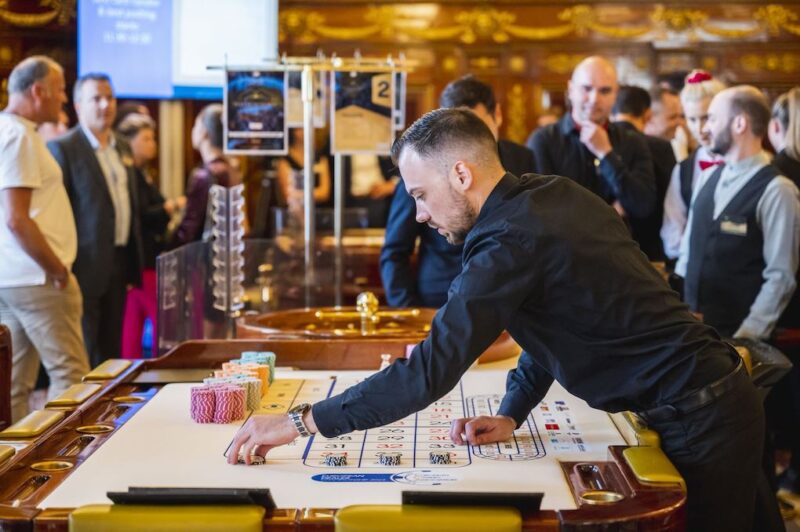
Did you know there are more than 8,100 casinos operating worldwide today? That means thousands of tables, tens of thousands of dealers and a whole world of opportunity for a new croupier ready to learn the ropes.
If you’ve ever wondered what it takes to become a casino dealer, how hard the training really is, or whether you can make a decent living dealing cards rather than just playing them – you’re in the right place.
What follows is a straightforward, no-fluff breakdown of what a croupier does, how you get there, what skills you need, and what kind of money you might expect, based on real insight from someone who lived it.
What a Croupier Does on the Job

A croupier (also known as a dealer) is the person responsible for running casino games: dealing cards, collecting bets, paying out winnings, and keeping the game smooth and fair.
The croupier also monitors players, watches for suspicious moves, enforces the house rules, and often keeps the mood light and professional.
In a typical shift, a dealer might handle blackjack one game, then switch to roulette or poker, manage chips and payouts, interact with players, and stay alert for several hours straight. The job requires both stamina and concentration. From what my friend said, it feels like being the calm center of a spinning whirlwind – you’re the anchor while everything around you moves fast.
How People Become Croupiers: Training and Entry
To become a croupier you must complete a specialized dealing or casino-dealer training program, often offered by casino schools or by the casino itself.
Here’s how the path tends to look:
- You sign up for a training course (several weeks to a few months depending on the games covered).
- You learn card mechanics, chip handling, payout math, game rules (blackjack, roulette, poker, baccarat, etc.), casino procedure and etiquette. Sometimes, trainees also study different variants of classic games, especially online or crypto-enabled ones like BTC Blackjack to get a grasp of timing, rule changes, and pacing. That kind of exposure helps when you later adapt to real-world casino tables or digital-assisted dealing formats.
- Some casinos require licensing, background checks or other security verification before you can officially deal.
- After training, many dealers start at entry-level tables; over time, with experience, they may get assigned to more demanding or high-stakes tables.
My friend who used to be a dealer told me that the first weeks felt like repetition nonstop: shuffling cards, counting chips, memorizing payouts, practicing fast dealing. Only after that did it start to feel natural.
Some trainees compare different formats early, like standard card games vs digital or crypto-linked games. That helps build familiarity and flexibility once you’re actually working.

Skills That Make or Break a Dealer
From chatting with dealers and insiders, these skills clearly matter more than “looking cool in a suit”.
- Manual dexterity and coordination – Smooth, accurate chip handling and card dealing. Mistakes slow down the table and frustrate players.
- Quick math and mental arithmetic – You often need to calculate payouts, odds, and bets on the fly. No calculator allowed.
- People skills and calm under pressure – Dealers talk to all sorts of people. Some may be friendly, some may be upset. You must stay polite, composed, and in control.
- Stamina and endurance – Long shifts on your feet, repetitive hand and eye work. You need to stay alert and steady.
- Adaptability and versatility – Working different games, adjusting to crowd size, handling late-night shifts, and sometimes unexpected situations (big wins, disputes, unusual bets).
If you combine these with a steady temperament and readiness to learn, you stand a decent chance of thriving fast. Dealers I know who started as novices became reliable after a few months if they practiced regularly.
What You Earn: Base Pay, Tips, and Realities
Let’s talk money: here’s what real data and insider stories say about what a croupier can actually earn.
- In the United States, the average base hourly pay for casino dealers sits around $19.25 per hour.
- With tips included, many dealers claim a total annual take-home between $40,000 and $60,000+, especially in busy casinos.
- That said, base pay alone is rarely enough – tips often make the difference between a modest wage and a comfortable living.
My friend has told me: on a good night with active tables and generous players, tips could double your earnings for that shift. On slow nights, it might barely add up. It’s unpredictable.
If you look globally, earning varies heavily depending on casino location, local economy, and demand. In some countries base pay is low, but cost of living too differs accordingly.
So: treat tip-income as a bonus rather than a guarantee. If you rely only on base pay, the job may be less attractive than it seems.
What to Know Before You Sign Up

Being a croupier isn’t all glitz and glamour. My friend’s stories taught me a few hard truths worth knowing.
- Shifts can be long, often including nights or weekends. Casinos seldom operate on a typical 9-to-5 schedule.
- You need high alertness throughout – dealing cards, counting chips, watching gamblers. Mistakes cost the casino and can lead to disciplinary measures.
- Tips fluctuate – slow periods or shy players can mean weak earnings. Good shifts are not guaranteed daily.
- Repetition and monotony: when tables are calm, dealing the same routines over and over can feel exhausting. Stamina matters as much as skill.
- Emotional regulation: some players may lose big. You’ll sometimes deal with tension or upset people. Keeping composure and professionalism is part of the job.
If you’re the kind who thrives in constant motion, social environments, and doesn’t mind variable income, this can be a fit. If you prefer stable routine and set hours, it may feel rough.
Growth, Specialization, and Long Term Potential
If you stick with the game, show you’re reliable and sharp, being a croupier can lead somewhere. It doesn’t have to be just a “table-job forever.” Many dealers eventually move up, assuming opportunity and performance line up.
What you can work toward:
- Once you master the basics and earn trust, you might get assigned to higher-stakes or VIP tables – those tend to draw bigger bets and more solid tips.
- Some experienced dealers end up training newcomers or mentoring fresh hires, which takes you out of dealing every night and into more stable, behind-the-scenes roles.
- With time and consistency, a jump to supervisor or floor-manager (pit boss) jobs becomes possible – overseeing several tables, helping with staff, resolving disputes, and generally managing floor operations.
That said, none of this is automatic. Whether you advance depends heavily on the size and structure of the casino you work for, how well you deal under pressure, and how dependable you are.
Is This Career Right for You? Questions to Ask Yourself
Before deciding to train as a croupier, consider these:
- Do you handle pressure well while staying calm and fair?
- Do you enjoy social interaction and can you deal with diverse personalities?
- Are you okay with irregular income and variable tipping?
- Can you work physically – long hours standing, repetitive motion, quick hands?
- Do you appreciate structured rules and consistency?
If the answer to most of these is yes, the casino floor might suit you. If not, the variability and unpredictability could wear you down.
Final Thoughts
So, bottom line: if you become a croupier, this job can genuinely work as more than just a “temporary gig.” If you learn the ropes, stay sharp, and treat the table and the people around it – right, you might build a steady, even comfortable living.
On the flip side: expect ups and downs. Some nights will be great, others slow. Shifts may be odd, and surprises happen. But if you enjoy fast-paced, people-focused work, and you don’t mind riding the ride, the upsides can outweigh the drawbacks.
Being a croupier isn’t for everyone, but for the right kind of person, it can absolutely be a solid, rewarding path.