


The insurance industry has never been static, but the pace of change facing carriers today is unlike anything before. Shifts in customer expectations, rapid digital adoption, regulatory pressure, and new risk models are reshaping how insurance carriers operate, compete, and grow. The future of insurance carriers is not about a single innovation or trend, but about how multiple forces intersect and push the industry toward more adaptive, data-driven, and customer-focused models.
This article looks at what is driving the next wave of change, how carriers are responding, and what these developments mean for the structure of the industry in the years ahead.
Customer Expectations Are Redefining Insurance Experiences
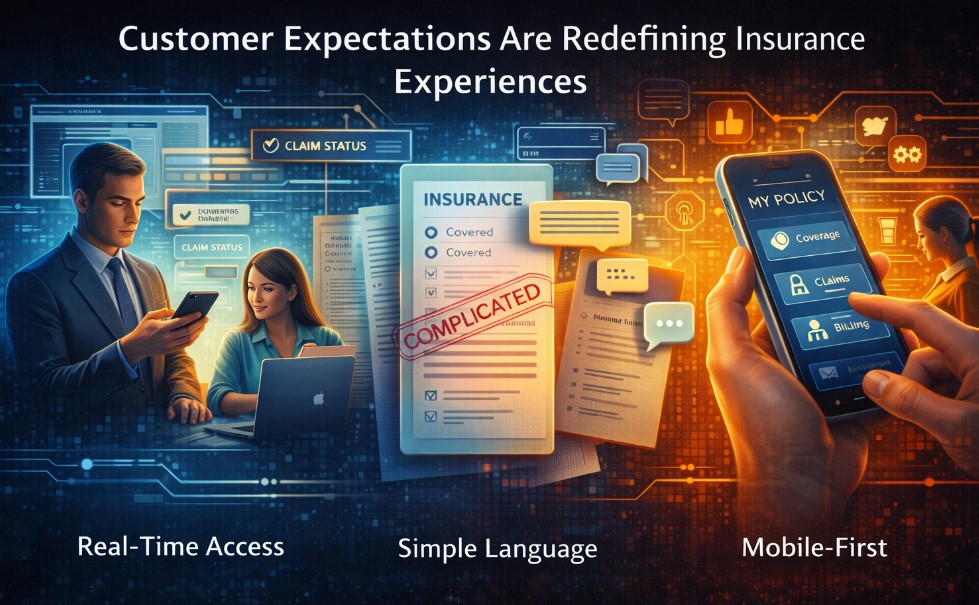
Modern policyholders expect the same level of speed, transparency, and personalization from insurance carriers that they receive from banks, retailers, and digital platforms. Long response times, complex paperwork, and unclear coverage details no longer align with how people want to manage financial services.
Insurance carriers are responding by redesigning customer journeys across every touchpoint. Digital onboarding, self-service portals, and instant policy updates are becoming standard expectations rather than premium features.
Key drivers behind this shift include:
- Growing demand for real-time access to policy information and claims status
- Preference for simple language instead of dense policy documentation
- Increased use of mobile devices as the primary interaction channel
As a result, carriers are investing heavily in user experience design, automation, and customer analytics. The future of insurance carriers depends on their ability to meet customers where they are, reduce friction, and deliver clarity at every stage of the relationship.
Distribution Models And Insurance Carrier Appointments Are Evolving
One of the most important structural changes in the industry is how insurance products are distributed. Traditional agency models are being supplemented and, in some cases, reshaped by digital platforms, embedded insurance, and flexible partnerships.
In this context, insurance carrier appointments play a strategic role. As carriers seek broader reach without sacrificing compliance or brand consistency, they are reevaluating how they appoint, manage, and support agencies and partners. Structured appointment processes help carriers scale distribution while maintaining underwriting discipline and regulatory alignment.
This evolution is driven by several factors:
- Expansion into new geographic and niche markets
- Demand for faster onboarding of qualified agencies
- Greater emphasis on performance monitoring and data transparency
Rather than abandoning traditional channels, the future of insurance carriers involves blending established appointment frameworks with modern tools that improve efficiency, oversight, and mutual growth.
Data And Advanced Analytics Are Reshaping Risk Assessment

Risk evaluation has always been at the core of insurance, but the tools used to assess risk are changing dramatically. Carriers now have access to unprecedented volumes of structured and unstructured data, ranging from telematics and IoT sensors to behavioral and environmental data.
Advanced analytics and predictive modeling allow carriers to move beyond static risk categories. Pricing, underwriting, and claims management can now adapt dynamically based on real-world behavior and evolving conditions.
Did you know?
Many auto insurers now adjust premiums based on driving behavior captured through telematics, rather than relying solely on age, location, and vehicle type.
This shift enables:
- More accurate pricing aligned with actual risk exposure
- Earlier fraud detection and prevention
- Proactive loss prevention strategies
The future of insurance carriers will increasingly depend on how effectively they turn raw data into actionable insights without compromising privacy or trust.
Regulatory Pressure Is Accelerating Operational Change
Regulation has always shaped the insurance industry, but recent developments have increased both complexity and urgency. Data protection laws, climate risk disclosures, solvency requirements, and consumer protection rules are expanding across jurisdictions.
Insurance carriers are under pressure to demonstrate compliance while maintaining operational agility. Manual processes and fragmented systems make this increasingly difficult, prompting investments in compliance automation and centralized reporting.
| Regulatory Focus Area | Impact On Insurance Carriers |
| Data privacy laws | Stronger controls over data collection and storage |
| Climate risk reporting | Integration of environmental risk into underwriting |
| Consumer protection | Clearer policy language and faster dispute resolution |
Under this table, the takeaway is clear. Regulatory demands are not just compliance issues. They are shaping product design, data architecture, and governance models. The future of insurance carriers favors organizations that embed compliance into everyday operations rather than treating it as a separate function.
Technology Modernization Is No Longer Optional
Legacy systems remain one of the biggest obstacles to innovation for insurance carriers. Many core platforms were designed decades ago and struggle to support real-time data exchange, automation, or integration with modern tools.
Technology modernization is now a strategic priority rather than an IT initiative. Cloud-based core systems, API-driven architectures, and modular platforms allow carriers to launch products faster and adapt to market changes with less disruption.
A practical definition worth noting:
Core system modernization refers to replacing or re-architecting legacy policy, billing, and claims platforms to support scalability, automation, and digital integration.
By modernizing technology stacks, carriers gain flexibility, reduce maintenance costs, and improve resilience. The future of insurance carriers is closely tied to how quickly and thoughtfully they modernize without disrupting existing customers or regulatory commitments.
Climate Change Is Transforming Risk Models And Coverage
Climate-related events are increasing in frequency, severity, and unpredictability. Floods, wildfires, storms, and heatwaves are forcing insurance carriers to rethink traditional risk models and coverage structures.
Historical data alone is no longer sufficient for accurate forecasting. Carriers are integrating climate science, geospatial modeling, and scenario analysis into underwriting and portfolio management.
This transformation affects several areas:
- Property insurance pricing and availability
- Reinsurance strategies and capital allocation
- Long-term sustainability of certain coverage lines
Rather than retreating from high-risk markets entirely, many carriers are exploring adaptive solutions such as parametric insurance, risk-sharing mechanisms, and incentives for resilience improvements. The future of insurance carriers will involve balancing financial stability with social responsibility in a changing climate landscape.
Workforce And Talent Strategies Are Shifting
The insurance workforce is undergoing its own transformation. Retirements, skills gaps, and competition for digital talent are forcing carriers to rethink how they attract, develop, and retain employees.
Traditional roles are evolving as automation handles routine tasks. In their place, demand is growing for professionals skilled in data analysis, cybersecurity, customer experience, and regulatory strategy.
Carriers are responding through:
- Upskilling and reskilling programs for existing staff
- Flexible work models and remote collaboration tools
- Cross-functional teams that blend technical and business expertise
This shift supports faster decision-making and innovation. The future of insurance carriers depends not only on technology, but on people who can interpret insights, manage complexity, and build trust with customers and partners.
Embedded Insurance And New Partnerships Are Expanding Reach
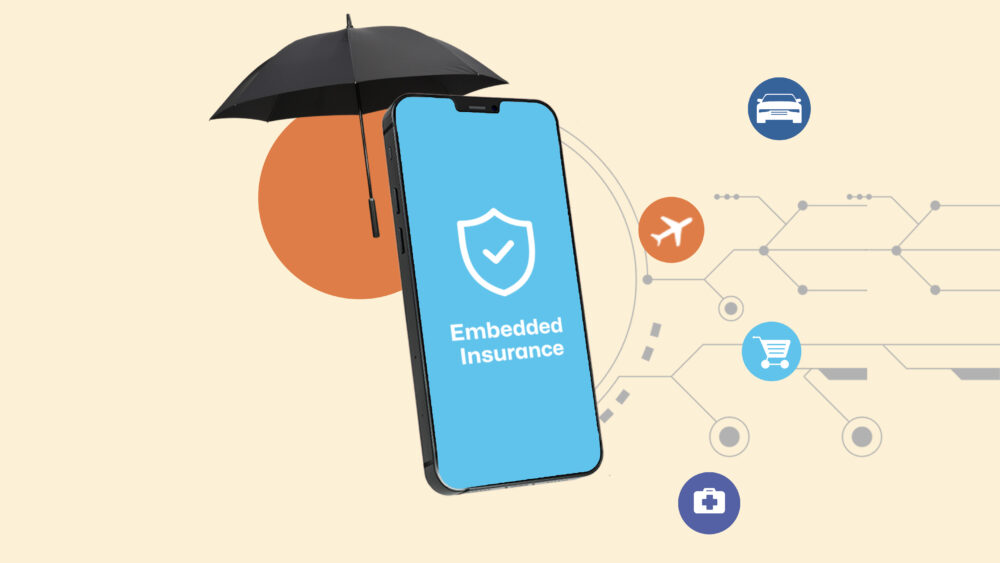
Insurance is increasingly being offered at the point of need rather than as a standalone purchase. Embedded insurance models integrate coverage into products and services such as car rentals, travel bookings, and e-commerce platforms.
For insurance carriers, this opens new growth channels without relying solely on traditional sales cycles. Strategic partnerships with non-insurance companies allow carriers to access new customer segments and data sources.
Benefits of embedded models include:
- Reduced customer acquisition costs
- Higher relevance and conversion rates
- Seamless user experiences
However, these partnerships also require careful governance, pricing discipline, and brand alignment. The future of insurance carriers will favor those that can form smart partnerships while maintaining underwriting integrity and regulatory compliance.
Adapting To A Multi-Force Future
The future of insurance carriers is being shaped by a convergence of forces rather than a single disruptive trend. Customer expectations, data-driven risk models, regulatory demands, technology modernization, climate pressures, workforce shifts, and new distribution strategies are all influencing the next wave of change.
Insurance carriers that succeed will be those that view adaptation as an ongoing process, not a one-time transformation. By aligning strategy, technology, people, and partnerships, carriers can remain resilient, relevant, and trusted in an increasingly complex environment.