


On a busy corridor in Queens, a storefront sign is no longer just a logo bolted to brick. It’s a node on a network-reporting its own health, adjusting brightness to the street’s glare, and logging proof-of-play for campaigns that change by hour. The “sign” is still physical. The business risk around it is now digital.
That shift is changing how buyers search-and what they expect when they find a sign installation company near me. Print shops, property managers, franchised operators, and real estate teams don’t only want a clean install. They want uptime, documentation, and someone who can own the long tail: permits, electrical sign-offs, maintenance, and service contracts that keep signage performing after launch.
This is the new reality of smart signage: IoT-connected hardware plus AI-assisted operations, spreading fast across New York, Illinois, and Texas-especially where outdoor environments punish weak standards and compliance is unforgiving. The winners will be the installers and partners who can treat signage like infrastructure, not a one-time task.
Context ─ the industry landscape in NY, IL, and TX
The demand curve is clear. Digital signage is now a large, growing market, with multiple research firms estimating global size in the high-$20B range in 2024 and projecting continued growth through 2030. This matters because “digital signage” doesn’t stop at the screen-it pulls installation into IT/AV territory: networking, power management, remote administration, and security.
In major metros, regulation and safety requirements push the industry toward professionalism. Austin explicitly requires sign permits for outdoor signage and spells out submission requirements; for certain sign types, it calls for construction drawings sealed by a licensed architect or engineer, plus detailed site drawings. Chicago’s rules are similarly permit-driven, tying sign work to municipal code obligations and contractor responsibility. In New York City, the administrative code lists specific exemptions-like small wall signs and certain “for sale or rental” ground signs-implying that everything else must be evaluated against permit requirements and zoning constraints.
For B2B buyers-especially print companies expanding beyond this creates a practical question: do you remain a signage company that fabricates and ships, or do you become a delivery-and-performance partner that can manage installs and service in multiple states? That’s where “local” and “national” begin to blur.
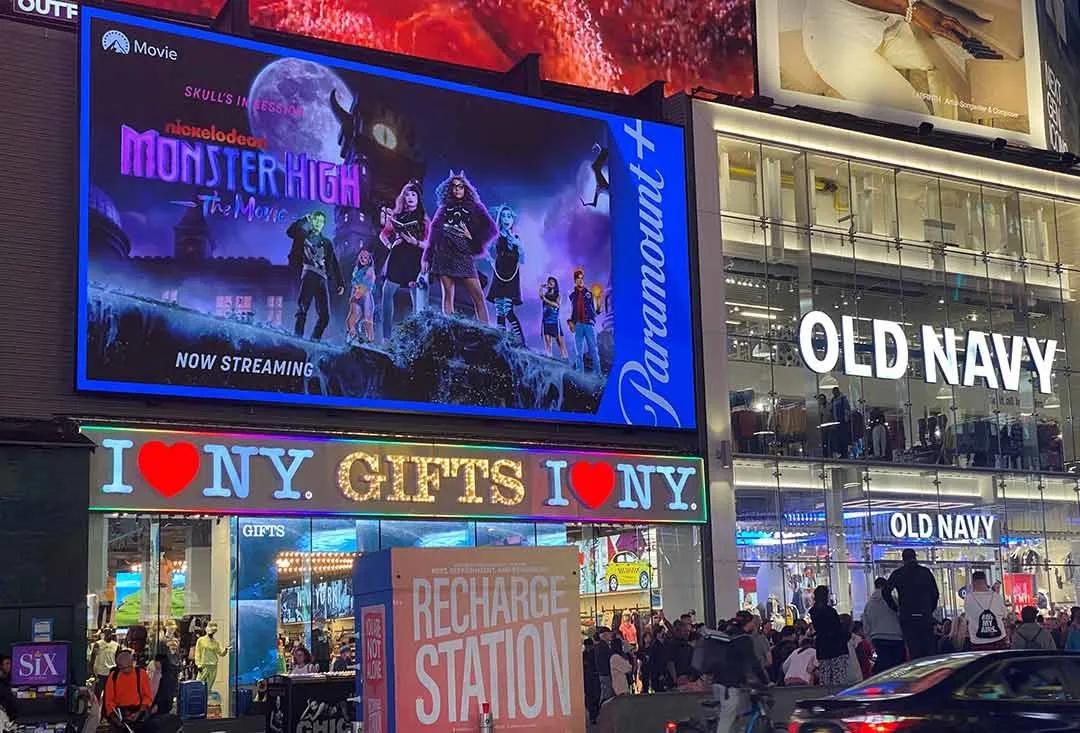
Key trends reshaping the outdoor sign market
There are a few trends to keep in mind.
Smart outdoor signage turns installs into managed infrastructure (and recurring contracts)
Classic signage economics rewarded a strong project: survey → fabricate → install → invoice. Smart signage changes the center of gravity. Once a sign is connected, the client expects the same disciplines they expect from other systems: monitoring, alerts, service-level commitments, and predictable response windows.
That is why long-term service contracts are rising in importance. In practice, the “product” is no longer only the sign. It’s the measurable reliability of the sign in the real world-wind, heat, vandalism risk, power interruptions, and intermittent connectivity.
Industry infrastructure guides for digital out-of-home emphasize that network operations require the right communications support and on-site personnel to manage systems effectively-language that maps directly to modern service models.
AI changes content operations and forces tighter installation standards
AI’s first impact is often on content (automated versions, dayparting, localization). But the second-order effect hits installers: when content changes rapidly and performance is tracked, failures get noticed faster. A flickering cabinet, a dim LED module, or a screen offline for a day is no longer “annoying.” It is measurable downtime.
This is where installation standards evolve:
- Better power planning (surge protection, load calculations, clean electrical pathways)
- Cleaner mounting and weatherproofing details (water intrusion becomes a reliability issue, not a cosmetic one)
- Better documentation (photos, as-builts, serials, location IDs, proof-of-install)
- Network-readiness (whether the client uses Wi-Fi, cellular, or wired connections)
In this environment, buyers stop shopping like consumers. They start evaluating an installer like a contractor-plus-operator.

“Sign suppliers near me” is no longer the decision, deployment capability is
Many buyers still begin with sign suppliers near me, but smart signage pushes the real decision downstream: who can deploy, permit, and service at scale?
That matters for:
- Franchise systems rolling out refreshes across states
- Retailers moving from static promos to dynamic, regional messaging
- Real estate brands want consistent posts, riders, and directionals that follow strict placement rules
A print shop can be excellent at production and still lose the client if it cannot pair production with reliable installation coverage in New York, Chicago, and Austin.
Why the “national” model is winning multi-site rollouts
The phrase national sign installation company sounds like marketing-until you’ve tried coordinating ten sites in three states under different local rules and landlord requirements.
A true signage company in the USA footprint requires:
- Standardized site survey workflows
- Partner or crew coverage across regions
- Consistent QA documentation
- Permit literacy (or permit handling partnerships)
- Predictable scheduling and escalation paths
This is why buyers increasingly ask for a signage company business profile that reads like a capabilities statement: insurance, safety process, coverage map, permit experience, and service structure.
Pricing, costs, and the economics of smart signage installs
There is no single “market price” for sign installation-scope and site conditions dominate. But published consumer-to-commercial cost datasets provide directional ranges for smaller commercial sign installs, while industry examples show how quickly costs climb when foundations, cranes, electrical work, and permits enter the scope.
- Multiple cost aggregators report an average commercial sign installation cost around the mid-hundreds, with common ranges roughly in the low hundreds to under $1,000 for straightforward jobs.
- For outdoor electronic/LED signage, installation is often described in the high-hundreds to several-thousand range, especially when concrete, trenching, electrical upgrades, and permits are involved.
- For complex installs (pylon/monument/tall signage), industry write-ups frequently cite multi-thousand-dollar installation ranges.

Directional cost table (installation-side only)
|
Category (typical scope) |
Directional range |
What usually drives the number |
| Basic install (small storefront/wall sign) | ~$181–$804 | Access, mounting surface, simple labor scope |
| Complex install (large/tall/heavy signage) | ~$2,000–$5,000+ | Lifts/cranes, crew size, access constraints, electrical coordination |
| Outdoor LED/electronic sign install (site-dependent) | ~$500–$5,000+ | Foundation, trenching, electrical work, permitting complexity |
| Permits/engineering (where required) | Varies by jurisdiction and sign type | City submittals, sealed drawings, inspections, revisions |
If you are evaluating providers, ask them to separate pricing into: (1) site survey, (2) install labor, (3) equipment/lift/traffic control, (4) electrical scope, (5) permit/admin handling, (6) closeout documentation, and (7) ongoing service. That is how professional quotes stay comparable across vendors.
For reference, Easy Way Install publicly notes that many cities carry a minimum visit charge (shown as $300 on its pricing examples), which reflects a real operational truth: mobilization is a cost, even before complexity starts.
Decision-making ─ how buyers should choose and implement smart signage
For print shop owners and B2B operators, the strategic mistake is treating installation as a commodity while treating signage as a premium product. Smart signage makes installation and service part of the product.
Use this decision model:
- Define the asset class
- Is this indoor signage company work (low weather risk) or outdoor signage company work (high exposure, stricter permitting)?
- Is it static signage, illuminated, or networked/digital?
- Identify your constraints before you pick a vendor
- Jurisdiction (NYC vs Chicago vs Austin)
- Mounting conditions (masonry, curtain wall, pylon base)
- Electrical requirements and inspections
- Tenant/landlord approvals and work windows
- Evaluate provider capability, not promises
- Can they handle permit-facing documentation requirements (site drawings, attachment details, sealed plans where required)?
- Do they understand local permit environments (Chicago permit expectations; NYC exemptions vs non-exempt signage)?
- Can they provide consistent closeout documentation and a service plan?
- Treat smart signage as an operational system
- Require an install checklist that includes connectivity, power stability, labeling, photo documentation, and acceptance testing.
- For multi-site rollouts, insist on standardized reporting so every location looks identical on paper.
This is where many searches-outdoor sign installation company near me, street sign installation company, American sign installation company-collapse into a single practical requirement: proven deployment capability with predictable follow-through.
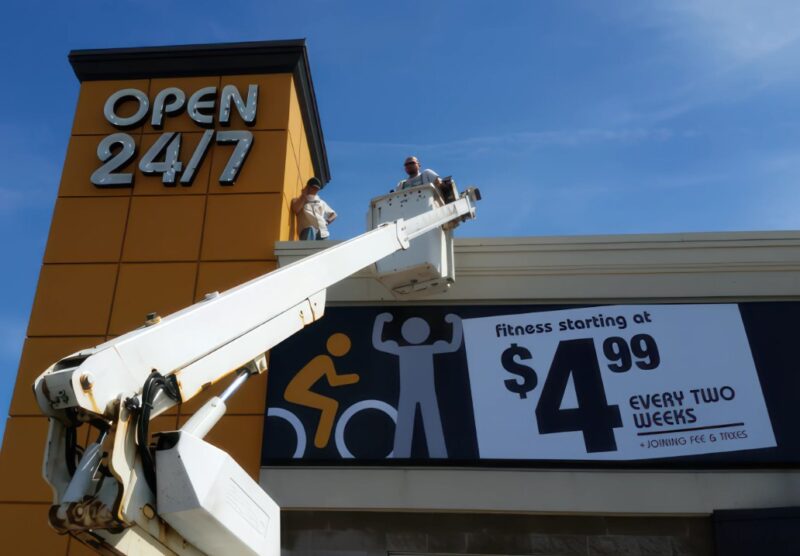
Mini case study ─ two scenarios buyers actually face
Scenario 1: a multi-state brand refresh (NY, IL, TX) with connected signage
A regional retailer plans a refresh across 12 locations: New York metro, Chicago area, and Austin. The creative is ready, fabrication is scheduled, and marketing wants a single launch week.
The friction points arrive fast:
- NYC locations require careful permit evaluation; not every sign is exempt, and zoning/permit logic can change the schedule.
- Austin requires a sign permit for outdoor signage and may require sealed drawings and detailed site documentation, depending on sign type.
- Chicago’s permit environment pushes accountability to contractors working on signs.
The brand’s “smart signage” goals add another layer: each site needs consistent brightness settings, reliable uptime, and repeatable acceptance testing.
The operational solution is not a miracle vendor. It is a rollout method:
- Standardized site survey template
- Permit path identified per jurisdiction before fabrication ships
- Install windows scheduled with lift and electrical coordination
- Closeout package per site (photos, labeling, acceptance checklist)
- A service plan that prevents “truck roll chaos” after launch
Scenario 2: real estate deployments that behave like a network
A brokerage wants faster listing activation and cleaner compliance. They search real estate sign installation company near me and real estate sign post company because speed matters more than design-the posts must go in the right place, safely, and consistently.
Smart tactics show up quickly:
- QR-driven landing pages (marketing performance is tracked)
- Inventory control (knowing which hardware is where)
- Standardized placement and removal workflows (brand and compliance)
In NYC, the code explicitly references certain ground signs offering sale or rental of the premises as an exempt category under defined size/conditions-meaning the brokerage still needs to know the rules, not guess them. The “winner” is the provider who can do repeatable installs, documented removals, and reliable scheduling-not just the cheapest post.
Conclusion
Smart signage is pushing the outdoor sign industry toward a new standard: connected assets, measurable uptime, stricter documentation, and service contracts that look more like facilities management than “one-and-done installs.” Market growth in digital signage reinforces that this shift is structural, not temporary.
For B2B buyers-especially print shop owners-the decision is now strategic: pick partners who can install safely, navigate permitting realities in NY/IL/TX, and support the operational life of the sign after it goes up.