

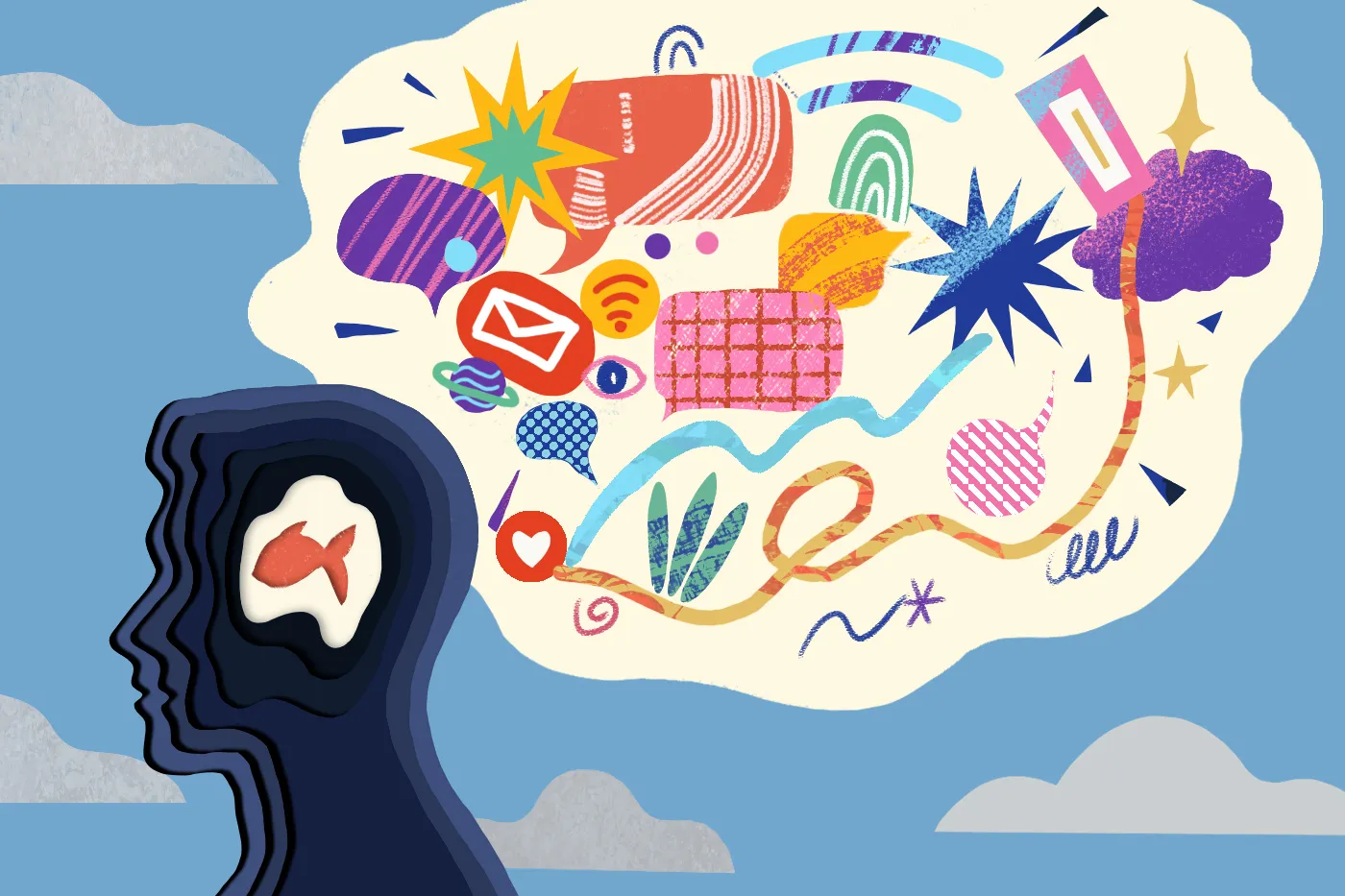
Most adults do not feel less intelligent than they used to. They feel more interrupted. A lot of people can still think deeply, solve problems, and learn hard things. The problem is getting enough uninterrupted mental space to do it. Modern life keeps pushing attention toward speed, novelty, and constant checking.
That changes how focus feels from the inside. You sit down to read, then remember a message. You start work, then jump to email. You open one tab for a task, then end up on five.
Over time, that rhythm can make calm concentration feel strangely difficult. Adult attention spans are not simply shrinking in a dramatic, irreversible way.
They are being trained by the environments people move through every day, and that matters.
Why focus feels thinner than it used to

A big reason attention feels fragile is that modern systems are built to keep people switching. Apps, feeds, work platforms, and even entertainment are designed around frequent re engagement.
A quick pause becomes a check. A check becomes a scroll. A scroll becomes ten minutes gone. Even simple forms of chance based stimulation, including the appeal people feel when reading about a plinko game, show how strongly the brain reacts to uncertainty, quick feedback, and the possibility of reward.
That same pattern appears all over digital life. Small, unpredictable signals keep attention hooked. Adults are not weak for responding to it. They are human, and modern tools are very good at pressing the right buttons.
The habits modern life rewards
Modern life does not usually reward stillness. It rewards availability, reaction speed, and visible responsiveness. That sounds productive, but it can quietly train the brain to prefer motion over depth.
Constant switching starts to feel normal
Many adults now spend their day moving across messages, browser tabs, notifications, meetings, and short bursts of content. The brain gets used to this pace. After a while, slower forms of attention can feel uncomfortable, even when they are necessary.
Reading a long article, following a careful argument, or sitting with a complex task may create a strange urge to escape. That urge is not proof that deep focus is gone. It is often a sign that the mind has adapted to fragmentation. When people say their attention span is ruined, they are often describing this exact feeling, the growing difficulty of staying with one thing long enough for real concentration to settle in.
Work and entertainment now blur into one stream
The same phone carries the calendar, the group chat, the breaking news, the shopping app, the video feed, and the work email. That creates a mental environment where the brain has fewer clear boundaries. Rest starts to look like stimulation. Work starts to happen in the middle of distraction. Even leisure can become mentally noisy. Instead of recovery, many adults get more input. Instead of boredom, which often helps creativity, they get constant occupation.
Important note: attention usually weakens when every spare second is filled. Empty moments are not wasted time. They help the brain reset, sort information, and prepare for deeper thinking.
What this rewiring looks like in real life

Attention changes rarely show up as one dramatic symptom. They usually appear as a pattern of small frustrations that build over time. Many adults recognize the same signs, even if they describe them differently. The common thread is not laziness. It is a mind that has adapted to frequent interruption.
Before listing them, it helps to notice how ordinary these behaviors have become:
- Reading the same paragraph twice because another thought barged in
- Reaching for the phone during short pauses without deciding to do it
- Feeling busy all day but struggling to name one completed deep task
- Losing patience with slow tasks that once felt manageable
- Finding silence oddly uncomfortable after long stretches of media input
These are everyday signals that attention is being pulled outward more often than it is being directed inward.
The hidden cost of always being reachable
Many people think attention problems begin with entertainment, but adult life adds another layer. Work culture often rewards instant replies, fast updates, and permanent accessibility. That pressure trains people to scan rather than think.
A quick response can look efficient, but repeated interruption creates mental residue. Part of the mind stays attached to the last task while the next one begins. That makes concentration shallower and slower.
A simple way to see it is this:
| Daily pattern | Likely effect on attention | Smarter adjustment |
| Constant notifications | Frequent mental resets | Batch checks at set times |
| Multitasking on screens | Lower depth and retention | Single task blocks |
| Working during breaks | Less mental recovery | Protect short offline pauses |
The pattern matters more than any single habit. Attention follows the conditions it lives in.
Why this is not just a willpower problem
It is tempting to turn this into a personal discipline story. People often blame themselves and say they just need to try harder. That misses the bigger picture. Attention is shaped by biology, environment, stress, sleep, and habit loops. Adults are carrying information overload, emotional fatigue, and too many digital entry points at once. Of course focus becomes harder under those conditions.
Did you know? Research on task switching has long shown that shifting between tasks can reduce efficiency because the brain pays a setup cost each time it changes direction. That means even brief interruptions can have a larger effect than they seem to in the moment.
This is why shame rarely helps. Better attention usually comes from changing the structure around you, not from expecting perfect self control in a system designed to pull you away.
How adults can rebuild stronger attention
The good news is that attention can be trained in a healthier direction too. It responds to repeated conditions, which means small changes matter when they are consistent. The goal is not becoming a perfect monk with zero distractions. The goal is making deep focus feel normal again.
A few approaches tend to work well when people actually stick with them:
- Start demanding tasks before checking reactive apps
- Keep one screen or one window for the main task whenever possible
- Build short boredom gaps into the day instead of filling every pause
- Read longer material regularly so the brain relearns sustained pacing
- Treat sleep, stress, and movement as attention tools, not side issues
None of this is flashy. That is exactly why it works. Strong attention is usually rebuilt through ordinary routines.
A healthier way to think about attention now

Adult attention spans are not being destroyed in some simple, hopeless way. They are being shaped by the speed, design, and demands of modern life. That distinction matters because it leaves room for change.
Once people understand that their focus reflects repeated conditions, they can stop treating every distraction as a personal failure. Better attention does not come from guilt. It comes from creating fewer openings for interruption and more room for depth. Most adults do not need a brand new brain.
They need better boundaries around the one they already have. When that happens, concentration often returns more quickly than expected, and everyday life starts to feel less scattered, more deliberate, and easier to actually inhabit.