


A WhatsApp account takeover happens when someone else gains control of your phone number on WhatsApp and starts receiving your messages, accessing your chats, or impersonating you.
This usually occurs through SIM swap fraud, SMS verification code interception, or social engineering.
Recovery is possible in most cases, but it depends on how quickly you act and whether protective features like two-step verification were enabled beforehand.
What a WhatsApp Account Takeover Actually Is

WhatsApp accounts are tied to phone numbers, not usernames or passwords. When someone manages to receive the six-digit verification code sent by SMS or voice call, WhatsApp assumes they are the legitimate owner of that number. From that moment, the attacker can activate WhatsApp on their own device, automatically logging you out.
This design makes WhatsApp fast and simple for users, but it also creates a single point of failure. Control of the phone number equals control of the account.
According to industry reporting from telecom regulators and fraud monitoring groups, SIM swap-related fraud has increased sharply since 2020, with messaging platforms becoming secondary targets after banking and email accounts.
WhatsApp takeovers are often not the final goal but a stepping stone to scamming contacts, resetting other accounts, or extracting sensitive information.
Common Attack Methods Behind WhatsApp Takeovers
The majority of takeovers follow a small number of repeatable patterns. Understanding these mechanisms matters because the warning signs often appear hours or days before the actual lockout.
Attack method
How it works
Typical warning signs
SIM swap fraud
The attacker convinces the mobile carrier to reissue your number to a new SIM
Sudden loss of signal, “No service,” carrier account changes
SMS code phishing
The victim is tricked into sharing the WhatsApp verification code
Messages asking you to “confirm” or “verify” your account
Voicemail hijacking
The attacker accesses the voicemail to receive the verification call
Weak voicemail PIN, missed calls from unknown numbers
Device access
Physical or remote access to an unlocked phone
The phone behaves normally until the account is replaced
SIM swap fraud is the most damaging because it breaks more than WhatsApp. Once the number is reassigned, the attacker can intercept calls and messages across all services that rely on SMS authentication.
Early Warning Signs Your WhatsApp Account Is Being Targeted

WhatsApp takeovers rarely happen without any signal. The problem is that most users ignore the early indicators because they look minor or temporary.
One of the earliest signs is receiving repeated WhatsApp verification codes that you did not request. This means someone has entered your phone number into the WhatsApp setup screen.
Another warning sign is a sudden loss of cellular service while Wi Fi continues to work. In many confirmed SIM swap cases, this happens minutes before the attacker completes account registration.
Contacts reporting strange messages from you is often the point when users realize something is wrong. These messages usually contain urgent requests for money, codes, or links, sent in a tone that does not match your normal communication style.
Symptom
Likely cause
Risk level
Unrequested WhatsApp codes
Active takeover attempt
High
Logged out without action
Account already activated elsewhere
Critical
Contacts receive scam messages
Account fully compromised
Critical
Loss of mobile signal
Possible SIM swap
Critical
What Happens After an Account Is Taken Over
Once activated on another device, WhatsApp automatically disconnects all other sessions. The attacker may or may not have access to your past messages, depending on whether cloud backups are enabled and whether they can restore them.
In many cases, attackers immediately enable their own two-step verification PIN to lock the original owner out. This creates a delay window, typically seven days, during which the rightful owner cannot re-register the account even with the correct phone number.
The secondary damage often extends beyond WhatsApp. Attackers use the compromised account to exploit trust relationships, convincing friends or family to send money, reveal codes, or click on malicious links.
In documented cases from 2023 and 2024, WhatsApp impersonation scams resulted in significant financial losses, particularly among older users and small business owners who rely on WhatsApp for daily communication.
Immediate Steps to Recover a Hijacked WhatsApp Account
Recovery depends on speed and preparation. WhatsApp allows account re-registration by entering the phone number again and requesting a new verification code. If the attacker has not set a two-step verification PIN, recovery can be immediate.
If a PIN has been set, WhatsApp enforces a waiting period before allowing a reset. During this time, you should secure the phone number itself by contacting your mobile carrier, reversing any SIM swap, and adding port-out protection or a carrier-level PIN.
Recovery scenario
What you can do
Expected timeline
No PIN set by the attacker
Re-register with SMS code
Minutes
PIN set by attacker
Wait for the PIN reset window
Up to 7 days
SIM swap active
Restore the SIM with the carrier
Hours to days
WhatsApp support case
Identity verification review
Several days
WhatsApp support operates largely through automated workflows. Clear documentation, consistent device use, and carrier confirmation significantly improve outcomes.
Two-Step Verification on WhatsApp Explained Clearly
@cyberrubus Whatsapp 2 Step Verification Settings . . . . #cyberawareness #onlinesafety #whatsapptips #whatsappsecurity ♬ 原创音乐 – s.santehnika
Two-step verification on WhatsApp is not the same as device biometrics or SMS codes. It is a user-defined six-digit PIN that is requested when registering the phone number again.
Without this PIN, an attacker cannot complete account activation even if they intercept the SMS code.
This feature was introduced globally in 2017 and expanded with email recovery options in later updates. Despite this, adoption remains inconsistent.
Security researchers estimate that a large portion of WhatsApp users still do not have two-step verification enabled, making SMS interception attacks far more effective than they should be.
Feature
Without two-step verification
With two-step verification
SMS code interception
Account lost immediately
Not sufficient alone
SIM swap impact
Full takeover
PIN blocks activation
Recovery difficulty
Moderate
Easier if the email is set
Attacker lockout risk
Low
High
How Two-Step Verification Changes the Risk Model
Two-step verification does not make WhatsApp invulnerable, but it fundamentally changes the economics of attacks. Instead of a single intercepted code, attackers now need both carrier control and knowledge of a private PIN.
This significantly reduces opportunistic attacks and forces more targeted efforts.
In real incident analysis, accounts with two-step verification enabled are far more likely to be recovered quickly and less likely to be abused for mass scams. The presence of a recovery email further shortens resolution time if the PIN is forgotten.
WhatsApp Backups and Their Role in Takeovers
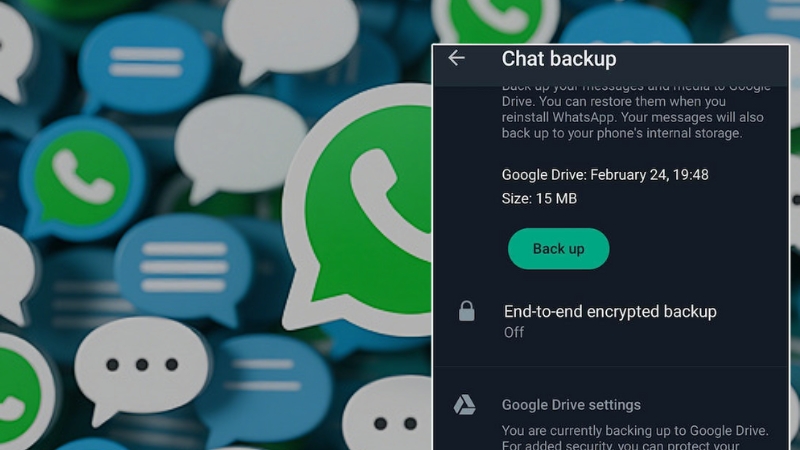
Chat backups introduce another layer of complexity. WhatsApp backups stored in iCloud or Google Drive are protected by the user’s cloud account credentials.
By default, attackers who take over a WhatsApp account cannot read past messages unless they also compromise the associated cloud account.
End-to-end encrypted backups, rolled out widely after 2021, add a password or key. Users who enabled this feature retain message confidentiality even during account takeover events, though recovery becomes more dependent on remembering the backup password.
Backup type
Attacker access
User recovery impact
No backup
No chat history
Clean restore
Cloud backup, not encrypted
Possible if the cloud is hacked
Moderate
End-to-end encrypted backup
Not accessible
High security, higher responsibility
Long-Term Account Hardening Beyond Two-Step Verification
While two-step verification is the single most effective defense, long-term protection depends on controlling the phone number itself. Carrier-level protections such as port-out PINs, SIM swap alerts, and account change notifications directly reduce takeover risk.
Avoiding public exposure of your phone number, especially in business listings or social media profiles, also lowers targeting probability. Many WhatsApp takeovers begin with data harvested from public profiles combined with basic social engineering.
Why WhatsApp Account Takeovers Keep Increasing
View this post on Instagram
The growth of WhatsApp account takeovers mirrors broader trends in identity-based attacks. Phone numbers have become universal identity keys, used for messaging, banking, password resets, and authentication. This concentration makes them valuable targets.
As long as SMS remains a fallback authentication method across platforms, attackers will continue exploiting weaknesses in telecom processes rather than software vulnerabilities.
WhatsApp is not uniquely insecure, but its global reach and trust-based communication model make the impact of compromise especially visible.
Bottom Line
A WhatsApp account takeover is usually the result of phone number compromise rather than a flaw in the app itself.
The signs are often visible before full loss of access;s, recovery is usually possible with prompt action, and two-step verification dramatically reduces the risk and damage of an attack.
A similar pattern appears in Instagram account hacked cases, where weak control over linked credentials like email or phone numbers often plays a bigger role than platform security failures.
Users who treat their phone number as a high-value credential, not just a contact detail, are far less likely to experience repeated compromise.