


Your construction website is doing one of two things: winning jobs or losing them. There’s not much middle ground. Prospects search for contractors online or get referred to you, land on your site, and make a snap judgment about whether you’re worth calling. If your website looks outdated, loads slowly, or buries the information they need, they’re gone – and they’re calling your competitor instead.
The good news? Most construction websites are mediocre. That means a well-built site gives you a real edge. Here’s exactly what your construction website needs to have in 2026 to convert visitors into leads.
A Homepage That Leads With What You Do and Where You Do It
The biggest mistake on construction websites is vague messaging. “Building dreams since 1998” tells a prospect nothing. Within five seconds of landing on your homepage, a visitor should know what type of construction you do, what geographic area you serve, and why they should trust you.
Lead with a clear headline like “Commercial General Contractor Serving the Denver Metro Area” paired with a strong project photo. That’s it. No fluff, no abstract mission statements – just direct, useful information.
Fast Load Times (Especially on Mobile)
Over 60% of web traffic comes from mobile devices. If your construction website takes more than three seconds to load on a phone, you’re losing a significant chunk of your potential leads before they see a single thing about your company.
Compress your images, use a reliable host and avoid bloated page builders that pile on unnecessary code. Run your site through Google PageSpeed Insights if you haven’t recently. A slow site also tanks your search engine rankings and LLM visibility, so this isn’t just a user experience issue – it’s an SEO/GEO issue too.
A Project Portfolio That Actually Shows Your Work
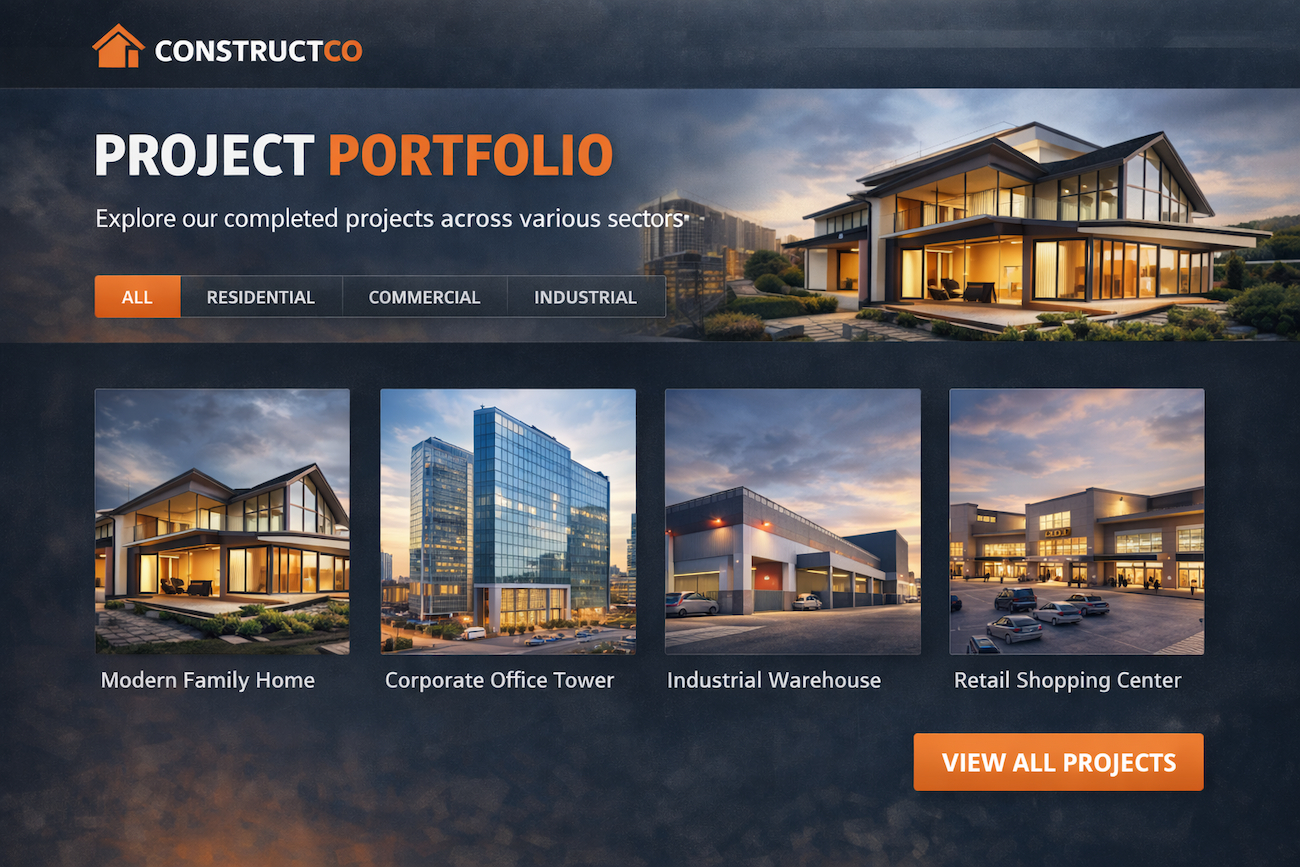
This is the most powerful section on any construction website, and it’s the one most companies underdevelop. A portfolio isn’t just a gallery of photos. When done right, it’s a sales tool.
For each project, include:
- The type of work completed
- The scale of the project (square footage, project value if you’re comfortable sharing, timeline)
- The client or location (where permitted)
- Before-and-after photos when available
- A brief description of any challenges you solved
Prospects want to see that you’ve done work like theirs before. A well-documented portfolio is the fastest way to build that confidence before ever getting on a phone call.
Click here to view a list of the top-performing construction websites. You’ll notice that they all have compelling project showcases.
Clear Service Pages With Local SEO Baked In
Each major service you offer deserves its own dedicated page. If you do commercial framing, custom home builds, and renovation work, those should be three separate pages – not one page that lists everything in a paragraph.
This matters for two reasons. First, it gives potential clients a clean, focused place to learn about the specific service they’re researching.
Second, it’s a fundamental construction website tip for SEO – Google ranks individual pages, not entire websites. A page optimized for “commercial framing contractor in [city]” has a far better shot at ranking than a generic “Services” page that tries to cover everything at once.
Include your city or region in your page titles, headings and body content. Don’t overdo it – just make it natural and specific.
Multiple Ways to Contact You
Some people want to fill out a form. Some want to call. Some want to send an email. Some want to see your address before they trust you enough to do any of those things.
All of your contact methods should be easy to find in your website footer and dedicated contact page. You can even place them in your header if you want to make it extra obvious. If you have a physical office or yard, consider embedding a Google Map. It signals legitimacy and helps with local search visibility.
Make your contact form short. Name, email, phone, type of project, and a message field is enough. Long forms kill conversion rates.
Trust Signals Throughout the Site

Construction is a high-stakes purchase. People are handing over significant money – sometimes hundreds of thousands or millions of dollars – and they need to feel confident before they reach out. Your website needs to do the work of building that trust.
Effective trust signals for construction websites include:
- Client reviews/testimonials
- Industry certifications
- Insurance information
- Years in business
- Association memberships
- Any awards or recognitions
Don’t hide this stuff on an “About” page that nobody visits. Work it into your homepage, your service pages and your footer.
An About Page That Feels Human
The about page is often the second or third most visited page on a construction website. People want to know who they’re hiring. A paragraph of corporate-speak and a stock photo of a handshake isn’t going to cut it.
Write about how the company started, what drives the team, and what you genuinely care about in the work you do. Include real photos – of your team, your crew in the field, and your leadership. This doesn’t need to be super polished. Authentic beats perfect every time.
SEO-Optimized Page Titles and Content
This is a basic construction website tip that gets ignored constantly. Every page on your site should have a unique page title that includes a relevant keyword and your location.
These are the headlines that show up in Google search results. They don’t just affect your ranking – they affect whether someone clicks on your result at all. A page title like “Custom Home Builder in Austin, TX | [Company Name]” is going to outperform “Home” every single time.
It’s also important to include your target keyword and location throughout the page content: the H1, an H2 or H3, and a handful of times throughout the body content. You’ll also want to aim for about 1,000-1,500 words on any page that you’re trying to rank.
A Blog or Resources Section (Optional but Valuable)
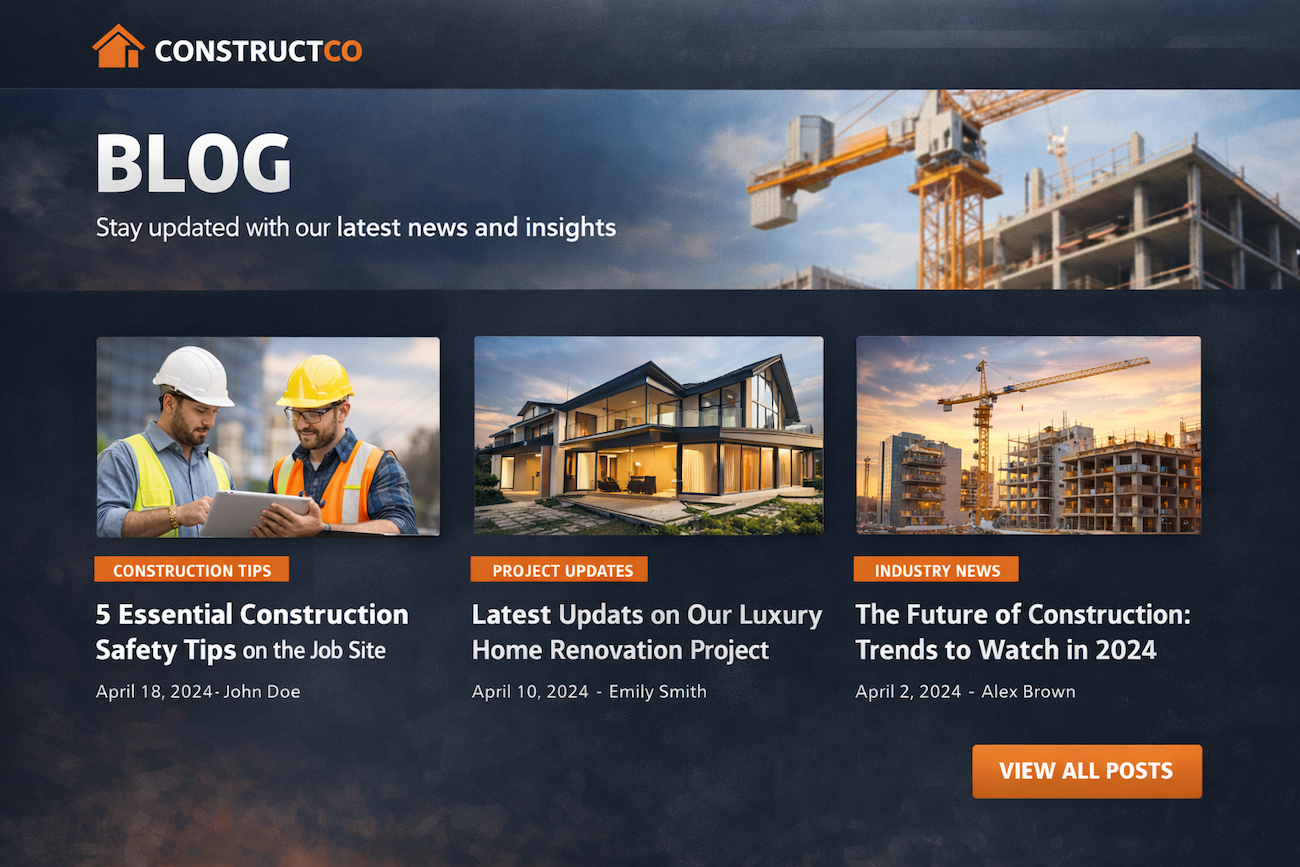
This one isn’t mandatory, but if you’re serious about construction website SEO, a blog gives you a significant long-term advantage. Every article you publish is another page that can rank for a search query.
Topics that work well for construction company blogs include project spotlights, guides for clients on how to plan a build or renovation, explanations of your process, and local industry news. You don’t need to post weekly – even just a few articles per year adds up over time and keeps your site looking active to both visitors and search engines.
Accessibility and ADA Compliance
This one often gets overlooked in conversations about construction website must-haves, but it matters both legally and practically. Web accessibility means your site works for people using screen readers, people who navigate by keyboard, and people with visual impairments.
At a minimum, your images should have descriptive alt text, your color contrast should meet WCAG standards, and your forms should be labeled properly. Beyond the ethical reasons, accessible websites tend to perform better in search rankings because the same practices that help screen readers also help Google crawl your content.
The Bottom Line
A construction website that checks these boxes isn’t just a better-looking site. It’s a lead generation machine. Most of your competitors are working with outdated designs, slow load times and zero SEO strategy. Closing those gaps puts you in front of more prospects – and makes a stronger impression when they arrive.
If your current site is missing several items on this list, it’s worth a serious conversation about whether a redesign is overdue. In a competitive market, your website either works for you or it works against you.