

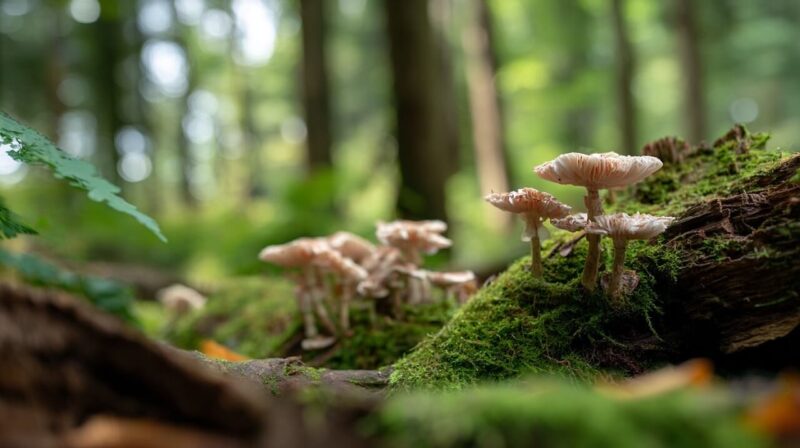
Mushrooms exist as an essential part of every natural ecosystem. Each type of fungus contributes to the cycle that supports plants, animals, and soil. Many overlook their influence, yet they serve as silent regulators of balance in forests, meadows, and wetlands.
Every decayed leaf, fallen branch, or animal remnant goes through a process where mushrooms transform waste into life-supporting nutrients.
Every form of life depends on continuous nutrient renewal. Mushrooms act as that invisible engine. Without their ability to decompose organic matter, ecosystems would collapse under layers of undegraded material.
Forests would weaken, and food chains would lose stability. Every level of living organisms, from plants to predators, relies on that continuous exchange.
A closer look reveals that mushrooms do far more than recycle waste. They link trees underground, feed small animals, and support plant growth through microscopic networks known as mycelium.
Each of those actions maintains a balanced food chain and sustains life where visible growth seems impossible.
Mushrooms as the Final Stage of Natural Recycling
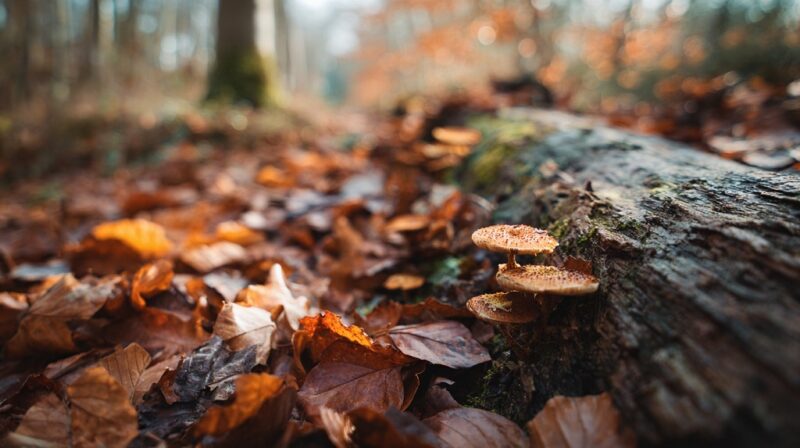
Every natural habitat depends on fungi to complete the biological cycle that sustains life.
After plants and animals die, fungi decompose their remains and return essential minerals to the soil.
That process keeps nutrients active and prevents natural systems from suffocating under waste.
Each decomposed leaf and decayed tree trunk becomes new energy for plants that follow.
How the Process Unfolds in Soil
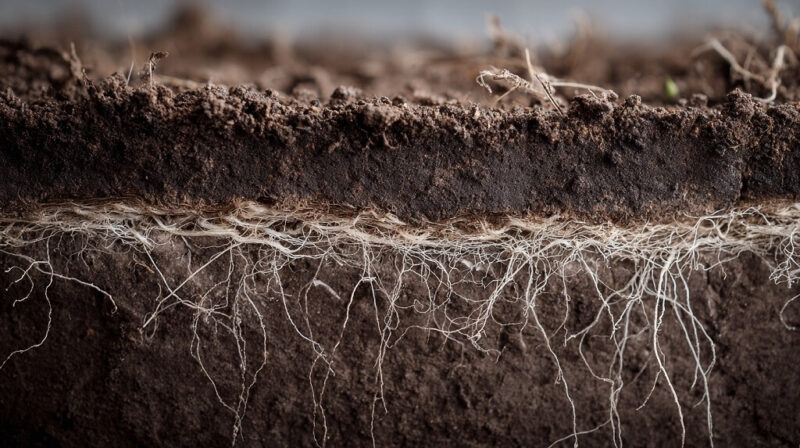
Mycelium spreads through the ground and releases enzymes that separate organic material into elements that plants can absorb.
Soil organisms then feed on the by-products of fungal activity. That forms a multi-level system where each participant benefits.
Every forest and meadow relies on that invisible transformation.
Key Insights
- Mushrooms decompose cellulose and lignin, the toughest plant materials.
- Fungal breakdown creates humus that enriches soil fertility.
- Decomposition keeps nitrogen, phosphorus, and carbon in circulation.
- Without fungi, dead matter would accumulate and stop plant renewal.
The largest living organism on Earth is a fungus found in Oregon, covering over two thousand acres underground. It operates as a single biological network.
The Role of Mycelium in Nutrient Exchange
Mycelium forms an underground web that connects roots, trees, and plants into one living structure. That network transfers nutrients and water between species, maintaining equal growth across entire ecosystems.
Forests owe much of their stability to that unseen connection beneath the surface.
The Fungal Bridge Between Plants
Roots coated with mycelium absorb more water and minerals than roots without that association.
Trees can share nutrients with weaker neighbors through those fungal links. That cooperation improves survival in harsh conditions and sustains vegetation through drought or disease.
Key Insights
- Mycorrhizal fungi extend the reach of plant roots several times.
- Trees connected through fungal networks can exchange carbon compounds.
- Mycelium stores moisture and protects soil against erosion.
- Fungi stabilize nutrient distribution across large forest zones.
Research shows that ancient forests communicate chemically through mycelial networks. Scientists call that system the “Wood Wide Web.”
Support for Plant Life and Soil Structure
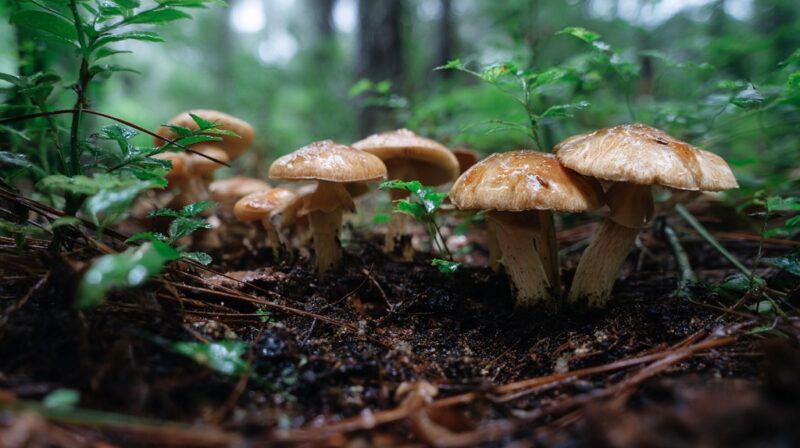
Fungi act as silent architects of healthy soil.
Every colony contributes to aeration, water balance, and the formation of nutrient-rich layers that sustain vegetation.
Mycelium binds soil particles, preventing erosion and keeping minerals available for root systems.
Stable soil supports diverse plant growth and sustains every herbivore and omnivore that depends on vegetation.
How Fungi Shape Soil and Roots
Roots grow stronger in soil filled with fungal life. Hyphae create microscopic tunnels that let air and water move freely.
Those channels allow oxygen to reach plant roots and keep moisture at an even level.
Fungal presence also raises organic matter content, creating a soft, absorbent texture that supports continuous plant renewal.
Key Insights
- Soil rich in fungal colonies contains higher levels of nitrogen and carbon.
- Mycelium improves structure and increases soil resistance to drought.
- Areas lacking fungal diversity suffer faster erosion and nutrient loss.
- Plant roots with fungal associations grow deeper and live longer.
Farmers use certain fungi to restore exhausted farmland.
Source of Food for Animals and Insects
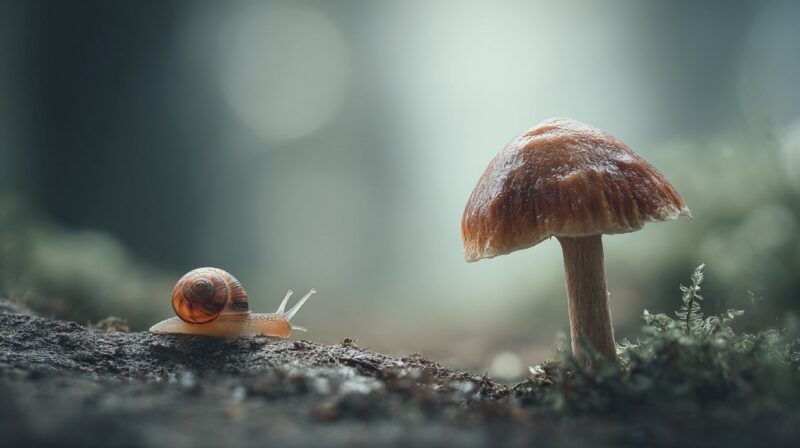
Mushrooms serve as direct nutrition for countless organisms.
In forests, fields, and wetlands, they appear seasonally as protein-rich meals for many creatures.
Small mammals, snails, and insects rely on fungal fruiting bodies as their main food source.
Larger animals benefit indirectly through the energy transferred across trophic levels.
Animal Life That Feeds on Mushrooms
Rodents such as squirrels and mice eat fungi to gain minerals absent in seeds.
Deer consume certain species that contain essential trace elements. Many beetles and flies lay eggs inside mushrooms, allowing larvae to feed until maturity.
Key Insights
- Over two hundred animal species feed primarily on fungi.
- Fungal fruiting periods align with wildlife breeding cycles.
- Spores survive digestion and reenter soil through animal waste.
- Birds in boreal forests rely on fungi to endure food shortages.
Flying squirrels depend heavily on truffles for survival during winter.
Hidden Cooperation Between Trees and Fungi
Forests thrive through silent alliances between trees and fungi. Roots form mutual partnerships where both sides gain vital resources. Fungi collect minerals and moisture that trees cannot access alone. In exchange, trees deliver carbohydrates produced through photosynthesis. That cooperation keeps forests alive even in poor or rocky soil where other vegetation cannot grow.
The link between roots and fungi creates a shared network known as mycorrhiza. That connection allows trees to exchange nutrients and chemical signals that regulate growth and defense. Old trees often transfer carbon to younger ones through fungal bridges. That internal balance prevents weaker plants from dying and keeps entire ecosystems productive for centuries.
The Regrowth Cycle Driven by Fungi
After a disturbance, fungi emerge first to colonize dead wood. Their enzymes release nutrients that feed mosses, ferns, and pioneer plants.
Those plants prepare the ground for shrubs and young trees that restore canopy cover.
Fungi then retreat deeper into the soil to maintain mineral flow for the new generation. Every forest rebirth follows that same hidden rhythm.
- Fungal decomposition accelerates forest recovery after damage.
- Mycelium prevents nutrient leaching during heavy rain.
- Decaying logs host hundreds of fungal and insect species.
- Soil fungi keep seedlings alive through nutrient sharing.
What Fungi Reveal About Ecosystem Quality?
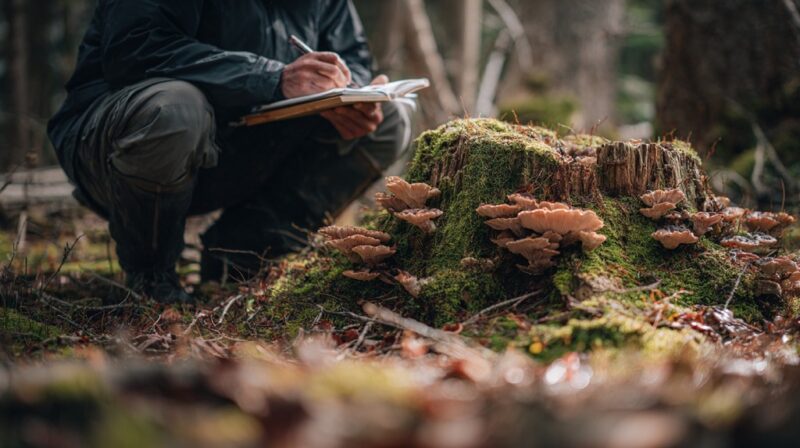
Certain species grow only under specific conditions. Their appearance or absence tells much about soil acidity, moisture, and contamination levels.
Fungi that disappear often indicate heavy metal accumulation or loss of organic matter.
Regular monitoring of fungal colonies helps ecologists measure recovery after restoration projects.
- Lichens and fungi serve as natural indicators of air quality.
- Soil fungi reflect the balance between organic and inorganic matter.
- Regions with low fungal diversity usually face ecosystem stress.
- Mushroom population shifts often precede plant or animal decline.
In Japan, mushroom species are used as bio-monitors around industrial areas. Their tissue samples help detect heavy metals and radiation faster than soil tests.
Consequences of Fungal Loss in the Food Chain
The disappearance of fungi leads to ecological collapse.
Without decomposition, organic material accumulates and blocks nutrient flow. Soil becomes compact and sterile. Plants weaken, herbivores lose their food supply, and predators follow.
Every level of the food chain depends on continuous fungal activity to remain functional.
When decomposition halts, nitrogen and carbon remain trapped in dead matter. Plants cannot absorb essential minerals, and bacterial growth also decreases.
Over time, erosion worsens, and entire habitats degrade.
- Fungal loss reduces soil fertility and forest density.
- Animal populations decline when mushroom-based diets vanish.
- Water cycles slow due to reduced organic matter retention.
- Agricultural yields fall when beneficial fungi disappear.
Scientists revived ancient fungal spores found in permafrost to study their resilience. Those samples proved capable of restoring decomposition in sterile soil after thousands of years.
The Bottom Line
Every form of life benefits from the unseen labor of mushrooms. Fungi connect soil, plants, and animals through nutrient cycles that sustain stability across all ecosystems. Decomposition, nutrient sharing, and symbiotic cooperation form the foundation of a balanced food chain. The presence of mushrooms guarantees renewal, and their loss marks decline.
Nature depends on constant transformation powered by fungal life.