

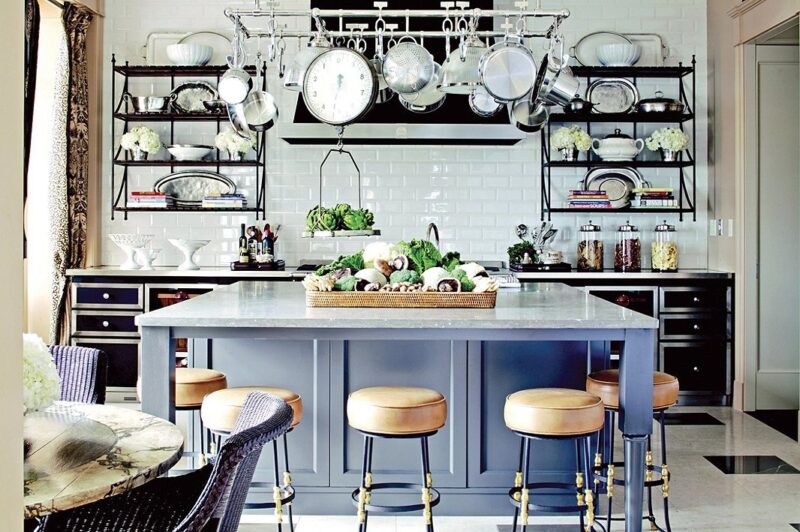
Have you ever noticed how a small Parisian bistro feels welcoming even before you sit down? The space is usually compact, the furniture simple, yet the atmosphere feels balanced, intentional, and timeless.
French bistro style works because it blends practicality with character, not decoration for decoration’s sake.
Every chair, light, and surface serves a purpose while quietly contributing to the mood.
This guide looks at how to bring that same feeling into your own space, whether it is a dining room, kitchen corner, café, or hospitality setting.
Why French Bistro Style Feels Effortless
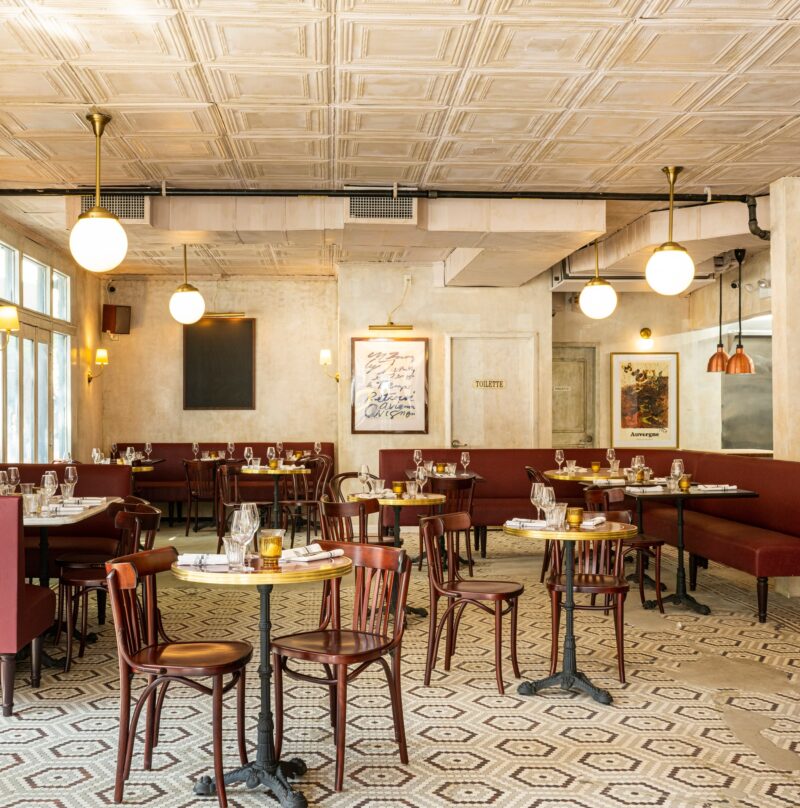
French bistro interiors rarely feel staged, yet nothing is accidental. The appeal comes from consistency and familiarity rather than novelty.
These spaces evolved to serve daily life, not photoshoots, and that history shows in the layout and choices.
A bistro-style interior usually relies on a tight palette, repeated materials, and furniture that prioritizes comfort over visual drama.
This creates an environment where people naturally linger without feeling overstimulated.
Key foundations of the style include:
- A limited range of materials such as wood, metal, and stone
- Repetition of similar chairs and tables rather than mixed styles
- Practical layouts that encourage conversation and flow
This approach makes the space feel grounded. When everything works together quietly, the room feels finished even without decorative excess.
Lighting That Sets the Mood
Lighting plays a central role in French bistro interiors, but it rarely takes center stage visually.
The goal is warmth and consistency, not statement fixtures.
Soft, layered lighting encourages relaxed meals and long conversations.
Wall sconces are a common choice because they free up table space and create an even glow across the room.
Pendant lights are often simple, placed low enough to feel intimate but not obstructive.
Effective bistro lighting usually follows a few practical rules:
- Warm light temperatures that avoid harsh white tones
- Multiple smaller light sources instead of one central fixture
- Fixtures with simple silhouettes and matte finishes
Traditional Parisian bistros favored wall lighting because gas and early electric systems distributed light more evenly along walls than ceilings, shaping the aesthetic we still associate with them today.
This layered approach prevents shadows and keeps the space inviting at all hours.
Red Table Cloths as a Classic Bistro Signal
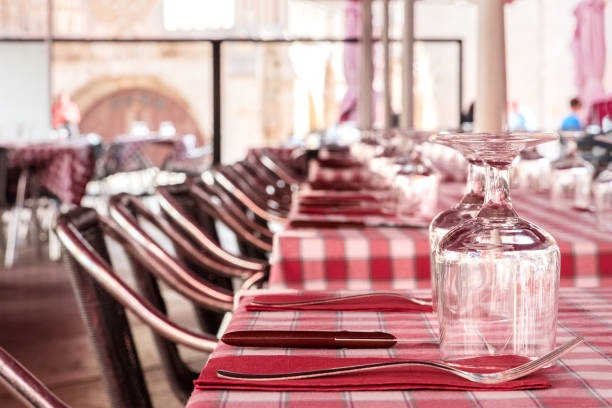
Among the most recognizable elements of bistro décor are red table cloths, often paired with white accents or simple table settings.
They signal warmth, tradition, and a sense of everyday ritual rather than formal dining.
In French bistro settings, red table cloths are not about bold decoration. They act as visual anchors that bring consistency across multiple tables while softening the room.
The color adds warmth against wood floors and metal chairs without overpowering the space.
When using red table cloths effectively:
- Choose solid or subtle woven textures instead of loud patterns
- Keep table settings minimal so the cloth remains the focus
- Pair with neutral walls and seating for balance
This is what makes the space feel cohesive instead of busy.
Seating That Balances Comfort and Durability
Bistro seating is designed for use, not display. Chairs need to be comfortable enough for long meals but durable enough for constant movement.
This balance is why certain designs appear again and again.
Bentwood chairs, woven café chairs, and simple wooden frames dominate bistro interiors.
Their shapes are familiar and practical, which helps the space feel approachable rather than curated.
Common seating characteristics include:
- Lightweight construction that allows easy rearranging
- Slight flexibility or contouring for comfort
- Neutral or natural finishes that show wear gracefully
Rather than mixing many chair styles, bistros usually repeat the same model. This repetition reduces visual noise and reinforces the relaxed, everyday character of the space.
Table Proportions and Layout Matter More Than Style
In French bistro design, tables are chosen for size and spacing before appearance. Small round or square tables allow flexibility and maximize seating without crowding.
A well-planned layout keeps pathways clear and encourages casual interaction. Tables are close enough to feel lively but not so close that privacy disappears.
Typical bistro table principles:
- Compact dimensions suitable for two or four people
- Durable surfaces like wood, laminate, or stone
- Simple bases that allow chairs to slide in easily
When tables and chairs work together spatially, the room feels natural. Guests focus on conversation rather than navigating the furniture.
Classic Materials That Age With Character
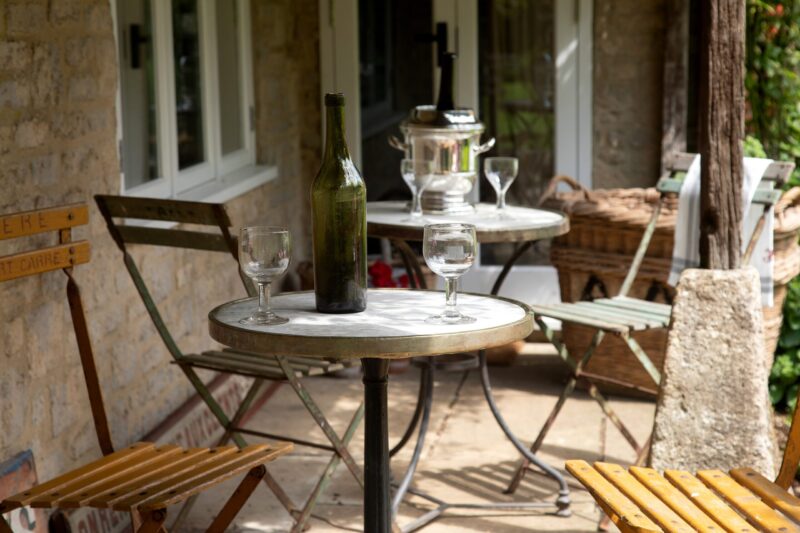
Materials play a quiet but powerful role in bistro interiors. French bistros favor surfaces that improve with age rather than needing constant replacement.
Wooden tabletops, tiled floors, and painted plaster walls show wear without looking neglected. Small imperfections add to the atmosphere rather than detract from it.
A typical material palette includes:
- Solid or veneered wood with visible grain
- Ceramic or mosaic tiles in neutral tones
- Metal accents with brushed or patinated finishes
These materials create visual continuity. Over time, they develop a lived-in quality that makes the space feel authentic rather than newly styled.
Small Details That Define the Style
French bistro style comes together through small, repeated details rather than bold features. These elements are often overlooked but make the difference between inspired and authentic.
Simple framed mirrors, chalkboard menus, and modest wall art contribute to the sense of place. Tableware is functional, not decorative, reinforcing the everyday nature of the space.
Look for details such as:
- Plain white or off-white dishware
- Simple glassware without heavy ornamentation
- Minimal signage with clear typography
Each detail reinforces the idea that the space exists for use. Nothing feels precious or untouchable, which is central to the bistro experience.
Mixing Old and New Without Breaking the Mood
One reason French bistro style remains relevant is its flexibility. New elements can be introduced without disrupting the overall feel if they respect the core principles.
Modern lighting, updated materials, or contemporary chairs can work when they follow the same proportions and restraint.
The key is consistency, not age.
A helpful approach includes:
- Keeping silhouettes simple even with modern materials
- Matching finishes across old and new elements
- Avoiding overly sculptural or trend-driven pieces
This balance allows the space to evolve naturally. The result feels current but rooted.
Building a Bistro Atmosphere That Lasts
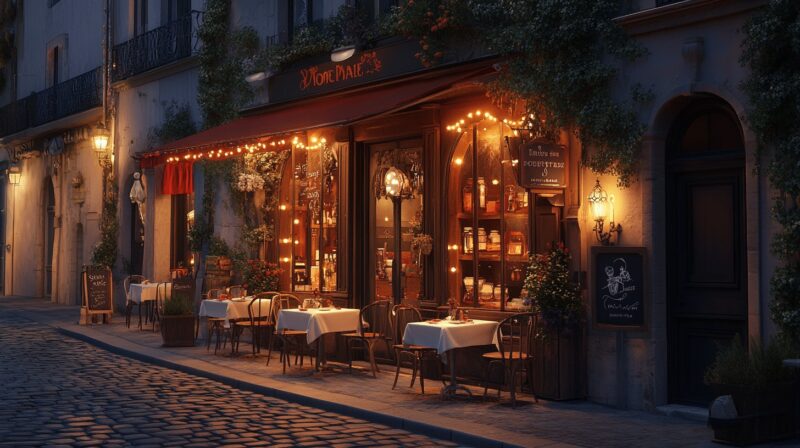
French bistro style succeeds because it prioritizes experience over appearance.
Lighting creates warmth without drama, seating supports comfort without excess, and details like red table cloths add rhythm and familiarity.
When these elements work together, the space feels welcoming from the first glance.
The strength of this style lies in repetition, proportion, and materials that age well.
By focusing on these fundamentals, you can create an interior that feels lived-in rather than styled.
Whether applied at home or in a commercial setting, French bistro design offers a timeless framework that remains practical, adaptable, and genuinely inviting.