


Learning how to play the Farkle dice game is easier than most beginners expect, and once you understand the basic scoring rules, it quickly becomes one of the most entertaining tabletop games you can bring to a family night or a casual hangout.
New players usually come in expecting complicated math or endless special combinations, yet the game is surprisingly smooth once you see a few examples in action.
This guide walks you through everything you need to know to start playing confidently, from scoring patterns to strategy.
What You Need To Start Playing Farkle
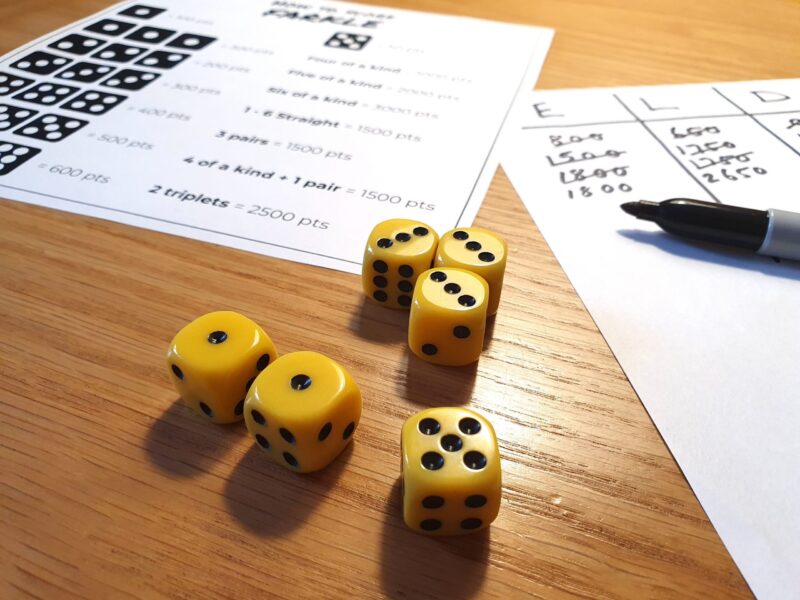
Farkle is traditionally played with six dice, a flat surface, and something to track points. You can use a notepad or any digital score tracker.
The game works best with two to six players, although larger groups can rotate quickly if everyone understands the flow.
What makes this game so appealing is its simplicity. You roll six dice, try to score points, and decide if you want to roll again or bank your current points.
That combination of chance and decision making creates a rhythm that keeps the game interesting long after the first round.
Let’s go through a setup checklist:
- Six standard dice
- A notepad or digital score sheet
- At least two players
- A clear surface for rolling
- Agreement on the winning score (usually 10,000)
These small steps prepare the table and help everyone start on the same page.
Basic Farkle Scoring Rules Explained
Understanding the scoring rules is the foundation of learning the Farkle dice game.
Most of the fun comes from recognizing scoring combinations as soon as the dice land and deciding whether risking another roll is worth it.
For beginners, the scoring chart below simplifies what you need to remember.
While there are house variations, these values represent the most commonly accepted system among players.
| Combination | Points |
| Single 1 | 100 |
| Single 5 | 50 |
| Three of a kind | 100 x face value (except 1s are 1000) |
| Four of a kind | 1000 |
| Five of a kind | 2000 |
| Six of a kind | 3000 |
| Straight (1 to 6) | 1500 |
| Three pairs | 1500 |
Once you start applying these numbers in real rolls, the game’s decision making becomes clearer and much more exciting.
Tip: Always remove scoring dice after each roll and keep the remaining dice ready for the next decision.
Taking Your Turn: Rolling, Scoring, and “Farkling”

A typical turn begins with rolling all six dice. After the dice settle, you separate any scoring dice and choose whether to keep rolling or stop and bank the points from that turn.
If you roll again and the dice show no scoring combination, you “Farkle”, which resets your turn’s points to zero.
This tension between risk and reward is what defines the game.
New players quickly learn that greed can turn a winning roll into a complete loss.
This is also where beginners realize the value of consistency rather than chasing every possible high score.
While learning, keep an eye on reliable scoring patterns. A few small gains often outperform risky attempts at high combos.
A “Farkle” means rolling and scoring nothing, which immediately ends your turn with zero points gained.
When To Keep Rolling and When To Stop
Knowing when to roll again separates beginners from more confident players. The general rule is simple.
The fewer dice you have left, the higher the risk. Rolling six dice has great scoring potential, but rolling only two puts you much closer to a Farkle.
As you play more rounds, you will start developing a sense for which situations justify taking the risk and which are better banked.
Here are some guidelines for you:
- Roll again when you still have at least three non scoring dice.
- Bank your points when you have only one or two dice left, especially if you are ahead.
- If your score is far behind, controlled risks may pay off.
- Avoid rolling again after achieving a high scoring combo unless you need to catch up.
Check out Winna for thrilling games and rewarding bonuses, where similar decision based play styles keep the experience exciting through every round.
This creates a smoother learning curve when stepping into more advanced Farkle strategy.
Reaching The Minimum Score To Get On The Board
Most versions of the Farkle dice game require players to achieve a minimum score before officially entering the scoreboard.
This entry threshold is often set at 500 or 1000 points in a single turn.
Until a player reaches that mark, all their points reset after each attempt.
This rule adds a fun level of pressure, especially for beginners who are eager to get started but find themselves one Farkle short of qualifying.
Once you enter the scoreboard, every successful turn adds to your total.
This structure keeps the early game competitive and prevents players from winning too quickly.
This rule is important because:
- Encourages careful early game decision making
- Prevents runaway leads
- Teaches beginners the value of recognizing strong rolls
- Adds suspense to the opening rounds
This milestone also introduces players to the emotional rhythm of Farkle, balancing patience with exciting moments of opportunity.
Common Beginner Mistakes To Avoid

Most new players fall into similar patterns during their first few games. For example, many players become overly excited when they hit their first three of a kind and immediately push their luck with the remaining dice.
Others overlook simple scoring dice like single 1s or 5s, which can rescue a potentially bad roll.
Another frequent issue is miscounting points, which disrupts the flow. Keeping a small scoring table nearby solves this problem instantly.
Watch out for these mistakes:
- Ignoring small scoring dice that could secure a safe turn
- Risking final rolls with too few dice left
- Forgetting to take scoring dice out before rolling again
- Trying to match advanced players too quickly
Correcting these habits leads to smoother games and better overall strategy.
Strategy Basics: Building Confidence As You Play
Beginners should prioritize steady scoring over risky plays. A good principle is recognizing when a roll is good enough as it is.
You do not need perfect combos every turn to win. For instance, three 5s or a couple of 1s can provide a stable foundation to bank points, especially when the table is competitive.
Over time, this approach teaches you how to read each roll in context rather than relying on luck alone.
Did you know? Statistically, rolling all six dice gives you the highest probability of forming at least one scoring combination.
This is why many players take bigger risks early in the round.
Combining simple awareness with basic probability gives beginners a strong starting advantage.
Playing With House Rules: Variations You May Encounter
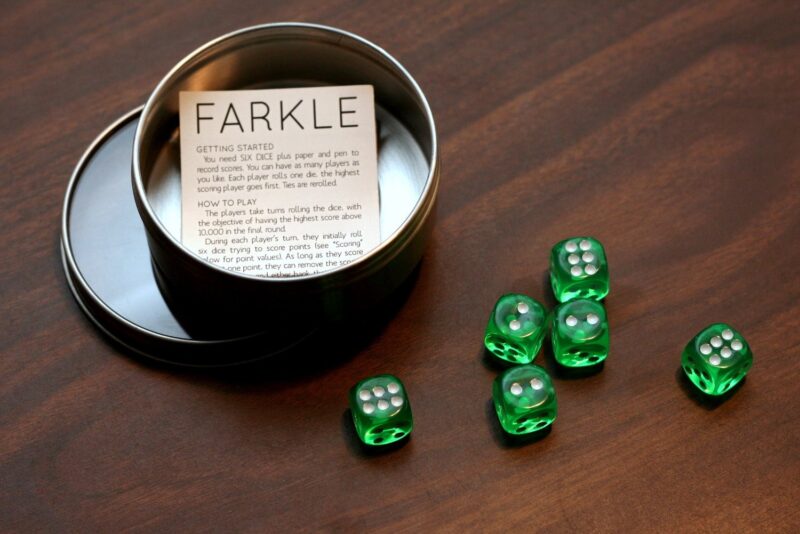
Many groups develop small rule variations to keep the Farkle dice game interesting.
These house rules do not change the core gameplay but introduce new twists that keep experienced players entertained.
Some variations adjust scoring values, while others add optional bonuses for rare combinations.
As a beginner, it helps to clarify rules before starting the game so every player understands what to expect.
This avoids confusion when scoring unique rolls.
Popular House Variations
- Bonus points for rolling four or more of a kind
- Penalty points for rolling three consecutive Farkles
- Extra reroll opportunities on specific combinations
- Races to smaller winning totals like 5,000 for quicker games
Experimenting with variations can make each session feel fresh while still preserving the recognizable structure of Farkle.
Conclusion
The Farkle dice game is one of those rare tabletop games that blend chance, rhythm, and decision making in a way that feels instantly enjoyable for beginners.
Once you understand the scoring rules and get a feel for when to roll or bank your points, the entire game opens up into a highly entertaining experience that suits families, casual groups, and game night enthusiasts.
With the strategies and examples shared here, you now have everything needed to start playing with confidence.
Each round teaches something new, and with a little practice, you will quickly recognize patterns that improve your score and make the game even more fun.
Farkle rewards patience, smart risk taking, and a good sense of timing, making it a long lasting favorite for anyone who gives it a chance.