


Online gambling in Europe is a fascinating mix of freedom, control, and national pride. While the European Union promotes a single market where goods and services flow easily across borders, gambling remains an exception.
Each country shapes its own rules, deciding who can run casinos, how they can advertise, what games are allowed, and how players are protected. The result is a patchwork of regulations where two neighboring nations might treat the same betting website in completely opposite ways.
Below is a clear look at why this happens, how EU principles interact with national sovereignty, and what it means for both operators and players who gamble online.
Why Gambling Isn’t Harmonized in the EU
Unlike other sectors such as banking or transport, gambling is not subject to full harmonization under EU law. That means there’s no single EU-wide regulation that dictates how countries must handle online gambling.
Instead, each member state regulates it independently, guided only by some overarching EU principles.
Platforms such as Stake casino highlight how operators must adapt to each country’s individual regulatory framework.
Treaty on the Functioning of the European Union (TFEU)
It guarantees the freedom to provide services across member states (Article 56). In theory, an online casino licensed in Malta should be able to serve customers in France.
But gambling is treated as a special case because of its moral and social implications.
Court of Justice of the European Union (CJEU) Decisions
Over the years, the CJEU has ruled that gambling restrictions can be justified if they protect consumers, prevent fraud, or limit problem gambling.
However, any restriction must be proportionate and consistent. A country can’t claim to protect players while simultaneously promoting its own state lottery.
Lack of EU Directive
The EU has never passed a directive to unify gambling laws, mainly because member states view gambling as part of their cultural and fiscal sovereignty. Tax revenues, public morals, and even religious values play into it.
So, the EU allows flexibility – countries can set their own rules as long as they don’t unfairly discriminate against operators from other EU states.
Historical Background
For most of the 20th century, gambling in Europe meant state-controlled lotteries and betting offices. The internet changed everything.
- 1990s–2000s: Online gambling platforms emerged, often licensed in small jurisdictions like Malta or Gibraltar that encouraged the industry with clear frameworks and low taxes.
- 2006–2015: Many countries tried to ban foreign sites, arguing consumer protection. But CJEU rulings often struck down those bans when they were too restrictive.
- Today: Most EU countries now have some form of licensing system for online gambling, though the details vary dramatically.
The story of European online gambling is one of transition – from total monopolies to regulated markets where private companies can compete, usually under strict supervision.
Why Each Country Takes Its Own Approach
The differences stem from several layers – political, cultural, economic, and moral. No two member states see gambling in exactly the same way.
| Factor | How It Shapes Policy | Example |
|---|---|---|
| Cultural attitude toward gambling | Countries with a history of lotteries and betting (like the UK, before Brexit) tend to be more liberal. Others with strong religious or moral traditions are more restrictive. | Italy allows online casinos but heavily regulates ads; Poland blocks most unlicensed sites. |
| Economic interest | Some governments view gambling as a valuable tax source, while others worry about social costs. | Malta and Gibraltar rely on gaming revenue for jobs and GDP. |
| Consumer protection | Governments vary in how they define and enforce responsible gambling standards. | Sweden’s Spelinspektionen enforces strict self-exclusion systems; others rely on voluntary tools. |
| Technological infrastructure | Advanced digital economies tend to regulate online gambling early and efficiently. | Estonia and Denmark were early adopters of fully digital systems. |
Each country’s mix of these elements results in a unique national framework.
Major Models of Gambling Regulation in the EU
There are roughly three main regulatory models across Europe, with hybrid versions in between.
1. State Monopoly Systems
In these countries, gambling (especially lotteries and sports betting) is run by state-owned or state-approved entities. The rationale is moral control and public funding.
Examples
- Finland: Veikkaus Oy holds exclusive rights for all gambling activities.
- Norway (non-EU but EEA member): Similar monopoly under Norsk Tipping.
- France: State influence remains through FDJ and PMU, though competition opened slightly.
- Easy to control advertising and player protection.
- Ensures gambling profits go to public welfare.
- Often criticized for inefficiency and lack of innovation.
- Can conflict with EU free-market principles.
2. Licensing Systems

Most EU countries now use a licensing model where private operators can apply for authorization if they meet strict standards.
Examples
- Malta: Pioneered the model in 2004 with the Malta Gaming Authority (MGA).
- Denmark: Opened its market in 2012, balancing competition with consumer protection.
- Spain, Sweden, Netherlands: Adopted licensing frameworks in recent years.
- Encourages innovation and competition.
- Keeps players within regulated, tax-paying environments.
- Harder to control gambling addiction when many operators compete.
- Enforcement against unlicensed offshore sites remains difficult.
3. Partial or Restricted Systems
Some countries allow private operators only in certain sectors or under strict limitations.
Examples
- Germany: Until recently, each federal state had its own rules. A national treaty now allows online slots and poker, but under tight controls.
- Poland: Only state-run online casino, but private sports betting under license.
- Austria: Lottery and casino rights remain largely monopolized.
- Provides some competition while preserving public control.
- Easier to phase in reforms gradually.
- Creates market confusion.
- Encourages players to use foreign or black-market sites.
The Role of EU Institutions
Even though the EU doesn’t regulate gambling directly, several institutions influence how national laws evolve.
European Commission
The Commission monitors whether national rules violate EU principles of free movement and fair competition. It can open infringement procedures if it believes a member state unfairly blocks foreign operators.
However, since 2017, the Commission has largely stepped back from pursuing gambling-related infringement cases, preferring to let countries self-regulate.
European Court of Justice (CJEU)
The Court remains the key player. Its judgments over the years form the de facto framework for online gambling in Europe. For example, rulings have emphasized:
- States can restrict gambling for moral or public order reasons.
- Restrictions must not be arbitrary or protectionist.
- Operators must be treated fairly if they meet legal requirements.
European Parliament and Consumer Policy
While not legislating gambling directly, EU-level bodies focus on consumer rights, anti-money laundering (AML), and data protection (GDPR) – all of which impact gambling platforms.
Operators must comply with:
- AMLD5 and AMLD6 directives (anti-money laundering).
- GDPR for player data security.
- Digital Services Act (DSA) regarding online platform accountability.
Key Case Studies Across Europe

Malta
Malta is home to hundreds of gaming operators and software providers. The Malta Gaming Authority (MGA) issues several classes of licenses for casinos, poker, sports betting, and lotteries.
Key traits:
- Low tax rates compared to large markets.
- Transparent compliance system recognized by the EU.
- Operators can service multiple EU countries if those countries don’t explicitly prohibit cross-border activity.
Malta’s model became the blueprint for modern online gambling regulation.
Sweden
Sweden liberalized online gambling in 2019 but keeps a firm grip on compliance through Spelinspektionen, its gaming regulator.
Highlights:
- Mandatory self-exclusion register (Spelpaus).
- Strict limits on bonuses and marketing.
- Heavy penalties for unlicensed activity.
The Swedish model aims to balance market competition with strong player protection.
Germany
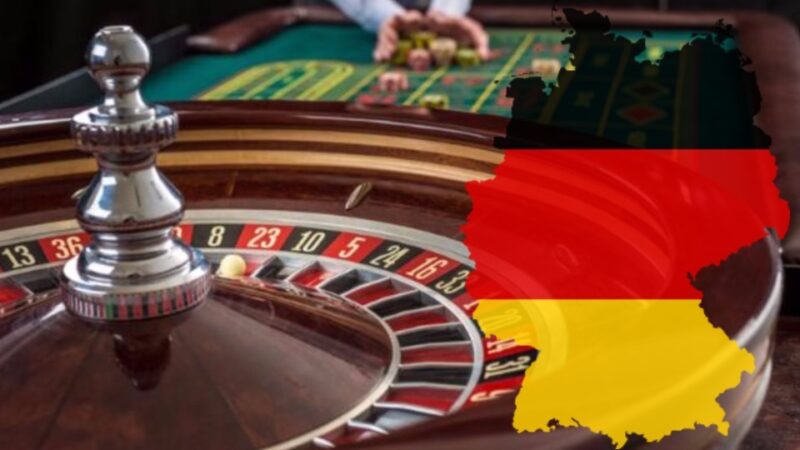
For years, each German state managed gambling differently, leading to chaos and legal challenges.
The Interstate Treaty on Gambling 2021 (Glücksspielstaatsvertrag 2021) finally created a unified framework.
Main features:
- Online poker and slots permitted under license.
- Monthly deposit limits for players.
- No live casino games allowed online.
- Centralized supervisory body (Gemeinsame Glücksspielbehörde der Länder).
Germany’s cautious pace shows how moral and political factors still shape gambling more than market logic.
France
France permits private operators under ARJEL (now ANJ) for sports betting, horse racing, and poker, but casino-style games remain offline-only.
Features:
- High tax rates.
- Tight ad rules to prevent “aggressive” marketing.
- Strong consumer protection and AML requirements.
France’s partial liberalization reflects its balance between cultural conservatism and economic opportunity.
Netherlands
After years of banning foreign sites, the Netherlands launched its legal online gambling market in 2021 under the Kansspelautoriteit (KSA).
Key traits:
- Strict licensing requirements.
- Centralized self-exclusion register (Cruks).
- Large fines for illegal advertising or unlicensed operations.
Despite a late start, the Dutch market quickly grew into one of the most regulated and transparent in Europe.
Why So Many Players Still Use Offshore Sites

Even with strict regulation, a significant portion of European players still gamble on unlicensed or foreign platforms. The reasons include:
- Better odds or bonuses abroad.
- Lack of local game variety.
- Slow licensing processes that delay legitimate options.
- Geo-blocking and payment restrictions that frustrate users.
Governments try to combat this through IP blocking, payment bans, and player education. But as long as offshore sites remain accessible and appealing, total control remains elusive.
The Economic Weight of Online Gambling in Europe
Online gambling is one of the fastest-growing digital sectors in the EU, driven by technology, marketing, and consumer behavior.
| Metric | 2025 Estimate | Main Drivers |
|---|---|---|
| Total EU online gambling revenue | Over €40 billion annually | Sports betting, online slots, mobile access |
| Average annual growth rate | 7–9% | Legalization and mobile penetration |
| Countries with highest per capita spend | Finland, Sweden, UK (pre-Brexit), Malta | Cultural acceptance and disposable income |
While numbers vary, gambling taxes and licensing fees provide billions in annual revenue for EU governments. That financial incentive alone ensures no single EU law will replace national control anytime soon.
Balancing Freedom, Protection, and Technology
The next decade will test how EU countries manage three major pressures.
1. Cross-Border Consistency
Players move freely within the EU, but their gambling rights don’t. A person licensed to bet in one country may find themselves blocked in another. The lack of harmonization will continue to create friction for both users and companies.
2. Player Safety and Addiction
Technology allows for advanced tracking and self-exclusion systems, yet implementation differs across countries. A pan-European self-exclusion mechanism has been discussed for years but hasn’t materialized.
3. Emerging Technologies
Crypto casinos, NFTs, and decentralized betting platforms are challenging regulators. Some countries, like Estonia and Malta, are experimenting with blockchain-based compliance systems, while others hesitate to touch them.
What It Means for Players

For anyone gambling online in the EU, the main advice is simple:
- Check the license. Look for authorization from a recognized national regulator (MGA, Spelinspektionen, ANJ, KSA, etc.).
- Avoid offshore platforms without clear oversight or consumer protection.
- Know your limits. Many licensed sites offer deposit caps and self-exclusion tools.
- Watch for fair play certifications (e.g., eCOGRA, iTech Labs).
It’s not about chasing bonuses but finding environments that combine entertainment with safety.
What It Means for Operators
Running a legal gambling business in the EU demands strategy and compliance expertise.
- Choose jurisdiction wisely. Malta, Gibraltar, and Isle of Man (non-EU) remain hubs for licensing.
- Localize content and marketing. Advertising laws differ drastically – what’s acceptable in Spain might be illegal in Belgium.
- Prepare for AML and GDPR audits. Data handling and player verification are under constant scrutiny.
- Stay adaptable. Regulatory updates happen yearly, sometimes monthly.
Success in Europe comes from operating transparently across multiple systems rather than exploiting gaps between them.
The Road Ahead
Online gambling in the EU is a living example of how sovereignty and integration can coexist. Each country guards its cultural and fiscal space while trying to respect shared European values. That tension keeps the industry dynamic and often unpredictable.
The coming years will bring more convergence on responsible gambling and technology standards, but not full unification. Gambling will likely remain one of the few industries where Europe speaks with many voices, each shaped by its own moral compass and economic priorities.