

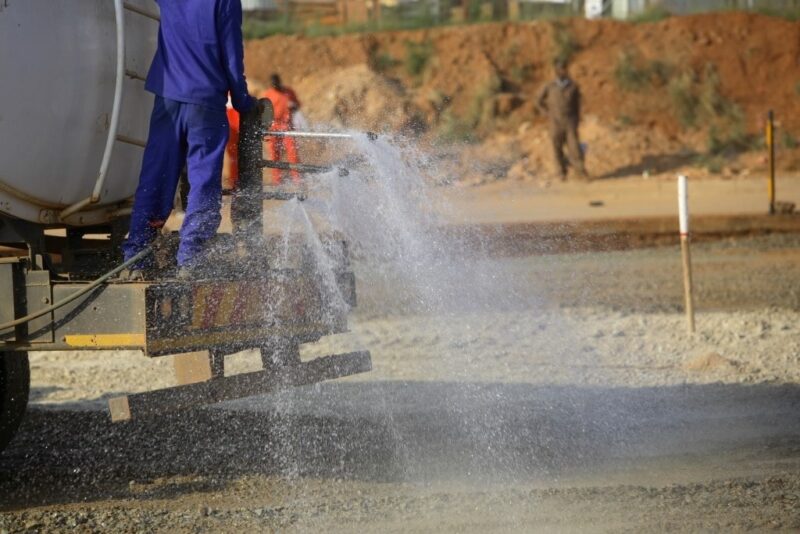
Dust suppression refers to the strategies and technologies used to control airborne particles generated during industrial, construction, agricultural, and mining activities.
Dust may look harmless, but fine particulate matter can pose risks to workers’ health, reduce visibility, damage equipment, and affect surrounding communities.
Because dust is produced anywhere materials are moved, crushed, stored, or transported, managing it effectively is an essential part of responsible site operations.
Airborne dust can come from a wide range of sources.
Unpaved roads, stockpiles, demolition work, and material handling processes all create conditions where fine particles easily become suspended in the air.
Natural factors such as wind, dry weather, and vehicle movement can intensify these emissions.
Understanding the origins and behaviour of dust is the first step in selecting an appropriate method of control.
The Science of Dust: PM10 vs. PM2.5
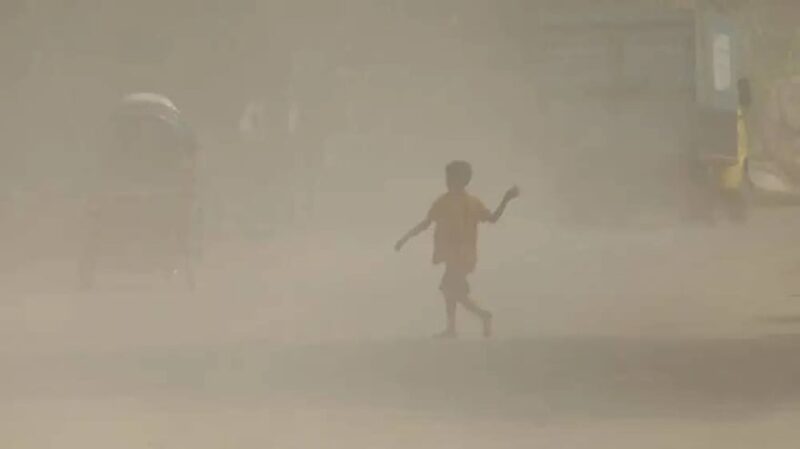
To control dust, one must first understand its composition. Dust is generally categorized by particle size.
PM10 refers to particles with a diameter of 10 micrometers or less, typically found near crushing and grinding operations.
These are inhalable and can cause significant irritation. However, the greater danger often lies with PM2.5 (2.5 micrometers or less).
These ultra-fine particles are invisible to the naked eye and can travel deep into the lungs and enter the bloodstream.
Effective suppression strategies must target both visible dust (nuisance dust) and these microscopic hazards, requiring different approaches for each.
Why Dust Control Matters
Health and Safety Considerations
Workplace exposure to dust, especially respirable silica or coal dust, has long been linked to short- and long-term health problems.
Fine particulate matter can enter the respiratory system and cause irreversible damage.
Over time, this exposure may contribute to chronic obstructive pulmonary disease (COPD), silicosis, cardiovascular stress, and other health complications.
Ensuring safe air quality is therefore fundamental to protecting workers and reducing long-term liability for employers.
Dust also affects safety in more immediate ways. In industrial environments, reduced visibility can lead to accidents involving vehicles and machinery.
Furthermore, certain types of organic or metallic dusts are combustible; if allowed to accumulate in enclosed spaces, they can create severe fire or explosion hazards.
Environmental and Operational Impacts
Dust that settles on land or water can influence local ecosystems by altering soil quality or affecting plant growth.
From an operational perspective, dust is abrasive and destructive.
Accumulation on equipment can clog air filters, wear down bearings, and overheat engines, leading to increased maintenance costs and unscheduled downtime.
For sites located near residential areas, unmanaged dust often leads to community complaints, reputational damage, and potential regulatory fines which can halt operations entirely.
Methods of Dust Suppression
Water-Based Suppression and the “Slipstream” Effect
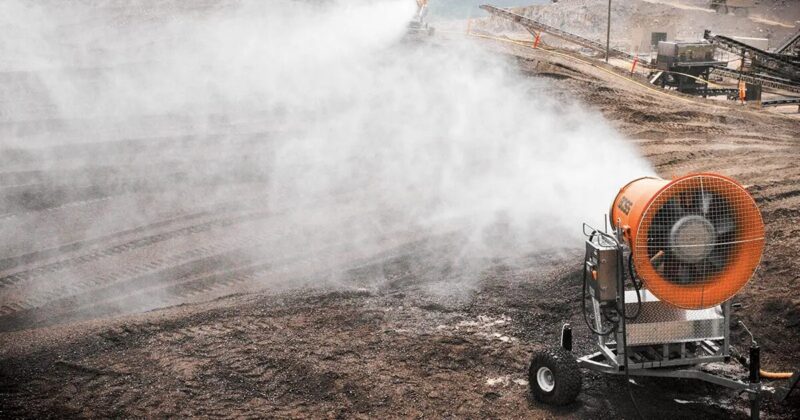
Water remains one of the most widely used dust suppression methods due to its simplicity and adaptability.
However, simply dousing a site with a hose is often ineffective against fine dust due to the “slipstream effect.”
If a water droplet is significantly larger than the dust particle, the dust will simply flow around the droplet rather than colliding with it.
To solve this, modern Atomized Mist technology is used. This involves breaking water down into millions of tiny droplets that match the size of the dust particles.
When the droplet and dust particle are of similar size, they collide and merge, becoming heavy enough to fall to the ground.
Spray systems, misting cannons, and fixed sprinklers can be tuned to create these specific droplet sizes depending on the site layout.
Chemical Additives
In some cases, adding surfactants, binding agents, or polymers to water enhances its dust-control properties.
These additives can improve moisture retention, stabilise surfaces, or create a thin, durable crust over static stockpiles (known as “capping”).
Chemical treatments are especially useful in dry climates or at sites where water availability is limited, as they reduce the frequency of application required.
Mechanical and Structural Controls
Physical barriers such as windbreaks, enclosures, and covers offer another way to minimise dust movement.
Enclosing conveyor belts or installing walls around stockpiles helps limit the spread of particles.
Adjusting site design—such as positioning stockpiles away from dominant wind directions—can also contribute to more effective dust control.
Operational Practices
Operational procedures play an important role in reducing dust emissions. Limiting vehicle speeds on unpaved roads significantly reduces the “kick-up” of dust.
Keeping surfaces damp through scheduled wetting and ensuring proper maintenance of transfer chutes all help minimise the generation and spread of dust.
Training workers to follow dust-aware practices strengthens the overall approach.
Technology and Monitoring in Modern Dust Suppression

Increasingly, dust suppression strategies are supported by monitoring equipment that measures airborne particulate levels in real time.
This allows operators to respond more quickly to changing conditions and ensure compliance with air-quality targets.
Automated systems can activate misting or spraying equipment when dust levels rise, reducing the need for manual intervention and saving water and energy.
Advanced systems, such as those described at dust suppression, integrate modern control methods with efficient water use and flexible deployment.
These systems provide more consistent dust management compared with traditional manual approaches, often utilizing weather sensors to adjust spray intensity based on wind speed and direction.
Creating a Site-Specific Dust Management Plan
An effective dust suppression plan must be tailored to the characteristics of each site.
Factors such as climate, material type (hydrophobic vs. hydrophilic), activity level, and environmental constraints all influence the choice of method.
For example, a demolition site may require mobile fog cannons, whereas a quarry haul road may benefit more from hygroscopic salts that pull moisture from the air.
Conducting a thorough assessment helps ensure that the selected measures address the main sources of dust without creating unnecessary operational burdens.
Monitoring should continue after the plan is implemented. Adjustments may be required as seasons change, as activities increase or decrease, or as regulations evolve.
Combining multiple control strategies often delivers the most reliable results.
Conclusion
Dust suppression is a vital part of maintaining healthy, safe, and compliant operations across many industries.
By understanding the sources of dust and using a combination of water-based systems, mechanical controls, additives, and good operational practices, organisations can significantly reduce particle emissions.
Continued monitoring and thoughtful planning ensure that dust is kept under control, supporting both worker wellbeing and environmental protection.