


Did you know that in many cities, more than half of dog related fines are issued not because dogs are aggressive, but because owners misunderstand leash rules? Most violations happen in ordinary parks, walking paths, or beaches where rules quietly change by zone or by time of day. That confusion is understandable. Regulations are rarely written in plain language, and signs are often overlooked.
Knowing where dogs can legally be off leash is not just about avoiding fines. It protects other people, wildlife, and dogs themselves. It also builds trust between dog owners and the wider community. This guide explains how to identify legal off leash areas, how to read official signs, what restrictions are most common, and what happens when rules are ignored, all without legal jargon or guesswork.
Understanding What “Off Leash” Actually Means Under the Law
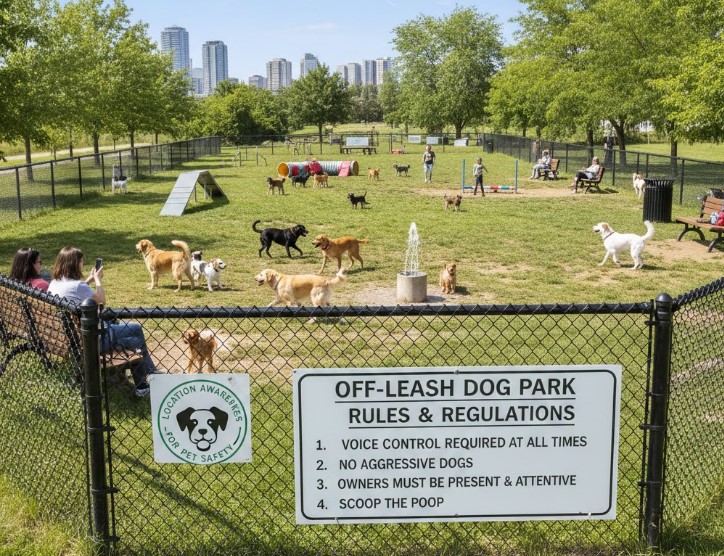
Before looking at signs or locations, it helps to understand how the term “off leash” is used legally. In most jurisdictions, off leash does not mean unrestricted freedom. It means dogs may be without a physical leash only in clearly designated areas and under specific conditions.
These areas are formally approved spaces, usually created by city councils or park authorities. They are managed environments with defined boundaries, implied supervision expectations, and rules that still apply even without a leash.
In practice, this usually means:
- Dogs must remain under voice control at all times
- Aggressive or disruptive behavior is still prohibited
- Owners must be present and attentive
- Local nuisance laws still apply
Designated off leash areas are the safest and most reliable places to allow a dog freedom of movement. These spaces are planned with foot traffic patterns, wildlife protection, and public safety in mind, and they are typically mapped or listed by local authorities.
When visiting unfamiliar areas, understanding where your dog is in relation to those boundaries can support better decision making. For owners who want to know more about how location awareness can be used responsibly in public spaces, tools designed for tracking can offer an added layer of confidence without replacing legal obligations.
How to Read Signs Without Guessing or Assuming

Signs are usually written to cover multiple scenarios in one space. Unfortunately, many owners rely on interpretation rather than reading carefully.
Look closely for specific wording. “Dogs allowed off leash” means permission. “Dogs must be leashed unless otherwise posted” means the opposite. Time based permissions are also common and easy to miss.
Common sign elements include:
- Icons showing a dog with or without a leash
- Time ranges listed under permissions
- Phrases like “designated area only”
- References to local ordinances
Always read the entire sign. Partial reading leads to most misunderstandings. When signs conflict, the more restrictive rule usually applies.
Important note
If an area is legally off leash, signage must clearly indicate that status. Absence of a sign does not create permission.
Time Based Rules and Why They Exist
Some public spaces allow off leash access only during specific hours. This is common in urban parks and beaches where usage changes throughout the day. Early mornings and late evenings are often designated for off leash activity.
These rules balance dog exercise needs with public safety and shared use. During peak hours, children, joggers, and tourists increase, raising the risk of conflict even with friendly dogs.
Typical time based rules include:
- allowed before 9 a.m.
- allowed after sunset
- Seasonal restrictions during summer months
Always check posted times carefully. Even a dog that is usually allowed off leash can become a violation outside approved hours.

Places Where Dogs Are Almost Always Restricted
Certain locations are consistently subject to strict leash requirements, regardless of local flexibility elsewhere. These restrictions exist for safety, hygiene, and legal liability reasons.
The most common restricted areas include:
- School grounds and playgrounds
- Sports fields during active use
- Nature reserves and wildlife protection zones
- Event spaces during permitted gatherings
Beaches may seem relaxed, but many prohibit dogs entirely during tourist seasons or restrict access to specific zones. Violations in these areas often carry higher fines.
These rules are rarely negotiable and are enforced more strictly than general park rules.
Special Conditions That Still Apply in Off Leash Areas
Even in legal off leash zones, conditions still exist. In fact, it increases expectations placed on the owner.
Dogs must respond reliably to recall commands. Owners must intervene immediately if behavior becomes disruptive. Waste removal is mandatory everywhere.
Some areas impose additional conditions such as:
- Limits on the number of dogs per person
- Breed specific restrictions under local law
- Prohibitions during maintenance or weather alerts
Failure to meet these conditions can result in removal from the area or future access restrictions.
Consequences of Ignoring Regulations
Penalties for leash violations vary widely but are rarely trivial. Fines are the most common consequence, but repeat offenses can lead to more serious outcomes.
Potential consequences include:
- Monetary fines
- Confiscation of the dog in extreme cases
- Mandatory training orders
- Civil liability if an incident occurs
Beyond legal penalties, ignoring leash rules damages public trust. Many off leash privileges exist only because communities believe owners will respect boundaries.
Making Confident and Lawful Choices as a Dog Owner

Knowing where dogs can legally be off leash requires more than intuition. It requires reading signs carefully, respecting time based rules, and understanding that permission must always be explicit.
When in doubt, keep the leash on. Choosing caution protects your dog and preserves access for others. Responsible ownership is visible, quiet, and consistent. It does not rely on loopholes or assumptions.
Public spaces work best when everyone follows the same rules. With a little attention and planning, off leash time can remain safe, legal, and enjoyable for all involved.