


Motorcycle helmet laws in the United States are not uniform. Requirements change dramatically depending on the state, the rider’s age, insurance status, and even years of riding experience.
For riders who commute, tour across state lines, or relocate, misunderstanding helmet laws can lead to fines, legal exposure, or problems after an accident.
This guide breaks down motorcycle helmet laws by state, clearly explaining which states require helmets for everyone, which apply partial rules, what exceptions exist, and how penalties are enforced.
States With Universal Motorcycle Helmet Laws

Universal helmet law states require all motorcycle riders and passengers to wear a helmet, regardless of age or experience.
These laws are typically strict and leave little room for interpretation. States such as California, New York, Washington, Oregon, Maryland, and New Jersey fall into this category.
In these states, helmets must usually meet DOT safety standards, and wearing novelty or non compliant helmets is treated the same as wearing no helmet at all.
Law enforcement officers can stop riders solely for helmet violations, and penalties apply even if no accident occurs.
Universal-law states tend to show lower motorcycle fatality rates related to head trauma. Because the rules are clear, riders are rarely able to argue exceptions.
For travelers, entering one of these states without a compliant helmet can immediately put them at risk of citation.
States With Partial Helmet Laws Based on Age
Partial helmet law states apply helmet requirements based primarily on age, most commonly under 18 or under 21. Examples include Texas, Florida, Pennsylvania, Ohio, and Colorado.
In these states, adult riders above the age threshold may legally ride without a helmet, but minors must wear one at all times. Some states add additional conditions, such as mandatory eye protection or proof of insurance coverage.
Partial helmet laws create complexity, especially when passengers are involved. An adult rider may legally ride without a helmet, while a younger passenger must still wear one. Violations involving minors often carry higher fines and stricter enforcement.
For riders crossing state lines, partial laws are one of the most common sources of confusion and unintentional violations.
States With Insurance-Based Helmet Exceptions
Some states combine age rules with insurance-based exceptions, meaning adult riders may ride without a helmet only if they carry a minimum level of medical coverage. Florida and Michigan are the most cited examples.
In Florida, riders over 21 may ride without a helmet only if they carry at least $10,000 in medical insurance coverage.
Michigan allows certain riders to forgo helmets if they meet insurance and licensing requirements.
These laws matter greatly after an accident. Insurance companies may scrutinize whether the rider truly met the legal exemption requirements at the time of the crash.
In disputed injury claims, riders often seek guidance from a motor vehicle accident attorney to determine whether helmet non use affects liability, compensation, or coverage under state law.
Failure to meet insurance requirements can turn a legal exemption into a violation retroactively.
States With No Helmet Requirement for Adult Riders
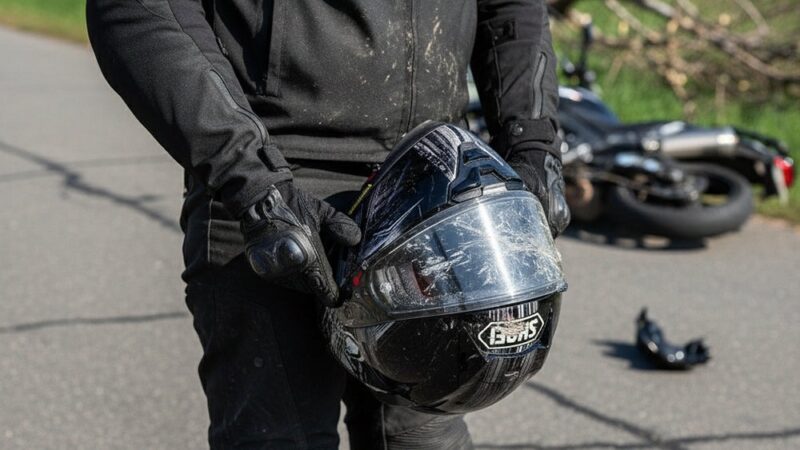
A smaller group of states allows most adult riders to operate motorcycles without helmets, with minimal restrictions.
States such as Illinois, Iowa, and New Hampshire fall into this category.
Even in these states, helmets are typically required for younger riders, and eye protection laws still apply.
While riding without a helmet may be legal, it does not eliminate legal risk.
After accidents, helmet non use can still influence injury claims, insurance settlements, and court decisions.
Insurers may argue that injuries were aggravated due to lack of protective equipment, even when helmet use was optional under state law.
Legal freedom does not necessarily mean legal immunity, especially in serious injury cases.
Motorcycle Helmet Law Overview by State Category
The table below summarizes how helmet laws are generally structured across the U.S.
| State Category | Helmet Requirement | Examples |
| Universal | All riders and passengers | California, New York |
| Partial (Age-Based) | Required for minors only | Texas, Ohio |
| Insurance-Based | Optional with coverage | Florida, Michigan |
| No Adult Requirement | Optional for most adults | Illinois, Iowa |
This table provides orientation, but each state has specific statutory language that defines enforcement, penalties, and exceptions. Riders should always verify the current law before riding.
Approved Helmet Standards and Legal Compliance
Most states that require helmets specify that they must meet DOT (Department of Transportation) standards. This includes structural integrity, impact absorption, and secure retention systems.
Wearing a novelty helmet that lacks certification is legally equivalent to not wearing a helmet at all in most jurisdictions. Law enforcement officers may check for certification stickers during traffic stops.
From a legal standpoint, helmet compliance matters not just for citations but also for accident investigations. In injury cases, opposing parties may argue that a non compliant helmet failed to provide reasonable protection.
Choosing a certified helmet is both a safety decision and a legal safeguard, particularly in states with strict enforcement.
Penalties for Violating Motorcycle Helmet Laws

Helmet law violations are typically classified as traffic infractions, but penalties vary by state. Most violations result in fines, which may range from modest amounts to several hundred dollars depending on the jurisdiction.
Common penalties include:
- Monetary fines
- License points in some states
- Mandatory court appearances for repeat offenses
While jail time is rare, a helmet violation can complicate matters after an accident. In some states, a documented violation may be introduced as evidence of negligence in civil litigation.
For riders with prior traffic violations, repeated helmet offenses may trigger increased penalties or insurance rate hikes.
How Helmet Laws Affect Motorcycle Accident Liability
Helmet use can significantly affect legal outcomes after an accident, even when the rider is not primarily at fault.
In comparative negligence states, courts may reduce compensation if injuries are deemed more severe due to helmet non use.
This does not automatically bar recovery, but it can reduce damages awarded for head or brain injuries. The impact varies depending on:
- Whether helmet use was legally required
- Whether injuries are directly linked to helmet absence
- State-specific negligence rules
In universal helmet law states, failure to wear a helmet often carries greater legal consequences than in states where helmet use is optional.
After several states repealed universal helmet laws in past decades, motorcycle fatalities involving head injuries increased measurably within the first year. These data points are frequently cited when states debate reinstating stricter helmet requirements.
This ongoing legislative attention means helmet laws can change. Riders should stay updated, especially before long-distance trips or relocation.
Conclusion
Motorcycle helmet laws by state differ far more than many riders expect. From strict universal requirements to age-based and insurance-based exceptions, each state creates a unique legal environment.
Understanding where helmets are mandatory, where exceptions apply, and how penalties are enforced helps riders avoid fines, legal disputes, and insurance complications.
Whether riding locally or across state lines, knowing the law is just as important as knowing the road.