

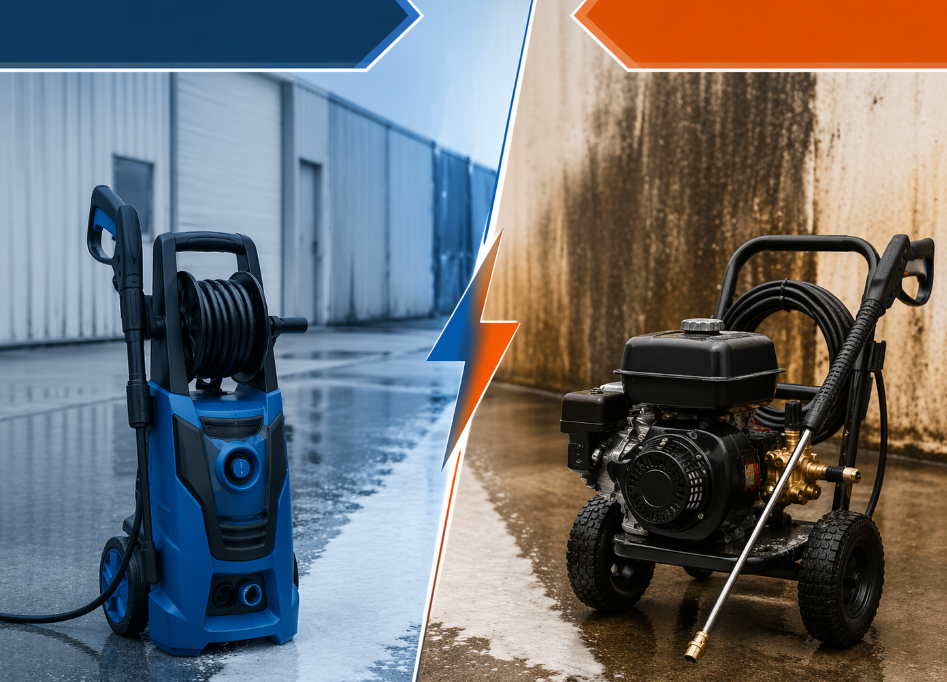
If you’ve ever stood in front of a dirty concrete floor or grease-covered equipment, you already know that not all pressure washers are built the same. The choice between electric and gas industrial pressure washers comes down to how much power you need, how often you use it, and what it costs you over time.
Most people focus on price first, but that’s not where the real difference shows up. It’s in daily use, maintenance, and how the machine holds up under pressure. Let’s go through it in a way that actually helps you decide.
Real-World Comparison: Electric vs Gas
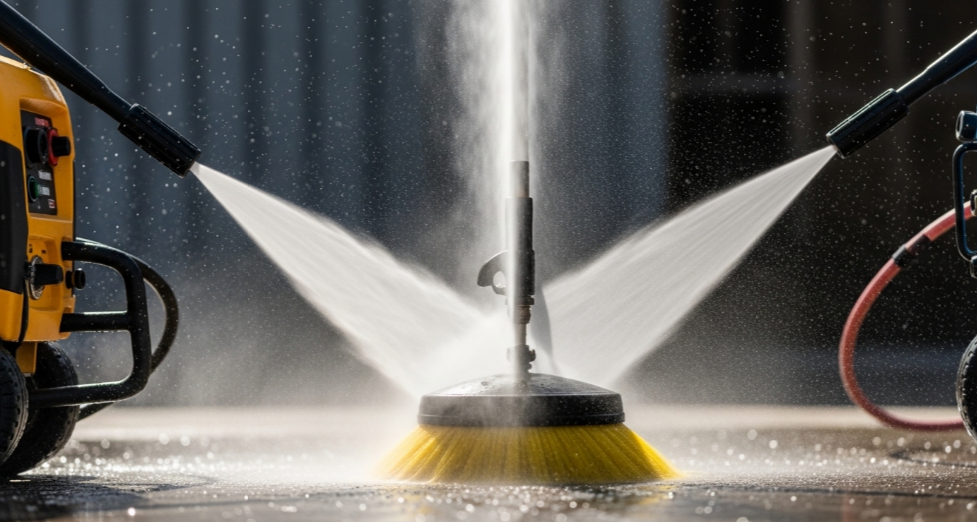
Instead of guessing, it helps to see how electric vs gas industrial pressure washers compare side by side.
| Feature | Electric | Gas |
| Power Output | Moderate to high | High |
| Mobility | Limited by cord | Fully portable |
| Noise | Low | High |
| Maintenance | Minimal | Regular servicing |
| Operating Cost | Lower | Higher due to fuel |
| Best Use | Indoor, light to medium jobs | Outdoor, heavy-duty work |
Electric units are easier to manage and cheaper to run. Gas machines are more capable when the workload increases.
What Really Matters: Power, Flow, and Workload
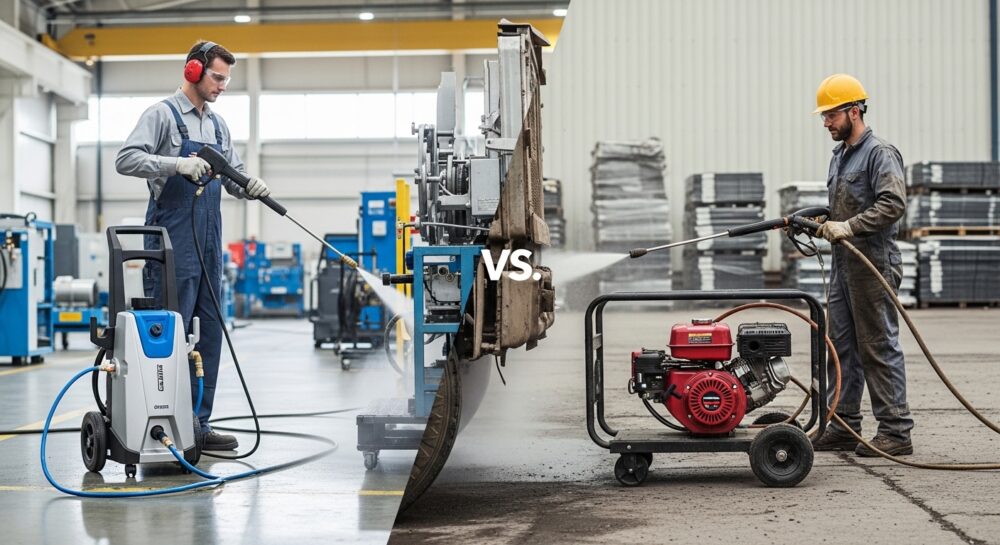
Before comparing electric vs. gas industrial pressure washers, it helps to understand what drives performance. Two numbers matter most: PSI and GPM. PSI measures pressure, and GPM measures water flow.
Higher numbers mean faster cleaning, especially on tough surfaces. Gas machines usually operate in the 2,500 to 5,000 PSI range, while electric units often sit lower, although newer models can reach similar levels in some cases.
Here’s the practical difference:
- Higher PSI cuts through grime faster
- Higher GPM rinses surfaces more efficiently
- Together, they reduce total cleaning time
Important: PSI alone doesn’t define performance. A balanced PSI and GPM setup determines how quickly a job gets done.
When people pick the wrong machine, it’s usually because they look at PSI only and ignore flow rate.
Electric Pressure Washers: Where They Make Sense
Electric industrial pressure washers get dismissed too quickly, but they solve very specific problems really well. If your work happens indoors or in controlled environments, they often make more sense than gas.
They are quieter, cleaner, and easier to manage. That matters in warehouses, food processing areas, or anywhere noise and emissions are an issue. Electric units also have fewer moving parts, which keeps maintenance simple.
Operating costs are another advantage. Electricity is cheaper than fuel, and there are no oil changes or engine servicing. Over time, that adds up.
You’ll feel the limits when jobs get heavy. Thick grease, large outdoor surfaces, or long continuous use can push electric machines beyond their comfort zone.
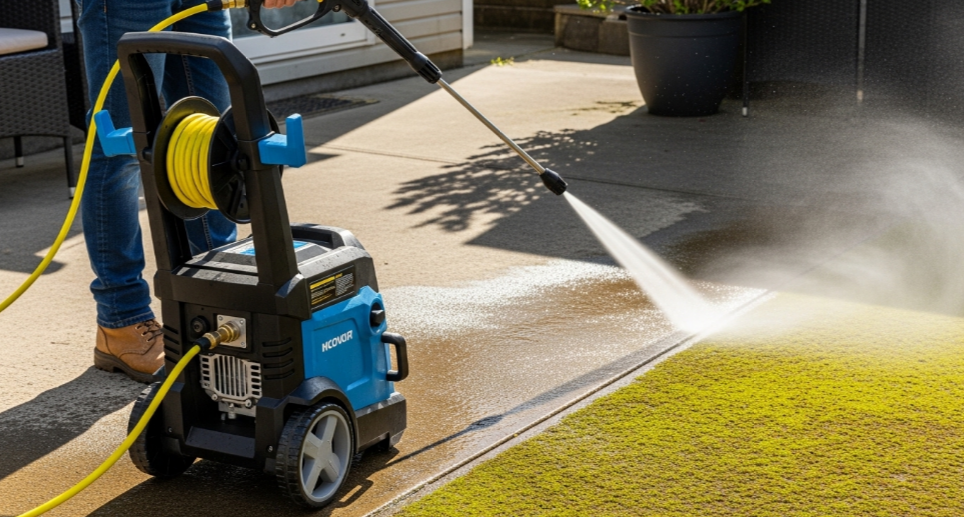
Gas Pressure Washers: Built for Heavy Work
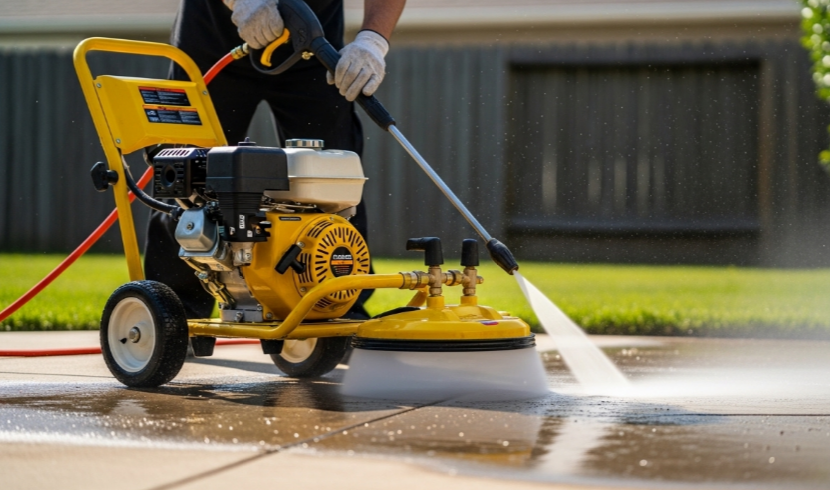
Gas-powered pressure washers are what most contractors rely on when the work gets serious. They’re not subtle, but they get the job done faster when conditions are tough.
The biggest advantage is independence. You’re not tied to a power source, which makes them ideal for construction sites, farms, and large outdoor areas. They also deliver higher output, which matters when you’re dealing with oil stains, heavy mud, or industrial buildup.
The trade-off shows up in maintenance and operating costs. Gas machines need regular oil changes, filter replacements, and fuel management. They’re also louder and produce emissions, so indoor use is not an option.
Still, if you’re working long hours on demanding jobs, gas machines hold up better under pressure.
Costs: Upfront vs Long-Term
Cost is where most decisions get made, but it’s also where people get it wrong. You need to look at both purchase price and ongoing expenses.
Electric pressure washers usually cost less upfront. Typical ranges fall between $100 and $400 for standard units, while gas models often start higher and can go beyond $600 depending on power.
But upfront price doesn’t tell the full story.
With electric machines, you’re paying for electricity and basic maintenance. With gas, you’re paying for fuel, oil, and more frequent servicing. Over time, those costs add up, especially if the machine runs daily.
Here’s how it breaks down in practice:
- Electric is cheaper to own long term for light to moderate use
- Gas becomes more cost-effective when productivity matters more than fuel costs
- Downtime from maintenance can cost more than either option if you rely on the machine daily
Where Most Buyers Get It Wrong
A lot of people assume gas is always better because it’s more powerful. That’s not always true. The right choice depends on where and how you’re working.
If you’re cleaning indoors, noise and emissions matter more than raw power. Electric wins there. If you’re dealing with large outdoor jobs and no access to power, gas is the only practical option.
If you’re not sure where to start, it’s worth looking at specialized suppliers like hotsyhouston.com, where equipment is matched to actual use cases rather than just specs. That kind of guidance helps avoid buying something that looks good on paper but doesn’t fit the job.
Practical Use Cases That Make the Decision Clear
Sometimes it helps to stop thinking in specs and think in real jobs.
Electric works better when:
- You clean indoor floors or equipment
- Noise restrictions are strict
- Jobs are shorter and more controlled
Gas makes more sense when:
- You clean large outdoor areas
- You need long run times without stopping
- You deal with heavy grime or industrial residue
Most businesses don’t need both, but some end up using electric for indoor work and gas for outdoor jobs.
A Quick Reality Check Before You Buy
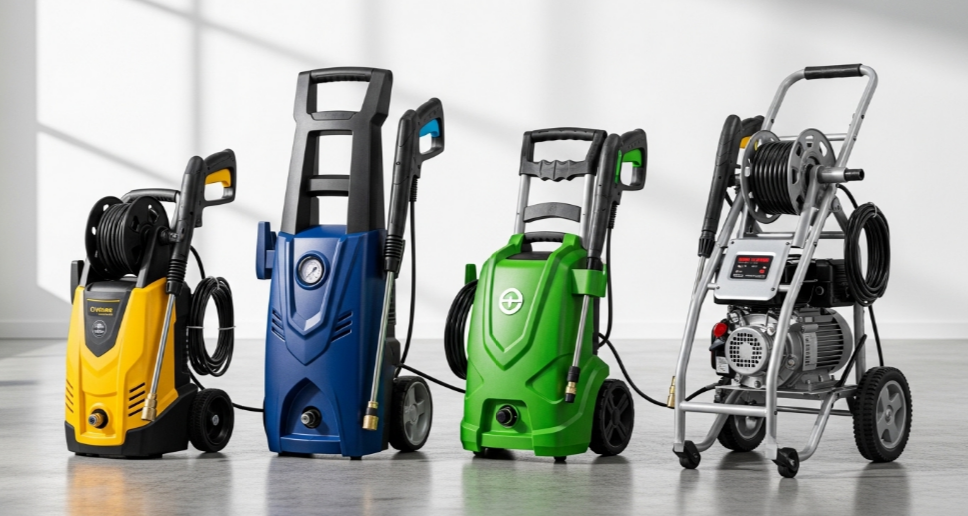
If you’re still deciding between electric vs gas industrial pressure washers, ask yourself three simple questions:
How often will I use it?
Where will I use it?
How tough are the cleaning jobs?
Answer those honestly and the right option becomes obvious.
A machine that’s too powerful wastes money and increases risk. One that’s too weak slows everything down and costs time.
FAQs
1. What PSI and GPM should you look for in an industrial pressure washer?
For industrial work, you should focus on both pressure and water flow, not just one number. A good starting point is around 3,000 PSI and at least 2.5 GPM for heavier cleaning jobs.
If you’re dealing with grease, concrete, or equipment, higher output will save time. Gas machines often go beyond 2,700 PSI and reach over 5 GPM, which is why they’re preferred for demanding tasks.
2. Can you use hot water systems with both electric and gas pressure washers?
Not always. Most hot water pressure washers are gas-powered or diesel-based because heating water requires more energy than electric units typically provide.
Hot water makes a real difference when dealing with oil and grease. Cold water struggles to break down those materials, while heated systems clean faster and more effectively.
3. Does higher PSI always mean better cleaning?
No, and this is one of the most common mistakes people make.
PSI helps break dirt loose, but GPM is what actually carries it away. Both need to work together.
A machine with slightly lower PSI but higher flow can clean faster than one with high pressure but weak water output. Too much PSI can also damage surfaces like wood or soft concrete.
The goal is balance, not maximum pressure.
4. When does renting a pressure washer make more sense than buying?
If you only need a pressure washer a few times a year, renting is often the better option.
Rental costs are usually far lower than buying, especially for high-end gas machines. For occasional use, you avoid maintenance, storage, and long-term costs.
Buying makes sense when you use the machine regularly or rely on it for work. In those cases, availability and time savings matter more than upfront cost.
5. What are the most common mistakes people make when choosing a pressure washer?
Most problems come from picking the wrong machine for the job.
Here are the mistakes that show up the most:
- Choosing based on PSI alone instead of PSI and GPM
- Buying gas when electric would be enough, which increases cost and maintenance
- Choosing electric for heavy-duty outdoor work, which slows everything down
- Ignoring power source limitations, especially outlet access
These mistakes don’t just affect performance. They usually lead to wasted money or constant frustration during use.
Final Thoughts
There’s no universal winner in the electric vs gas industrial pressure washers debate. Each type is built for a different kind of work.
Electric machines are efficient, easier to maintain, and better for controlled environments. Gas machines are stronger, more flexible, and built for heavy-duty use.
The right choice comes down to matching the machine to the job, not picking the most powerful option available.