

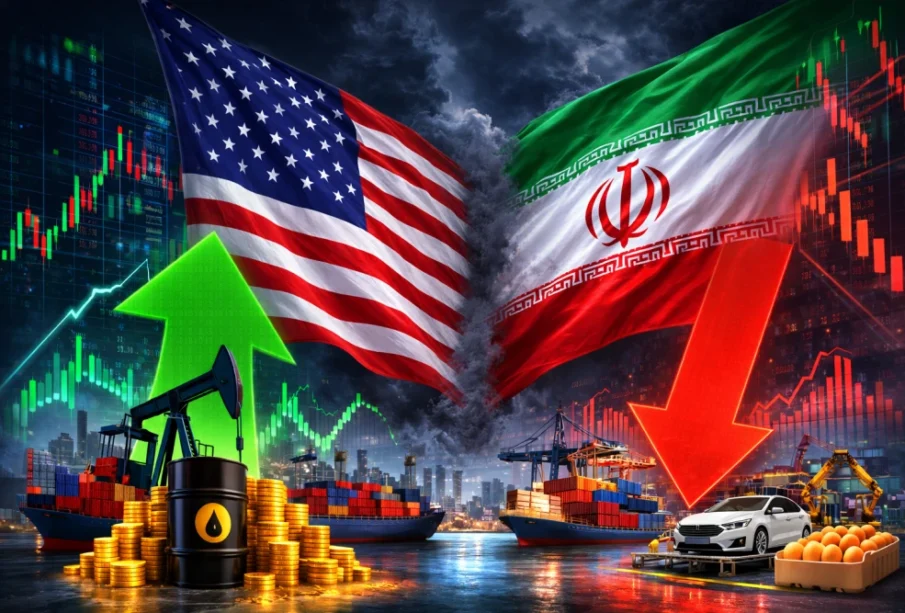
The connection between war and stock markets usually comes down to one thing, uncertainty. The Iran war has made that very clear. Markets are not reacting to headlines alone. They are reacting to supply disruptions, energy prices, and what central banks might do next.
What stands out right now is that markets are moving in two directions at the same time. Oil and risk indicators are still flashing warning signs, while equities in some regions are holding up better than expected.
That gap tells you how investors are thinking. They are not ignoring the war, but they are pricing in the possibility that it will not last forever.
The first shock markets felt
When the conflict started, the reaction was immediate. Investors moved quickly out of risk and into safer assets. Stocks dropped across regions, and the moves were not subtle.
Global indexes fell as energy concerns took over. European and Asian markets dropped around one to two percent early on, while the US market also pulled back.
What drove that reaction was simple. Oil supply looked at risk, and markets understood what that means. Inflation goes up, growth slows down, and central banks lose flexibility.
At the same time, gold moved higher and airline stocks dropped, which fits the usual pattern when energy costs rise.
Key point – Markets reacted first to risk of disruption, not to confirmed damage.
That early phase set the tone. From that moment, everything started revolving around energy.
Why oil is driving almost everything
To understand stock markets right now, you have to look at oil before anything else. The Iran war has disrupted one of the most important routes in the world, the Strait of Hormuz.
Around 20 percent of global oil flows through that route. When it is disrupted, prices move fast.
At one point, oil prices jumped sharply, with Brent crude rising from around $70 to well above $100 during the conflict.
That kind of move feeds directly into markets through a few channels:
- Higher fuel costs for companies
- Increased inflation pressure
- Reduced consumer spending
- Tighter monetary policy expectations
What makes this situation more complex is that physical oil prices and futures prices are not fully aligned. Some traders are betting the crisis will ease, while others are reacting to actual shortages.
That split creates instability. Markets do not have a clear anchor.
How investors are trying to make sense of it
If you look at market behavior now, it feels inconsistent at first. Stocks are not collapsing. In some cases, they are rising.
That is because investors are not pricing the present, they are pricing expectations. Right now, the dominant expectation is that tensions may ease or at least stabilize.
A lot of investors rely on tools and systems to track these shifts in real time, especially when volatility picks up. Some platforms help break down trends and signals quickly. If you are trying to keep up with fast-moving markets, that is where you need tools like https://www.vectorvest.com/.
Recent data shows global stocks holding near record highs despite the conflict, with investors focusing on potential diplomatic progress.
That tells you something important. Markets are forward-looking, even when the situation on the ground is still uncertain.

The role of inflation and central banks
The Iran war is not just about energy. It feeds directly into inflation, and that brings central banks into the picture.
When oil prices rise, inflation tends to follow. That puts pressure on central banks to keep interest rates higher for longer. And higher rates usually mean lower valuations for stocks.
The International Energy Agency has already adjusted its outlook, noting supply disruptions and potential demand declines tied to high prices.
At the same time, analysts are warning that this oil shock could limit the ability of central banks to cut rates.
Here is how that plays out in markets:
|
Factor |
Market Effect |
| Rising oil prices | Higher inflation expectations |
| Higher inflation | Delayed rate cuts |
| Higher rates | Pressure on tech and growth stocks |
| Slower growth | Lower earnings expectations |
So even if stocks are stable today, the longer-term pressure is still building underneath.
Sector winners and losers
Not all parts of the market are reacting the same way. Some sectors are benefiting, while others are taking a hit.
Energy companies are the most obvious winners. Higher oil prices improve their margins and earnings outlook.
On the other side, sectors that rely heavily on fuel or stable costs are struggling.
Here is how the shift looks in practice:
- Energy stocks rising alongside oil prices
- Airlines and transport companies facing cost pressure
- Industrial companies dealing with supply chain uncertainty
- Consumer sectors adjusting to weaker demand
Airlines have already reported higher fuel costs and operational challenges tied to the situation.
The pattern is consistent with past energy shocks. When input costs rise, margins get squeezed unless companies can pass those costs on.

Why markets are not panicking right now
Given all this, you might expect markets to be in a full downturn. That is not what is happening.
The main reason is timing. Investors believe the situation could improve before it causes lasting damage.
There are signs supporting that view. Oil prices have pulled back at times when negotiations or ceasefire talks appear likely.
Markets have responded quickly to those signals. Stocks have rallied when oil drops, even if the underlying issues are not resolved.
Another factor is that corporate earnings have remained relatively strong so far. That gives markets a cushion.
Still, there is a clear caution in the background. Investors are not fully committing. They are waiting for clearer direction.
What could change the market direction next
Looking ahead, there are a few key triggers that could shift markets more decisively.
The most important one is the duration of the conflict. A short conflict leads to temporary volatility. A longer one changes the economic outlook.
Other factors include:
- Whether oil supply disruptions continue
- How quickly shipping routes reopen
- Central bank responses to inflation
- Corporate earnings adjustments
Right now, markets are assuming that conditions will stabilize. If that assumption proves wrong, pricing will adjust quickly.
There is also the risk of delayed impact. Energy shocks do not always hit immediately. Sometimes they show up in earnings and economic data a few months later.
Final perspective
The Iran war is affecting stock markets through a chain reaction that starts with energy and spreads across the entire financial system.
What makes this situation different is the gap between current reality and market expectations. Oil markets are still signaling stress, while equities are leaning toward a more optimistic outcome.
That gap will not last forever. Either the situation improves and markets are proven right, or the economic impact deepens and stocks adjust.
For now, the market is balancing between those two outcomes. Investors are not ignoring the risk. They are choosing to price what they think comes next.