

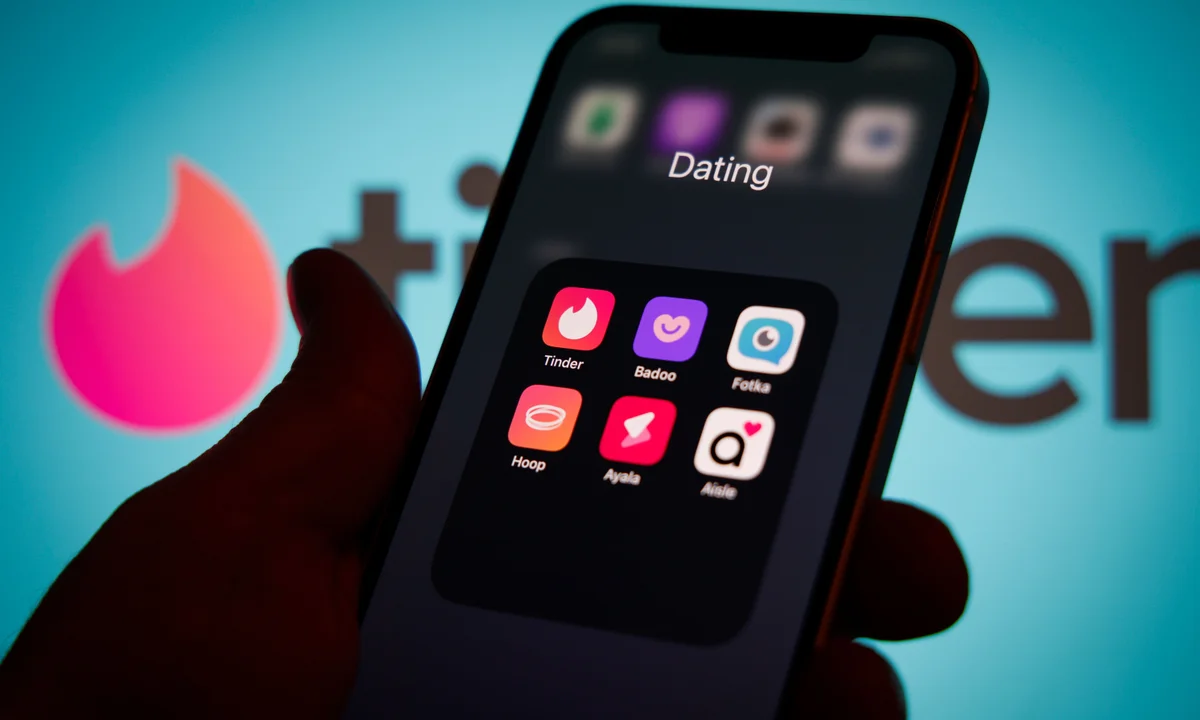
Tinder’s revenue declined 5.2% in 2025. Bumble’s revenue dropped 9.5% in the same period. Match Group’s flagship apps lost monthly active users for four consecutive quarters. The combined dating app market posted its first ever total revenue decline, slipping to $6.07 billion. None of these numbers come from a small player or a cherry-picked period. They come from the market leaders, in audited filings, during a year when the underlying user base hit 380 million globally.
Extinction is too strong a word. The big apps are not closing. The trend, however, is visible enough that investment analysts have begun to ask if the standard swipe-and-match format is reaching the end of its useful life. The signals point that way, even if the timeline remains open.
The Numbers Behind the Decline
The user metrics tell the story. Tinder reported a 9% year-over-year decline in monthly active users for the fourth quarter of 2025. Bumble lost 16% of its paying users in the same window. Total time spent on U.S. dating apps fell 7% in Q3 2025 according to platform analytics. Reports on Match Group’s earnings overhaul call it the first sustained downturn since the format’s invention.
Hinge is the only major platform showing growth, with revenue up 26% to $691 million. The pattern there is informative. Hinge positioned itself early as the app for people who want to delete dating apps, and the marketing translated into actual user retention. Hinge users report less burnout, longer relationships, and higher match-to-meet conversion rates than Tinder or Bumble users. The growth came at the expense of the platforms designed for indefinite swiping.
Why Users Are Burning Out
A Forbes Health survey of dating app users found that 78% reported emotional, mental, or physical exhaustion from the platforms. Among Gen Z users specifically, the number rose to 79%. The exhaustion is not abstract. Users describe specific complaints. Endless swiping with low conversion to actual dates. Conversations that fizzle within three messages. The “ghosting” pattern where matches disappear without explanation. Increased introduction of paid tiers that gate basic functions like seeing who liked you. Algorithm changes that surface fewer compatible matches in the free tier and reserve them for premium subscribers.
The result is a user product that feels engineered for revenue extraction rather than relationship formation. Users notice when the system optimizes against the outcome they are paying for, and the major platforms have done that visibly enough that even casual users now talk openly about it.

Where Online Dating Has Fragmented
The mainstream apps lost their universal appeal once the user base started to fracture. Niche platforms now serve every possible variation of preference, intent, and lifestyle. A daily-active queer platform exists separately from a daily-active religious platform, which exists separately from a sugar daddy website, a runner’s-only community, a Christian conservative platform, a polyamory-focused app, and dozens of others.
The fragmentation is healthier than it sounds. People who know what they want find it faster, and the platforms that match real intentions outperform the catch-all apps that tried to serve everyone.
The Return of Offline Meeting Formats
The most measurable countertrend is the growth of structured offline formats. Run clubs, supper clubs, board game nights, hobby-specific meetup events, and singles-focused tasting nights have all grown in attendance through 2025 and into 2026. Newsweek’s coverage of Gen Z dating app usage describes a generation that grew up with apps and is actively choosing to meet people in person instead of through them.
The offline formats work because they solve specific problems the apps cannot. Attendees self-select for participation, which screens out the highest-volume problem behaviors. The activity gives a built-in conversation topic that bypasses the awkward opening message. The single-event commitment is short enough to feel low-stakes.
People meet face to face, which compresses ten messages of guesswork into 30 seconds of in-person reading. The format also rebuilds the social muscles that years of app use atrophied for many users.

The Return of Professional Matchmaking
Professional matchmaking has resurged among users in their late twenties through forties who can afford the service. Modern matchmaking firms charge between $5,000 and $50,000 per year and provide vetted introductions, coaching, and a process built around explicit values alignment. The format feels like an extreme response, but the math works for users who calculate the cost of three years of dating app subscriptions, premium upgrades, and bad first dates against a single guided process.
Coverage of Gen Z burnout from dating apps frequently cites matchmaking as a service category that is back on the rise after a long dormancy. The service grew up alongside the early app boom but lost ground for fifteen years. Its return suggests that some segment of the dating market has decided that automation produces worse outcomes than curated human attention.
What the Apps Are Trying to Become
The platforms that produced the swipe-and-match format are not standing still. Tinder has rolled out video features, AI-assisted profile coaching, and intent-tagging tools that let users state explicitly if they want short-term or long-term partners. Bumble has integrated personality-style assessments and reduced the spam of low-quality matches by limiting daily swipes for non-paying users. Hinge has added prompts and voice introductions that move the interaction earlier into the human-to-human stage.
These changes may not reverse the decline. Industry coverage of dating app fatigue among Gen Z suggests that incremental product changes do not solve the structural problem, which is that the swipe interface itself trains users into behavior patterns that work against forming relationships. Adding features on top of that base may not be enough.

The Likely Path Forward
Three scenarios feel plausible based on the current data. In the first, the major apps consolidate into a smaller number of platforms that each serve a specific intent. Tinder becomes the casual platform, Hinge becomes the relationship platform, and the rest of the market splinters into vertical-focused niches. The aggregate market shrinks but each platform becomes more profitable per user.
In the second, dating moves substantially offline through community formats, hobbyist events, and matchmaking services. The apps survive as a smaller piece of the dating ecosystem rather than the dominant channel. People in their teens and twenties grow up assuming that meeting in person is the default and the apps are a supplement.
In the third, technology produces something that changes the format itself. AI agents that vet profiles, video-first interfaces that compress the screening process, or social platforms that integrate dating organically into existing communities could all replace the swipe model.
Whatever the exact path, the evidence points toward the swipe-and-match format losing its position as the default channel for adult dating. The decline is real, the user feedback is consistent, and the market is reorganizing around alternatives.
The traditional apps are not going extinct, but the era of treating them as the obvious starting point for meeting someone new is ending. The replacements may not look anything like the apps that came before them, and that may turn out to be the actual story of the next five years.