

Financial services used to think about security in layers. Firewalls, encryption, internal controls. That model is still there, but it is no longer the center of the conversation. What has changed is simple. Attackers do not break systems as often as they walk in using someone else’s identity.
If you look at recent patterns, this shift is clear. Credential theft and misuse now power the majority of breaches in financial institutions. That changes how banks, fintechs, and payment platforms think about identity. It is no longer just about verifying who you are once. It is about continuously asking if the person interacting with the system is still the right one.
The scale of breaches is forcing a rethink

The volume and frequency of breaches are no longer edge cases. They are part of normal operations. In 2024, about 46% of financial organizations reported experiencing a breach within two years. That is not a rare event. It is something institutions expect to handle.
What matters more is what gets exposed. Names, emails, account numbers, and behavioral data are all circulating. According to a 2025 DeepStrike cybersecurity report, the financial sector accounted for 27% of global breaches, with average losses around $5.9 million per incident.
This changes priorities. Security teams are less focused on preventing every breach and more focused on limiting how useful stolen data is.
Important point: once personal data is exposed, it cannot be “un-exposed.” Identity security becomes about reducing damage, not just preventing access.
Why identity is now the main attack surface
Attackers go where the return is highest. Financial systems store both money and verified identity data. That combination makes them efficient targets.
The method is usually straightforward. Attackers take leaked credentials from one breach and reuse them elsewhere. If the user reused passwords, the attacker gains access without exploiting any system vulnerability. This is often called credential stuffing.
There are a few reasons this works so well:
- Users reuse credentials across services
- Identity checks often rely on static data
- Legacy systems were not designed for continuous verification
Even internal threats play a role. Phishing remains dominant, with most attacks still entering through email channels . Once a single account is compromised, it can be used to move through systems unnoticed.
The shift toward continuous identity verification
Financial institutions are moving away from one-time identity checks. Opening an account used to be the main checkpoint. Now, identity is evaluated throughout the entire customer lifecycle.
This is where enhanced KYC becomes relevant. Instead of verifying identity only during onboarding, institutions extend verification into ongoing monitoring.
The idea is simple. Identity is not static. Behavior changes, devices change, and risk levels change. Systems need to reflect that.
Here is how this shows up in practice:
| Traditional model | Emerging model |
| Identity verified once | Identity verified continuously |
| Static data checks | Behavioral and contextual signals |
| Password-based access | Multi-layer authentication |
| Reactive fraud detection | Real-time risk scoring |
This shift is not theoretical. It is already shaping how financial products are designed.
What financial institutions are actually changing
The changes are not abstract. They show up in very specific parts of the customer experience.
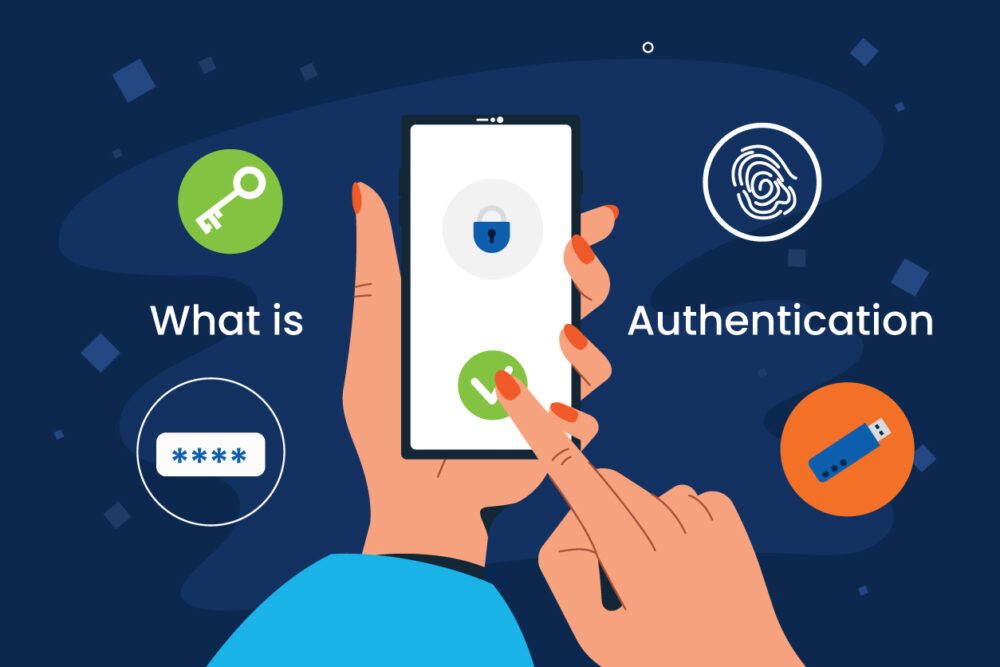
First, authentication is becoming layered. Passwords are still there, but they are rarely enough on their own. Multi-factor authentication, device recognition, and biometric checks are becoming standard.
Second, systems are watching behavior more closely. Not in a surveillance sense, but in a pattern sense. If a user logs in from a new location, uses a different device, or behaves differently, the system reacts.
Third, identity is being scored in real time. Many institutions now assign a risk score to each interaction based on available data. That score determines whether to allow, block, or step up verification.
These changes are driven by necessity. Attackers adapt quickly, and static defenses do not keep up.
The trade-off between security and user experience
This is where things get complicated. Stronger identity checks often mean more friction. Users do not like extra steps, especially when they are trying to complete simple tasks.
Financial institutions are constantly balancing two goals:
- Reduce fraud and account takeover
- Keep the user experience smooth
If security is too strict, customers leave. If it is too loose, fraud increases.
Most organizations are trying to solve this with adaptive security. The idea is to apply stricter checks only when risk is higher. For low-risk actions, the experience stays simple.
This approach depends heavily on data quality. If the system cannot accurately assess risk, it either blocks legitimate users or lets attackers through.
Third-party risk is becoming harder to ignore
Another major shift is how institutions think about their ecosystem. Financial services rarely operate in isolation. They rely on vendors, APIs, and external partners.
That creates new entry points. A TechMonitor study referenced in fintech breach analysis found that about 41.8% of breaches originate from third-party vendors.
This changes how identity is managed. It is no longer just about employees and customers. It includes:
- Contractors
- Vendors
- API integrations
- Automated systems
Each of these entities has access to systems, and each introduces risk. Managing identity across this extended network is significantly more complex.
Breaches have long-term identity impact

A 2026 academic study on the social cost of breaches found a measurable increase in identity theft incidents after major breaches, even accounting for delays between exposure and exploitation .
This matters because the impact is not immediate. Data from a breach can be used months or years later. That changes how institutions think about monitoring.
Identity security is no longer tied to a single event. It is an ongoing process that extends well beyond the initial breach.
Where identity security is heading next
The direction is becoming clearer. Identity is being treated as a dynamic signal rather than a fixed attribute.
Some trends are already visible:
- Increased use of behavioral biometrics
- More reliance on device-level intelligence
- Growth of identity scoring systems
- Expansion of zero trust architectures
Zero trust is especially important. It assumes that no user or system should be trusted by default, even inside the network. Every access request is evaluated independently.
This aligns with how breaches actually happen today. Once attackers gain access, they often move laterally. Continuous verification helps limit that movement.
Final thoughts
Data breaches are not new, but their role in shaping identity security is different now. They are no longer isolated failures. They are inputs into a larger system that is constantly adapting.
Financial institutions are learning to operate in an environment where some level of exposure is expected. The focus has shifted from prevention alone to resilience and response.
Identity sits at the center of that shift. It connects users, systems, and transactions. When it is weak, everything else becomes vulnerable.
What is changing is not just technology. It is how institutions think about trust. Instead of assuming identity is stable, they are treating it as something that needs to be verified continuously.
That is a more realistic model. It is also more demanding.
FAQs
1. How do data breaches directly impact customers in financial services?
Breaches expose personal and financial data that can be reused for fraud. Even if no immediate loss occurs, the data can be used later for account takeovers or identity theft.
2. Why are passwords no longer enough for security?
Passwords are often reused and easily stolen through phishing or breaches. Once exposed, they can be used across multiple services, making them unreliable as a single security layer.
3. What is continuous identity verification in simple terms?
It means checking a user’s identity not just at login, but throughout their interaction with a system, based on behavior, device, and context.
4. Are smaller financial companies at higher risk?
Yes. Smaller organizations often have fewer resources for security, making them more vulnerable to attacks, especially phishing and third-party risks.
5. How long does the impact of a data breach last?
The impact can last years. Stolen data is often reused over time, and identity theft incidents can occur long after the original breach.