


Group fitness programming has a bigger impact on class success than most instructors realize. Participants do not judge a workout only by how hard they sweat. They also judge how easy it is to understand, how smoothly it flows, and whether they feel confident throughout the session.
I learned this after teaching classes that looked great on paper but felt confusing in practice. Have you ever watched participants glance around the room because they missed the next movement? Have you noticed people stopping to ask questions during transitions? Those moments are usually signs that the workout structure needs work.
Making a class easier to follow does not mean making it easier physically. It means reducing confusion so participants can focus on movement, effort, and enjoyment.
Why Simplicity Usually Produces Better Results

Many instructors feel pressure to constantly introduce new exercises and creative formats. Variety has value, but excessive complexity often creates unnecessary obstacles.
When participants spend time figuring out what comes next, they spend less time moving with confidence. Beginners feel overwhelmed. Intermediate members lose rhythm. Even experienced participants can become distracted when instructions are unclear.
A simple structure creates several advantages:
- Participants learn the format faster.
- Transitions become smoother.
- Coaching cues become more effective.
- Members feel more successful.
- New attendees integrate into class more easily.
One pattern I have noticed over the years is that members rarely complain that a workout was easy to understand. They often complain when they feel lost.
Make the Workout Structure Visible
One of the quickest improvements any instructor can make is showing participants exactly what they are about to do.
Before class begins, people naturally want to know how long they will work, what exercises are coming, and when recovery periods occur. Clear communication removes uncertainty and helps participants mentally prepare.
Many facilities now use a Gym Workout Display to present workout details in real time. Instead of repeatedly explaining the next station or interval, instructors can direct participants to a visible reference point. That simple adjustment often reduces confusion and keeps classes moving efficiently.
Participants who understand the workout structure tend to focus more on performance and less on remembering instructions.
Important note: Visibility should support coaching, not replace it. Clear displays work best when paired with concise verbal guidance.
Build Predictable Class Segments
Predictability is often misunderstood. Some instructors worry that predictable programming becomes boring. In reality, predictable structure and varied exercises can work together extremely well.
Consider the difference between changing every element of a workout and maintaining a familiar framework. Most participants appreciate knowing how a session unfolds while still experiencing different movement challenges.
| Common Segment | Purpose |
| Warm up | Prepare movement patterns |
| Skill block | Teach technique |
| Main workout | Build fitness capacity |
| Finisher | Increase intensity |
| Cool down | Support recovery |
The exercises can change weekly, but the structure remains familiar. Members quickly understand expectations and spend less time adapting to the format itself.
Reduce Transition Time Between Exercises
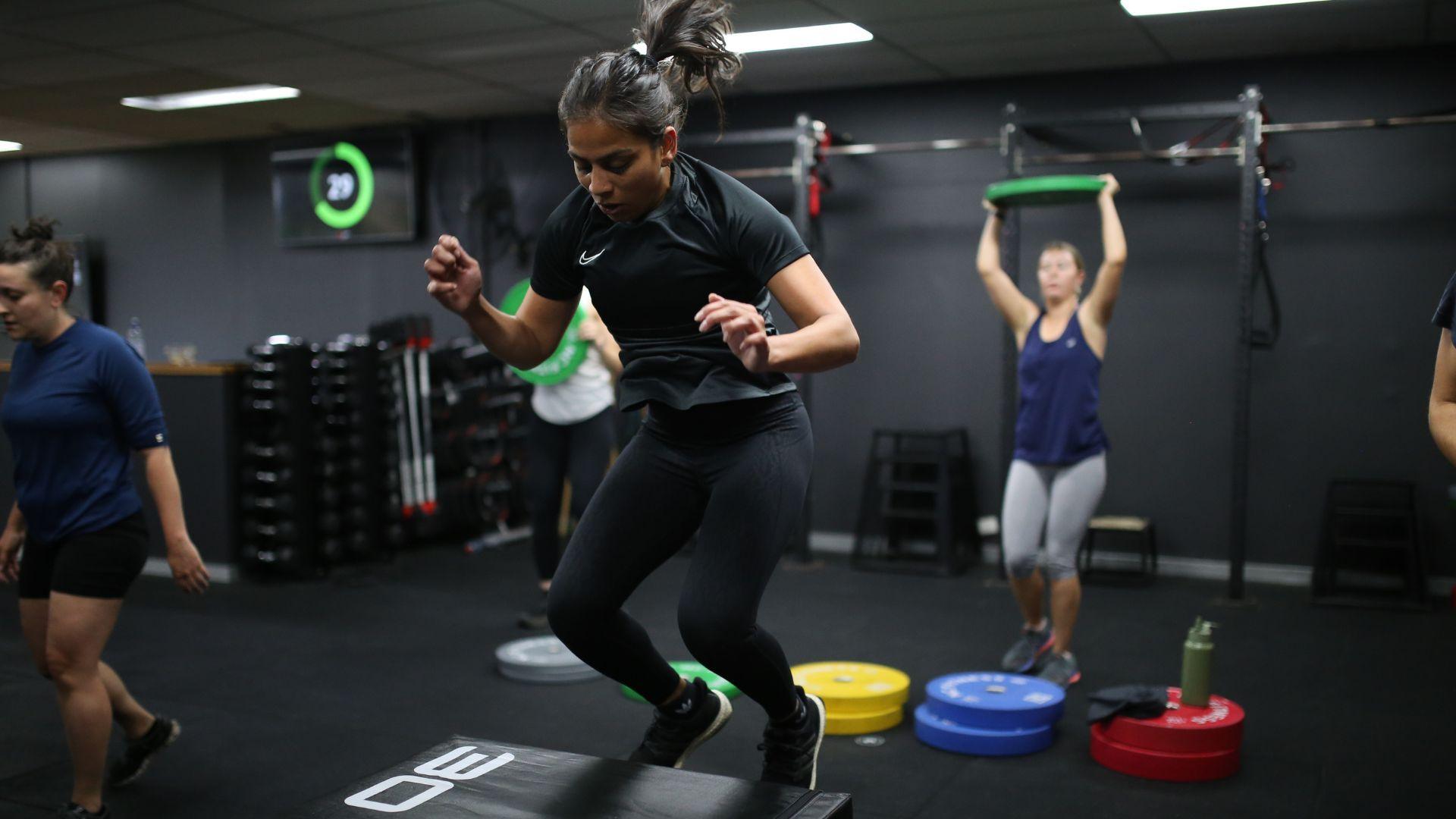
Transitions are where many classes lose momentum.
I have attended classes where the workout itself lasted twenty minutes, but confusion between stations added another ten minutes of downtime. Participants gradually lose focus when movement repeatedly stops.
A practical approach is limiting the number of instructions delivered at once. People generally absorb information better when it arrives in small pieces rather than long explanations.
Instead of explaining six stations simultaneously, introduce sections progressively. Demonstrate movements efficiently. Position equipment before class begins whenever possible.
Use Consistent Coaching Language
Many instructors unintentionally create confusion by using different terms for the same movement.
If one class uses “push press,” another uses “shoulder drive,” and another uses “overhead press variation,” participants may spend unnecessary energy interpreting instructions.
Consistency helps people learn faster.
A useful coaching framework includes:
- One primary name for every movement.
- Short setup instructions.
- One key safety cue.
- One performance cue.
When language stays consistent across sessions, participants become more independent. They require fewer reminders and gain confidence in their execution.
Did you know?
According to the American Council on Exercise article “Cued Up for Success” published in 2023, effective cueing helps participants understand instructions, maintain class flow, and improve overall exercise execution.
Program for Mixed Ability Levels
One challenge every instructor faces is teaching participants with different fitness backgrounds in the same room.
A workout that suits advanced members may discourage beginners. A workout designed only for newcomers may not challenge experienced participants.
The solution is not creating multiple separate classes inside one class. Instead, create scalable options.
For nearly every exercise, provide:
- A beginner version.
- A standard version.
- A more challenging progression.
Participants appreciate having choices without feeling singled out.
A 2024 review published in the journal Sports Medicine examined exercise adherence and participant engagement across different populations and found that adaptable programming supports long term participation and enjoyment.
People stay consistent when workouts feel achievable and appropriately challenging.
Test Your Programming Before You Teach It

One habit that changed my coaching dramatically was reviewing every workout from a participant’s perspective before class.
I ask myself a few simple questions.
Would a first time visitor understand this format?
Are there too many transitions?
Can instructions be shortened?
Does equipment setup create unnecessary delays?
Many programming issues become obvious once you mentally walk through the class step by step.
The goal is not creating the most creative workout in town. The goal is creating a workout that participants can follow confidently while still receiving an effective training experience.
Good programming often feels invisible because everything simply works.
Final Thoughts
The easiest classes to follow are rarely the most complicated. They are organized, predictable, clearly communicated, and built around participant experience.
When members understand what they are doing, they move with more confidence and spend more time training instead of figuring things out. Small adjustments such as visible workout plans, simpler transitions, consistent coaching language, and scalable exercise options can dramatically improve class quality.
Strong group fitness programming helps participants succeed from the moment they walk into the room until the session ends.
Frequently Asked Questions
1. How often should group fitness programming change?
Most instructors benefit from keeping the overall structure consistent for four to eight weeks while rotating exercises and progressions within that framework.
2. Should every class include completely new exercises?
No. Familiar movements often improve participant confidence and technique. New exercises should serve a purpose rather than exist only for variety.
3. What is the biggest mistake in group fitness programming?
Overcomplicating workouts. Too many exercises, transitions, or instructions can reduce participant engagement and understanding.
4. How can instructors improve class retention?
Clear communication, consistent class structure, and appropriate progressions help participants feel successful, which encourages long term attendance.
5. Is visual workout guidance useful for beginners?
Yes. Visual references help beginners understand the workout format more quickly and reduce uncertainty during class transitions.