

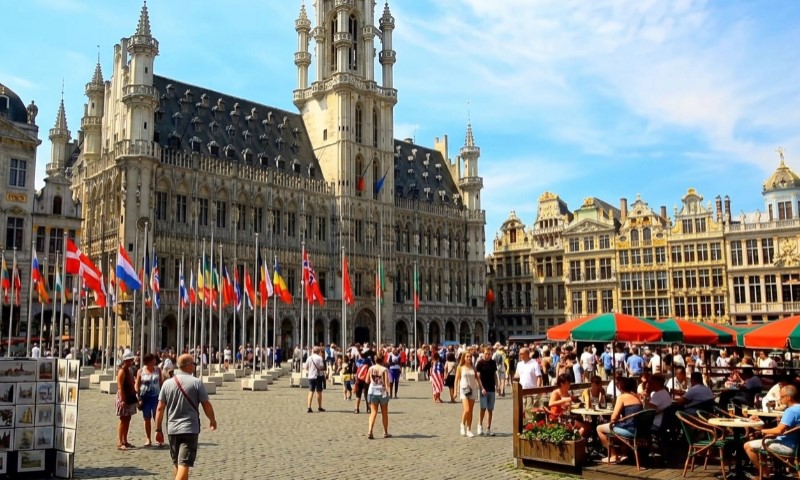
Brussels often gets treated as a quick photo stop between Paris and Amsterdam: see Grand-Place, find the peeing statue, eat a waffle, leave. First-time American visitors get a better weekend by approaching the city as a collection of neighborhoods with its own rhythm and setting aside the checklist of Belgian clichés.
The historic center fits comfortably into a day, while memorable Brussels extends into the Marolles, Sablon, Sainte-Catherine, Matongé, and the European Quarter. Two days are enough for an excellent introduction, provided every hour is not assigned to another attraction.
“Capital of Europe” Is a Nickname, With Good Reason
Brussels has no formal status as the capital of Europe. The familiar label reflects the concentration of European Union work in the city.
The European Commission and European Council are based in Brussels, the Council of the European Union meets mainly there, and the European Parliament works across Brussels, Strasbourg, and Luxembourg. The EU’s own institution location guide makes the shared geography clear.
Americans sometimes imagine a federal capital comparable to Washington, D.C. Brussels feels looser. Office blocks around Rue de la Loi sit close to Art Nouveau houses, Congolese restaurants in Matongé, neighborhood bars, and Cinquantenaire Park. European politics forms one layer of a multilingual city.
Street and station names often appear in French and Dutch. Bruxelles-Midi and Brussel-Zuid identify the same railway station, as do Bruxelles-Central and Brussel-Centraal.
The Airport Name Can Cost You an Hour
Check the airport code before booking. Brussels Airport, code BRU, lies northeast of the city near Zaventem. Direct trains reach Brussels-Central in about 18 minutes, making arrival pleasantly simple.
Brussels South Charleroi Airport, code CRL, serves many low-cost flights and sits much farther away. Its airport shuttle to Brussels-Midi takes about 50 minutes under scheduled conditions.
Compare the full journey before choosing a fare; a $30 saving can disappear into ground transport and a shortened Friday evening.
Visitors staying at the centrally located La Bourse Hotel can reach their accommodation from Brussels-Central without adding a long journey across the city.
Once inside Brussels, a rental car becomes a burden for most weekend visitors. On STIB-MIVB buses, trams, and metro services, a contactless bank card or phone works as a ticket.
A ride currently costs €2.40, transfers within 60 minutes are included, and contactless charges are capped at €8.50 daily. Use the same card or device for every tap.
Grand-Place Deserves Time, Then Keep Walking
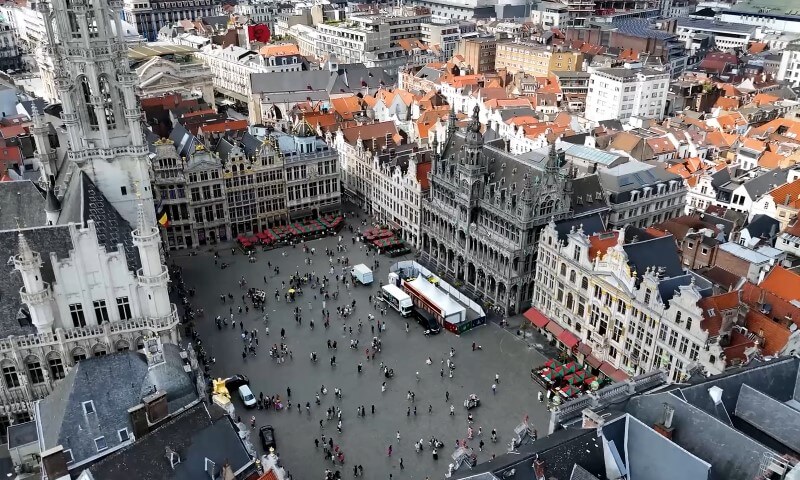
Grand-Place lives up to its reputation, especially early in the morning or after the day-trip groups leave. Many ornate guild houses rose during a rapid reconstruction after French forces bombarded the city in 1695.
UNESCO describes the square as a rare blend of Gothic and Baroque architecture in its World Heritage record.
Manneken Pis creates a different reaction: “Is that all?” The outdoor figure is a small copy; the original entered the Brussels City Museum after repeated thefts, according to the museum’s history of the statue.
Treat the fountain as a five-minute encounter with Brussels humor. His nearby wardrobe museum, with over 1,000 outfits, explains why residents remain fond of him.
After the famous sights, walk uphill through the Sablon and down into the Marolles. Antique shops line Rue Haute and Rue Blaes, while the daily flea market at Place du Jeu de Balle gives the neighborhood an unpolished energy.
Sainte-Catherine and Dansaert offer another useful route for design shops, cafés, seafood, and evening drinks.
The EU Quarter Is Quieter on a Weekend
Travelers expecting lawmakers, television crews, and diplomatic motorcades may meet empty sidewalks instead. The European Quarter is a working district, so Saturday and Sunday feel calm.
The quiet can improve a visit. Parlamentarium, the European Parliament’s interactive visitor center, opens seven days a week, costs nothing, and usually takes around 90 minutes. Its weekend hours run from 10 a.m. to 6 p.m. The Parliament hemicycle follows weekday access rules and does not admit weekend visitors.
Pair an EU visit with Leopold Park or the House of European History, then stop for a drink around Place du Luxembourg.
Belgian Food Is Broader Than the Souvenir Menu
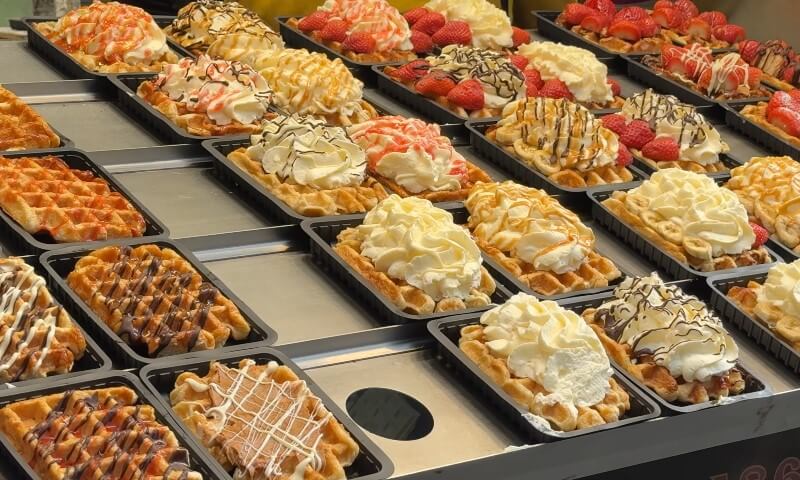
A giant cream-covered waffle near Grand-Place makes a cheerful photograph. Local waffle culture offers two distinct styles.
A Brussels waffle is rectangular, light, and relatively neutral; the smaller Liège version has rounded edges and pearl sugar baked into the dough. The official visitor guide provides a useful comparison of both waffles.
For a weekend, choose a few foods with intention: shrimp croquettes, fries from a fritkot, carbonnade flamande cooked with beer, or stoemp with sausage. Brussels also has substantial immigrant communities. A meal in Matongé or Saint-Gilles reveals another side of the modern city.
American tipping habits can inflate the bill. Restaurant service is included, while an optional 5 to 10 percent is acceptable for good service, according to local tipping guidance. Requesting the check is normal. “L’addition, s’il vous plaît” works well; English also works in many central establishments.
Sunday Requires Selective Planning
Sunday is a good museum day and a weaker time for spontaneous shopping. Most shops open Monday through Saturday, generally from 10 a.m. to 6 p.m.; some independent stores in the Marolles trade on Sunday.
Museums commonly open from 10 a.m. to 5 p.m., although individual closing days vary. The city’s usual opening-hours guide recommends checking each venue directly.
Reserve one priority museum and leave room around it. The Magritte Museum suits surrealism fans, while the Belgian Comic Strip Center connects Tintin and the Smurfs to a larger national tradition. The Atomium lies outside the center and deserves a separate block of time.
A Better Shape for a First Brussels Weekend
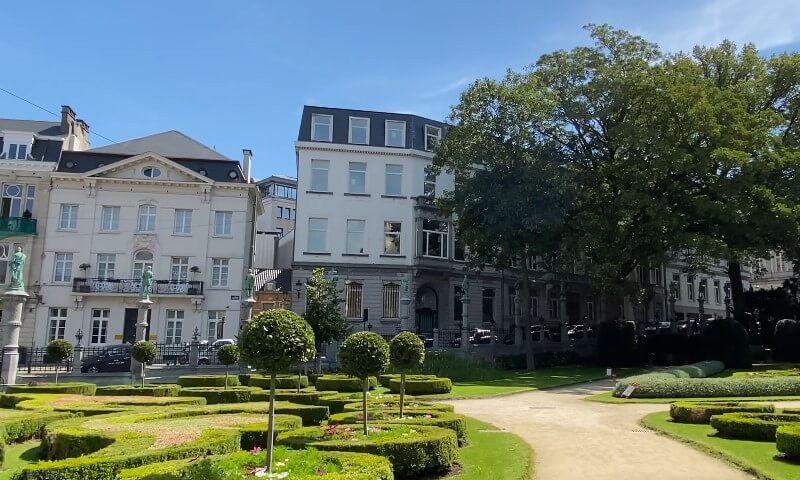
A strong plan follows geography and mood. Friday evening belongs to Grand-Place, the Galeries Royales Saint-Hubert, and dinner nearby. Return to the square after dark, when gold details glow and the groups thin out.
Saturday: Historic Streets and Local Neighborhoods
Start at Grand-Place before 9 a.m., visit the Sablon, then descend toward the Marolles flea market. Spend the afternoon at one major museum or continue through Sainte-Catherine and Dansaert. Finish with a Belgian dinner and a beer bar where staff can explain serving sizes and alcohol strength.
Sunday: Europe and a Final Long Lunch
Use Sunday morning for the European Quarter and Parlamentarium. Return through Matongé or the Royal Quarter, then settle into lunch without watching the clock. U.S. citizens planning a short Belgian trip can generally visit visa-free for up to 90 days, subject to Schengen rules. Before departure, review the latest Belgium entry requirements, including passport-validity rules and any new EU border procedures.
Let Brussels Be Slightly Untidy
Brussels makes sense when visitors stop asking it to behave like a miniature Paris or a European Washington. Its appeal comes from close encounters: a grand square rebuilt after bombardment, a political district asleep on Sunday, a tiny civic mascot with an enormous wardrobe, and neighborhoods that change language and atmosphere within a few tram stops.
A first weekend should leave one museum unseen and one street unexplored. Brussels rewards enough structure to avoid a closed door, followed by enough freedom to stay for another beer, coffee, or plate of fries.