


Relocating abroad for a first international job requires far more preparation than taking an ordinary trip.
Immigration rules, housing requirements, tax obligations, healthcare access, banking, and employment paperwork can all affect how smoothly you settle in.
Starting early gives you time to collect documents, complete visa procedures, arrange housing, estimate costs, and deal with administrative deadlines.
Requirements can vary sharply by country, so official government and consular information should always take priority over informal advice.
Before You Move
Start with immigration requirements.
Check official embassy, consulate, or government immigration sources for the visa or work permit that applies to your nationality and job.
Employer sponsorship, salary, qualifications, occupation, and contract length can affect the permit category.
Prepare any required residence applications before travel.
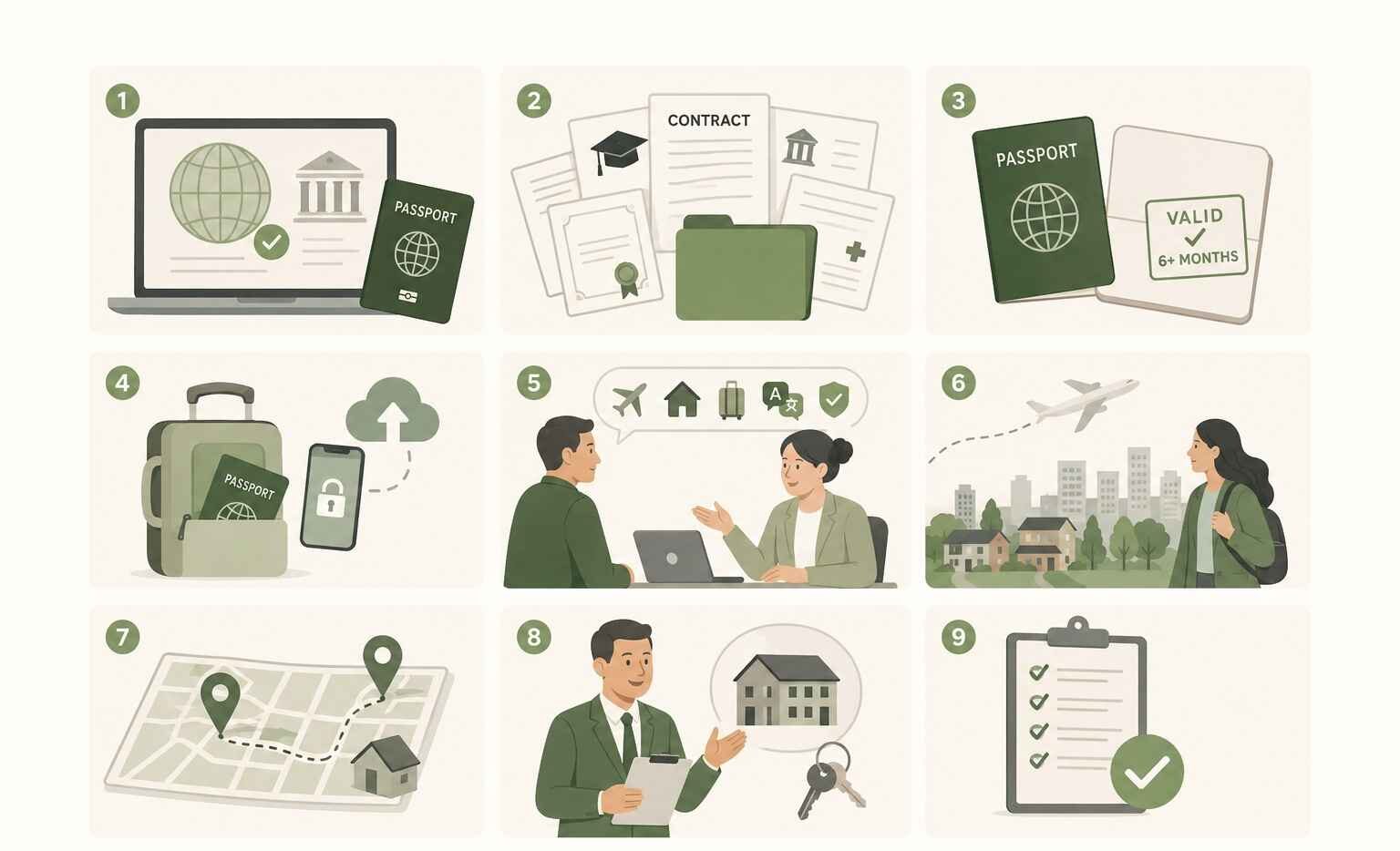
- Passport and national identification
- Birth certificate
- Confirmed job offer and employment contract
- Employer sponsorship documents
- Education records and professional qualifications
- Bank statements
- Medical and vaccination records
- Visa and residence paperwork
- Certified copies and official translations when required
Check passport validity early. Keeping at least six months of validity after the intended stay can reduce travel and visa problems.
Keep essential originals in your hand luggage and store secure digital copies separately.
Ask your employer what relocation support is included. Assistance may cover immigration, visa fees, moving costs, temporary housing, relocation agents, flights, language lessons, or tax support.
If possible, visit before moving. Use the trip to compare neighborhoods, test commuting routes, and inspect housing in person.
A relocation agent can also help with local rental procedures and property searches.
Moving to Germany
Confirm the correct German work visa or residence permit for your nationality and employment type before travel.
Keep your passport, employment contract, qualifications, immigration approvals, and employer records ready for appointments.
Arrange health insurance early and keep proof of coverage available, first try to understand how healthcare in Germany works.
Depending on your employment status, income, and previous insurance situation, you may qualify for statutory coverage or private health insurance for foreigners.
Prioritize local registration after arrival. Address registration can affect banking, taxes, insurance, residence procedures, and other administrative tasks.
A German bank account can simplify salary payments, rent, utilities, and recurring charges. Banks may request identification, registration documents, employment records, and tax information.
Housing can be competitive in major cities. Research prices and required documents before arrival and consider temporary accommodation while searching.
A relocation agent may help locate properties, including some not yet publicly advertised.

- Government appointments
- Housing discussions
- Healthcare visits
- Transportation problems
- Shopping
- Service-provider communication
Moving to France
Confirm your visa, work authorization, and residence requirements before departure.
Nationality, job type, contract duration, and employer status can affect the process.
Some employment, education, identification, or civil-status documents may require certified French translations. Check official requirements before arranging them.
Temporary accommodation can give you time to inspect properties and prepare a stronger rental application.

- Identification
- Employment contract
- Proof of income
- Bank information
- Supporting financial documents
- Guarantor information when requested
Set up banking early because a local account may be needed for salary, rent, utilities, mobile service, and recurring payments.
Arrange healthcare access soon after arrival and check if temporary private insurance is needed before public coverage starts.
Practical French is useful for administration, housing, banking, healthcare, shopping, and transportation.
Moving to the UK
Confirm the correct work visa and any employer sponsorship requirements before relocating to the UK for a job.
Complete immigration and sponsorship steps before making expensive, nonrefundable commitments.
Budget for rent, deposits, temporary accommodation, transportation, utilities, and other regular costs rather than judging affordability by salary alone.
Compare neighborhoods based on commute time, transport connections, healthcare access, grocery stores, pharmacies, and essential services.
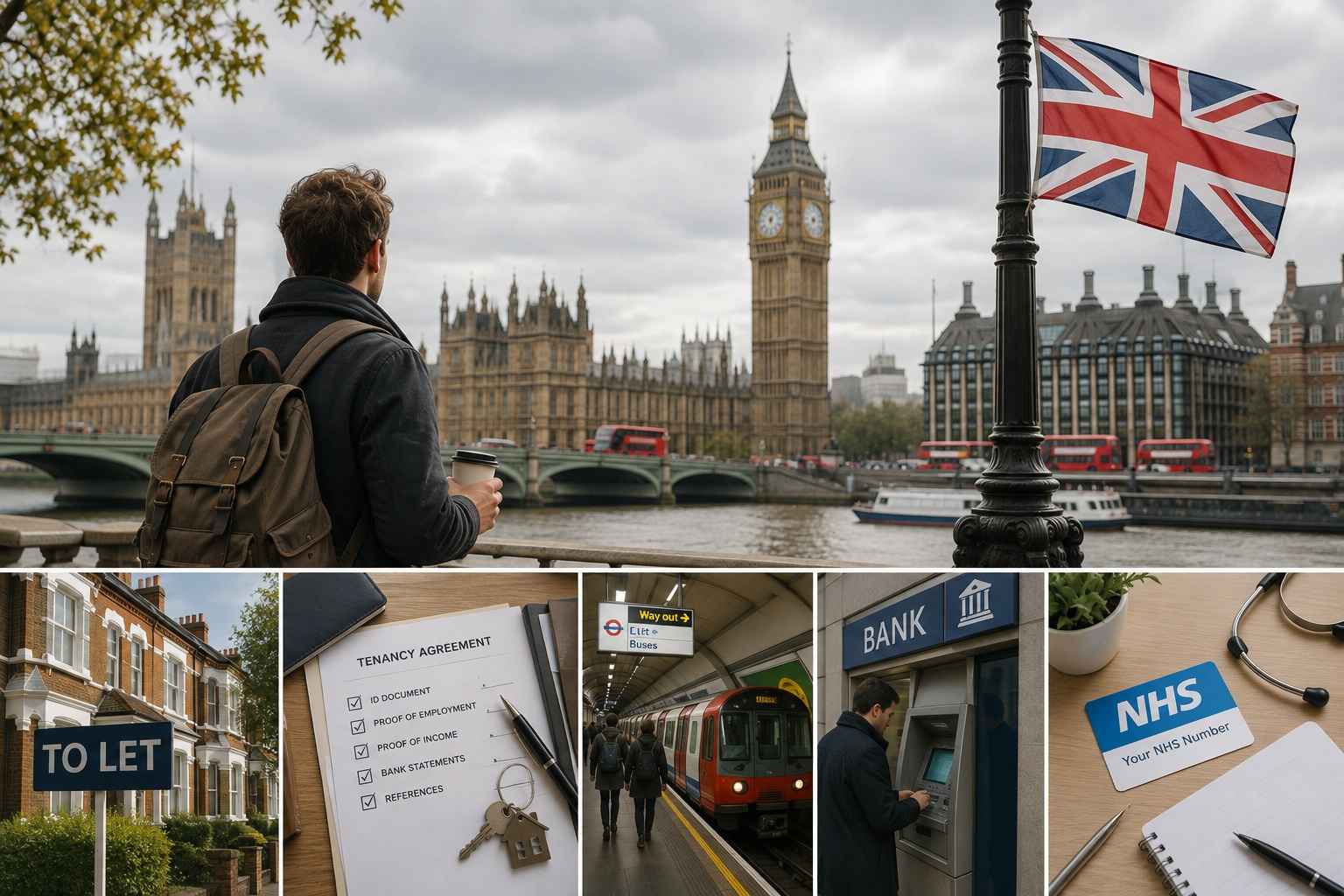
Prepare housing documents before starting your search. Landlords or agencies may request identification, proof of employment, proof of income, bank statements, and references.
Set up local banking and payroll arrangements after arrival and confirm how to access healthcare.
Review rental agreements carefully, especially deposit terms, notice periods, maintenance duties, renewals, utilities, payment dates, and rules for ending the tenancy.
Plan Your Finances
International relocation often requires substantial spending before your first regular paycheck.
| Cost | What to plan for |
|---|---|
| Rental deposits | Set aside money for upfront housing deposits before moving in. |
| Temporary accommodation | Budget for hotels, short-term rentals, or serviced apartments during the first days or weeks. |
| First rent payment | Prepare for the first month’s rent, which may be due before or at move-in. |
| Flights and local transportation | Include plane tickets, airport transfers, taxis, trains, buses, or car rental. |
| Shipping or moving services | Account for luggage, international shipping, removals, and storage if needed. |
| Visa and permit fees | Include application fees, residence permits, work permits, and related appointments. |
| Translation and certification fees | Plan for certified translations, notarization, apostilles, and document copies. |
| Insurance | Cover health, travel, liability, home, or temporary relocation insurance. |
| Utility setup | Budget for electricity, water, heating, internet, phone, and connection fees. |
| Basic furniture and household supplies | Prepare for bedding, kitchen items, cleaning supplies, small appliances, and essential furniture. |
Keep an emergency fund for extra accommodation, medical costs, delayed shipments, replacement travel, or unexpected fees.
Research local banking before arrival.
A domestic account may be needed for salary payments, rent, utilities, and recurring bills.
Keeping your home-country account can still make sense for savings, loans, investments, subscriptions, or other ongoing obligations.
Account for exchange rates and international transfer fees when moving larger sums.
Compare both transaction charges and exchange-rate margins.
Research tax obligations before relocating. International employment can create reporting or payment requirements in more than one country.
Check foreign-income reporting rules and any applicable double-taxation treaty.
Housing and Moving Logistics
Renting is often the more flexible choice for new arrivals who are still learning the area.
Temporary accommodation can give you time to inspect properties, compare neighborhoods, and avoid signing a long-term lease sight unseen.
Compare locations using practical factors such as commute time, public transportation, safety, healthcare access, grocery stores, pharmacies, and everyday services.
Rental requirements can include deposits, references, proof of income, bank statements, employment records, guarantors, or advance rent.
Review lease terms carefully, especially notice periods, maintenance responsibilities, deposit conditions, renewal rules, utilities, and procedures for ending the tenancy.
- Passport and immigration paperwork
- Employment documents
- Prescription medication
- Important medical information
- Electronics and chargers
- Valuables
- Several changes of clothing
- Essential financial records
Healthcare and Insurance
Check how healthcare access works before departure. Public coverage may depend on employment, local registration, insurance contributions, or residence status.
Ask your employer when workplace health insurance begins and what it covers, including prescriptions, emergency treatment, deductibles, provider restrictions, and dependents where relevant.
Temporary private or international insurance may be needed until employer or public coverage starts.
Consider a medical checkup before moving and obtain copies of useful records, including vaccination history, prescriptions, allergies, ongoing treatment, and major previous procedures.
Bring enough prescription medication for the first few weeks when legally permitted.
Check local rules before travel because medication names, availability, and legal controls can differ.
Keep medication in original packaging and carry supporting prescription documents when required.
Summary
Successful relocation depends on completing the essential practical work before departure.
Prioritize immigration status, documentation, finances, housing, healthcare, banking, taxes, and local registration.
After arrival, focus on language skills, social connections, and reliable daily routines. A first international job becomes much easier to manage when the rest of your everyday life is properly set up.