

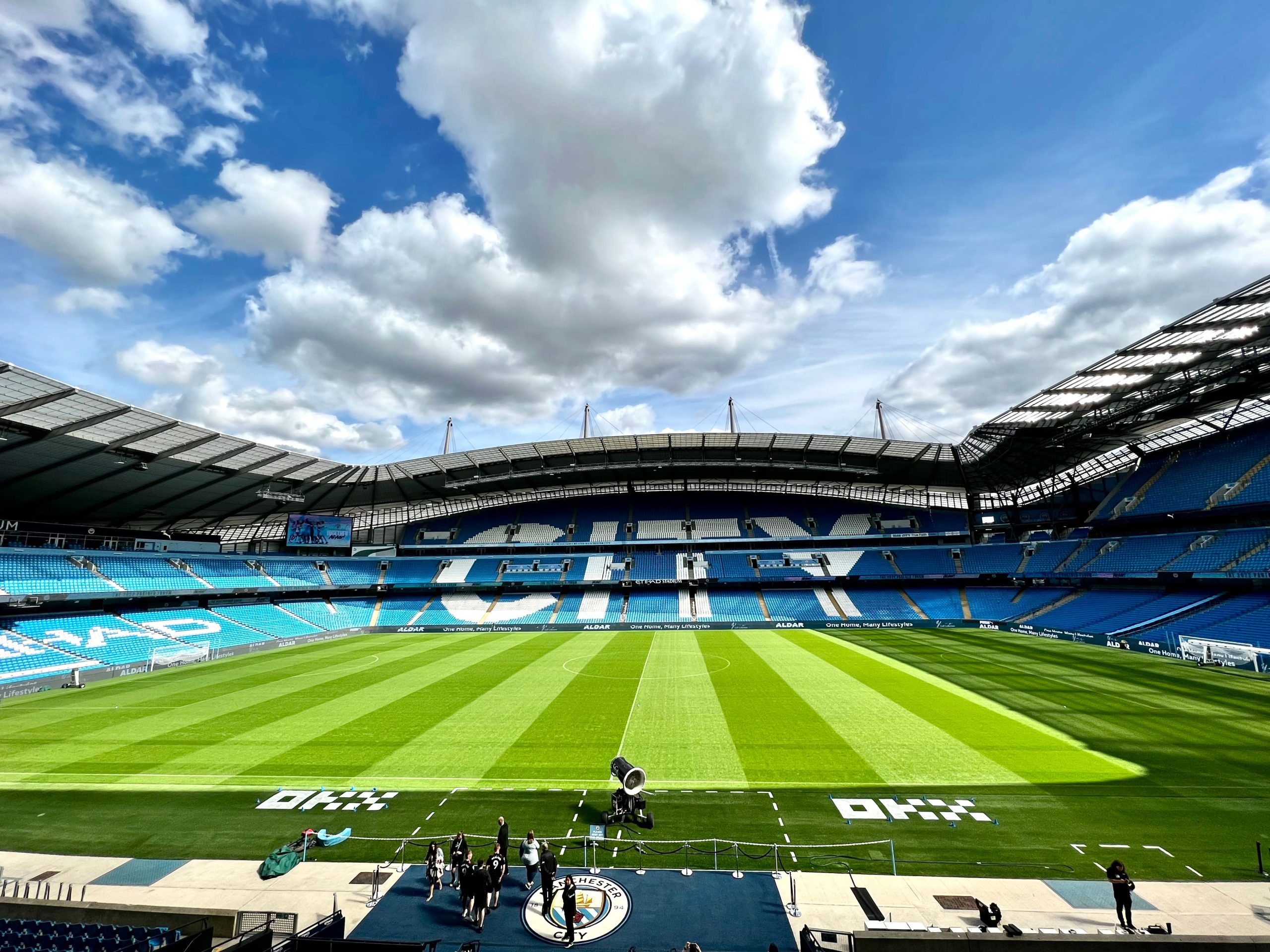
At the last count the Premier League claimed 1.9 billion followers, was broadcast in 189 countries, and drew a record 15.9 million people through its turnstiles in 2025-26. That is an enormous number of opinions. On any given weekend, most of them are about the same four clubs.
Arsenal and Manchester United have been circling each other since the late 1990s. Manchester City and Chelsea forced their way into that argument by buying their way to the top, and nobody on the old side of the divide has fully forgiven them for it. Four fanbases, four different fuels, and a fire that never quite goes out.
It helps that the dispute went global. Africa has long been one of English football’s biggest audiences, with a widely used estimate of about 300 million people tuning in regularly. In Ghana the pull is especially strong: the GeoPoll Africa Soccer Survey 2026 put football followership at 91% and named the Premier League the country’s most-followed league. When the games are not on television they are on your phone, which is how a live scores page or something like the betway ghana app ends up sitting open in the middle of a family argument about the referee.
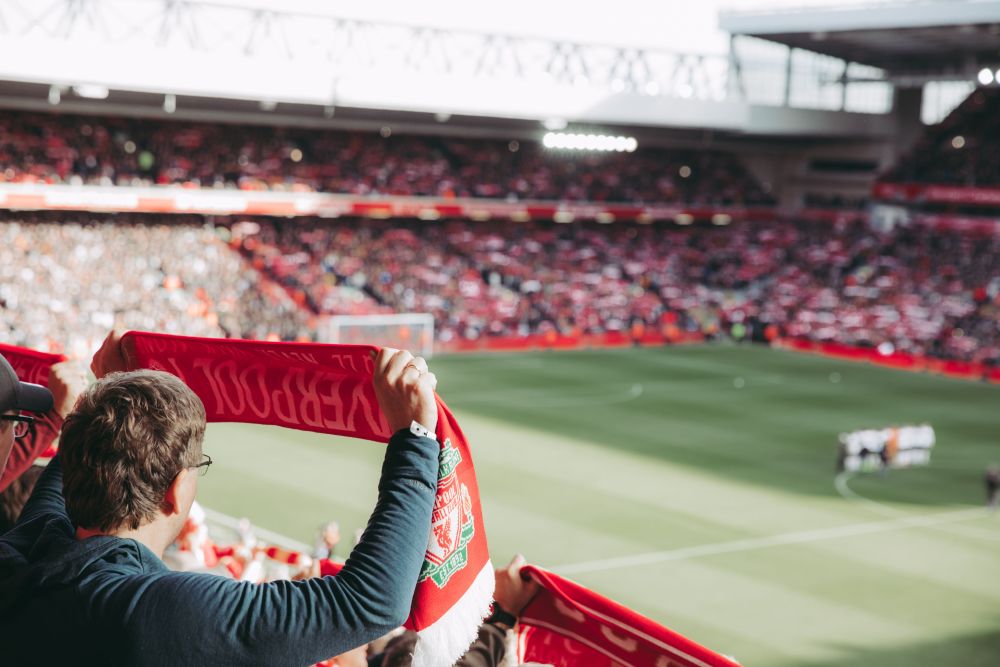
Four clubs, four completely different arguments
These fanbases never run dry because they are not really having the same conversation. Each club has its own genre of grievance, and each one is almost impossible to settle, which is exactly what keeps it alive.
| Club | The argument they are actually having | Who gets the blame | The number that refuses to close it |
|---|---|---|---|
| Manchester United | Whether the club still knows what it is | The owners, the managers, the recruitment | A 0.9% title chance after five games |
| Arsenal | Whether winning once finally settles the “bottler” jibe | Every other fanbase, on muscle memory | 22 years between league titles |
| Manchester City | Whether any of it counts at all | The Premier League’s disciplinary process | 115 charges, no verdict since February 2023 |
| Chelsea | Who owns the football club, and what it is for | BlueCo, Clearlake, the sporting directors | Six permanent managers in four years |
The title-chance figures come from the Opta supercomputer’s projections after five matchdays, published on 21 September 2026. The charge count and the managerial turnover come from Premier League and national reporting through 2026. Notice the pattern: only one of the four is arguing about the actual title race.
United are arguing about identity, not trophies
Michael Carrick’s side have taken five points from their opening five games and sit 12th, the joint-fewest they have managed at this stage of a Premier League season. The Opta model now gives them a 0.9% chance of the title, down from 6.6% before a ball was kicked. Those numbers are bleak, and nobody in a United shirt is pretending otherwise.
But look at what the supporters actually fight about. Almost no one is debating whether this team can win the league. The fight is over what the club has become: a commercial machine that happens to play football, or still a football club in a rough patch. Was there ever a “United way”, or was it just Sir Alex Ferguson in a very good mood for two decades? Is the next manager the answer or another delay? None of that can be settled by a table, which is why it survives every result.
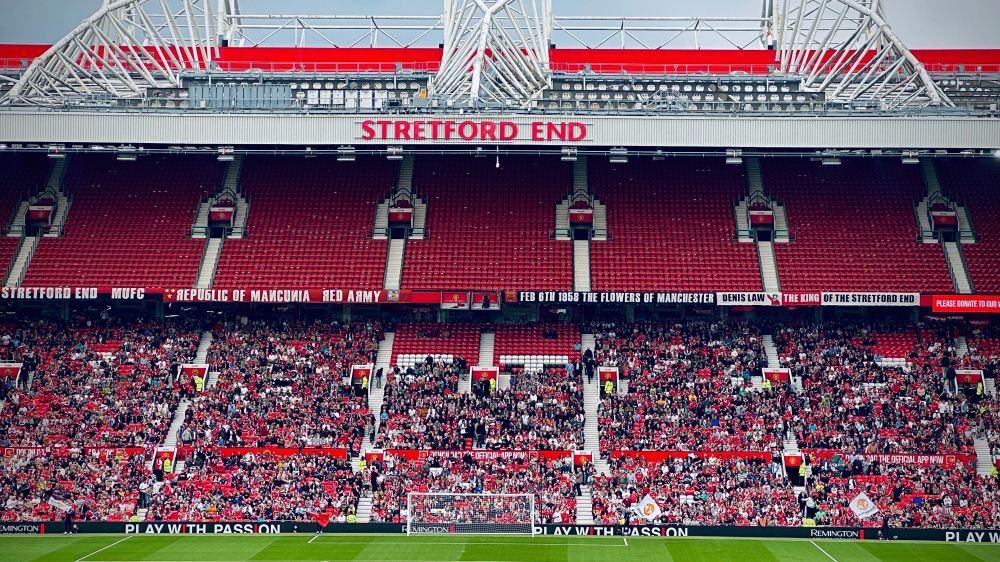
Arsenal finally found the answer they waited 22 years for
For two decades the Arsenal argument was simple and unanswerable: when are you going to win it again? Mikel Arteta’s side ended a 22-year wait by winning the 2025-26 Premier League, then opened the new campaign with a Community Shield win over City and a league winning run stretching back into last spring. The Opta supercomputer still makes them favourites, at 43.7%, just ahead of City’s 39.8%.
You would think that would settle things. It did not. The “bottler” tag is a habit now, and rival fans reach for it without checking the dates. Arsenal’s own supporters, meanwhile, argue about style, about whether a squad that has already shown cracks can defend a title, and about how much the Champions League should be allowed to distract them. Winning the trophy did not close the argument. It changed the subject.

City’s problem is that a scoreboard cannot answer a case file
Enzo Maresca’s City won all five of their opening fixtures and sit top, with eight goals scored and only two conceded. Their title probability has climbed from 19.6% in August to 39.8%, the biggest jump of any club over the first five matchdays. On the pitch, there is very little to argue about. That is the trouble.
The argument following City has nothing to do with form. It is the 115 charges of breaching Premier League financial rules, brought in February 2023 and heard across 12 weeks from September to December 2024. No verdict has been published, and the 2026-27 season is now the fourth to start with the case unresolved. Premier League chief executive Richard Masters has admitted the process “has taken longer than expected” and that he understands the frustration, while City have denied wrongdoing throughout. Every trophy reopens the same debate, and no result on grass can end it.
Chelsea’s fight is not with the other three
At Stamford Bridge the argument has turned inward. Chelsea have cycled through six permanent managers in four years, and this season has rested on expensive youth and a defence that has leaked badly: two or more goals conceded in each of their first four league games, the first time that has happened since 2015-16.
That is not what the banners are about. The fan movement Not A Project CFC has marched on Fulham Broadway and on Wembley Way, chanting “We don’t care about Clearlake, they don’t care about us”. The Chelsea Supporters’ Trust has accused the ownership of an “unclear vision, inconsistent execution, and insufficiently accountable leadership”. The argument at Chelsea is not whether Arsenal are better. It is whether the club is a football team or an investment portfolio, and that question does not get old.
So what do the other three even agree on?
Strip out the tribalism and all four fanbases agree on more than they would ever admit out loud. VAR has drained the goal celebration of its purest few seconds. The calendar is too crowded. Referees are somehow both over-protected and under-qualified, depending on which decision went against you this week.
Then there is the shared history that predates the modern noise. Between February 1997 and February 2005, matches between United and Arsenal produced seven red cards. The September 2003 meeting at Old Trafford ended with Arsenal fined £175,000, the largest fine the FA had handed a club at the time. In February 2005, Roy Keane and Patrick Vieira had to be separated in the Highbury tunnel by referee Graham Poll before a game United won 4-2. Keane’s summary of the era was refreshingly uncomplicated: he said he hated them.
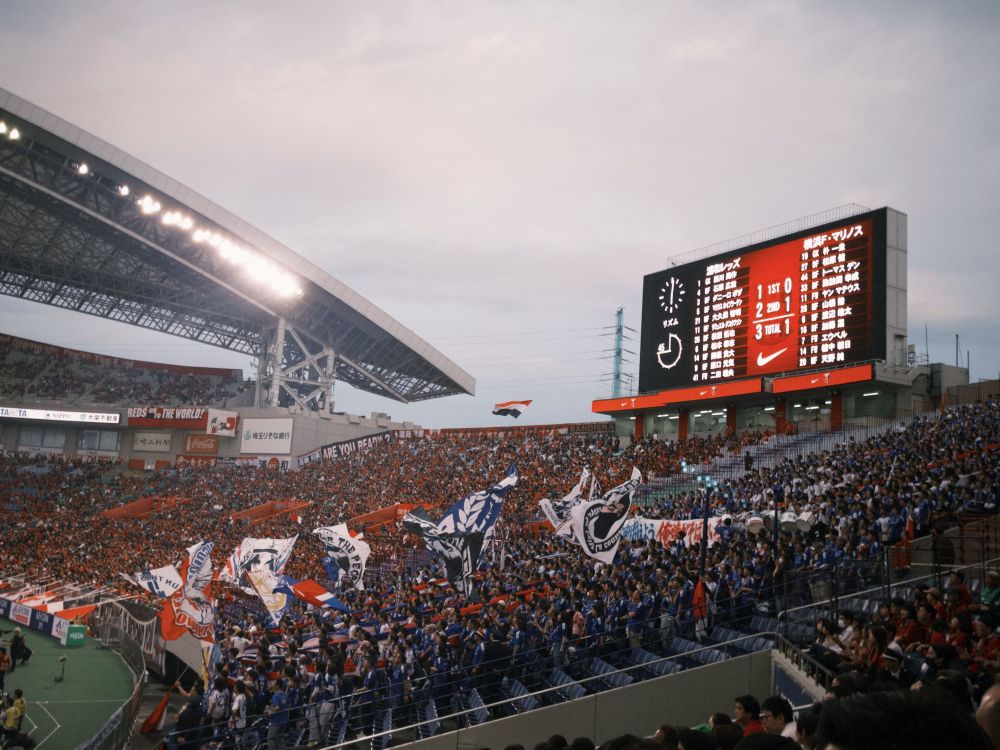
The argument is the product, and that is not a bug
Here is my read: the endless argument is not a side effect of the Premier League. It is a large part of what the league actually sells. A season with two genuine contenders and two fallen giants nursing grievances generates more talk than a procession ever could, and the talk costs the competition nothing. Every fanbase that can build a half-defensible case for its own club, or against someone else’s, is producing free content.
That is why the noise feels relentless, and why it is worth defending anyway. Being able to argue about football with a stranger from another continent, in a group chat that spans three time zones, is a genuinely new kind of belonging. The trash talk is the membership fee.

The case against all this noise
Not everyone sees banter as harmless. The organising fans at Chelsea make the strongest version of the opposite case: that the argument is no longer spontaneous, but engineered. When clubs trade players like assets, hire and fire managers every season, and treat supporters as customers, the “debate” becomes a distraction from the fact that fans have less say than ever over the thing they pay for.
Dave Johnstone of the CFCUK fanzine put it bluntly, saying any rapport between players and supporters is at an all-time low. He has a point that is easy to dismiss and hard to answer. Where I land: the arguing is fine, even healthy. What deserves suspicion is when the argument is the only thing on offer, and nobody in the boardroom is being asked the questions the group chat keeps asking.
Questions people keep asking
Who has won the most Premier League titles? Manchester United, with 13. No other club is close on that specific measure, which is part of why United fans can still win an argument they are losing on the pitch.
Why do Manchester United and Arsenal hate each other? The rivalry hardened in the late 1990s and early 2000s, when Arsene Wenger’s Arsenal broke United’s domestic dominance. The manager feud between Wenger and Ferguson, and the captain feud between Vieira and Keane, turned it into seven red cards in eight years.
What are Manchester City’s 115 charges about? They concern alleged breaches of the Premier League’s financial rules between 2009 and 2018: accurate financial information, player and manager compensation, profit and sustainability, UEFA regulations, and cooperation with the investigation. City deny wrongdoing and no verdict has been published.
Are Chelsea still owned by Todd Boehly? Chelsea are owned by the BlueCo consortium, majority controlled by Clearlake Capital. Boehly, the public face of the 2022 takeover, has since sold his shares to Clearlake. The fan protests now mostly target the wider ownership structure, not one man.
Which Premier League club has the most fans in Africa? There is no reliable headcount, but historically Arsenal led on formal supporters’ clubs across the continent, while Chelsea took West Africa on the back of Didier Drogba, Michael Essien and John Obi Mikel. Ghana sits right in that Chelsea-leaning West African belt.