


A strong car accident claim can be shaped in the first days after the crash, rather than months later at a settlement table. Every photo, receipt, doctor’s note and pay slip you keep supports a specific part of your case in your motor vehicle accident claim: fault, the link to your injuries, treatment needs and proven loss. Keep records as you go and you won’t have to rebuild facts from memory.
Table of Contents
- At the scene: lock in the basics
- Take photos and video while it is fresh
- See a doctor and start a paper trail
- Line up witnesses and write your account
- Before you lodge: notification rules and time limits
- Count every dollar: your economic loss file
- After you lodge: handling insurers and settlement
At the scene: lock in the basics

Stay calm and make exchanging details your first job once everyone is safe. Ask the other driver for their licence and insurance information. Note the registration and colour separately so you have your own record if paperwork is lost. If anyone is hurt, call police and ask for the incident number before you leave. The police report becomes a base record insurers use when assessing fault.
You don’t need to argue about who caused the crash at the roadside. Fault is sorted out later using statements, damage patterns, photos and independent accounts. Don’t admit blame or accept blame from the other driver. Just collect facts. Those details help you or your representative begin the injury-claim process. In Western Australia, an injured person can report the crash and lodge a motor injury claim through the Insurance Commission of Western Australia.
Report the crash even if an injury seems minor at first. Soft tissue pain and signs of concussion can build over several hours. Police will note the time, place, parties and whether an ambulance attended. Ask how to obtain a copy of the report for your file. Insurers may treat it as a neutral starting point when accounts clash. The Western Australian Government provides official guidance on reporting a traffic crash.
Take photos and video while it is fresh
Road deaths in Australia exceeded 1,250 in 2023, with many more people hurt badly enough to need ongoing care (Bureau of Infrastructure and Transport Research Economics). Behind each number is a claim where early proof may make a difference. Photos taken in the first few minutes carry weight because they cannot be recreated later. Skid marks fade, and cars are often repaired quickly.
Walk around both cars and take wide shots as well as close-ups. Capture vehicle damage and number plates in the same set so there is no dispute about which car is which. Step back and photograph road markings and traffic signs. If the road is wet or affected by glare, show that with a shot looking down the road. Ask passengers or bystanders whether they have dashcam footage and save a copy that day.
Film a slow pan showing the full scene before the cars are moved. Include skid marks with the direction of traffic visible behind them. Show close-up damage with a coin or hand for scale if you can do so safely. Save dashcam clips in two places and note the date and time. Send the raw file to your lawyer instead of a trimmed clip from a social app.
Keep the originals. Don’t crop or filter them. Back them up to cloud storage that night and retain the time stamps. Those files support your fault argument when the versions of events differ. For more immediate steps, see this guide on what to do immediately after a car accident.
See a doctor and start a paper trail

See a doctor within hours if you can, even if you feel shaken but otherwise okay. Adrenaline can mask pain. Neck and back symptoms often appear the following day. Insurers look closely at the gap between the crash and first treatment. A long gap gives them room to argue that something else caused your pain.
Tell the GP exactly what happened and where you hurt, including any minor aches. Mention dizziness or trouble sleeping. Those notes become medical records linking the injury to the crash. In personal injury law, this connection is known as causation. Without it, treatment bills can be difficult to connect to the other driver.
Start a treatment diary from day one
Buy a notebook or use your phone. Record each appointment, including the date, clinic, practitioner’s name and cost. Note your pain levels morning and night in plain language. Record what you cannot do, such as a missed shift, two days of cancelled childcare or sleep broken by neck pain.
That diary supports your causation argument months later, when your memory may be less clear. Bring it to every medical review so relevant details are not missed. It can also help your lawyer assess how the injury has affected your daily life.
Follow referrals and keep copies of them. If your GP refers you to a physiotherapist or for scans, book promptly and retain the letters. Gaps in care may be interpreted by an insurer as recovery. If you cannot attend, call to reschedule and keep a record of that message.
Line up witnesses and write your account
Independent witnesses may help more than passengers or family members. Insurers know your passengers may support your account. A stranger with no stake in the outcome can carry more weight. Ask anyone who stopped for their name, phone number, email and preferred contact time if they are willing to share those details. Note where they stood and what they saw in a line or two while you are still at the scene.
Write your own account that night. Begin before the impact and continue until after the police left. Include your speed, lane position, the lights and what you heard. Memory can fade quickly after a stressful event. A clear account written early may later support a statutory declaration if the insurer asks for sworn facts about speed and impact outside court.
Don’t wait.
If no one stopped, look for cameras. Note any shops, petrol stations, buses or homes with cameras near the crash location. Write down the exact time so footage can be identified. Ask nearby staff for the contact details of the manager who controls the video. Do this within a day or two before files are recorded over.
Before you lodge: notification rules and time limits
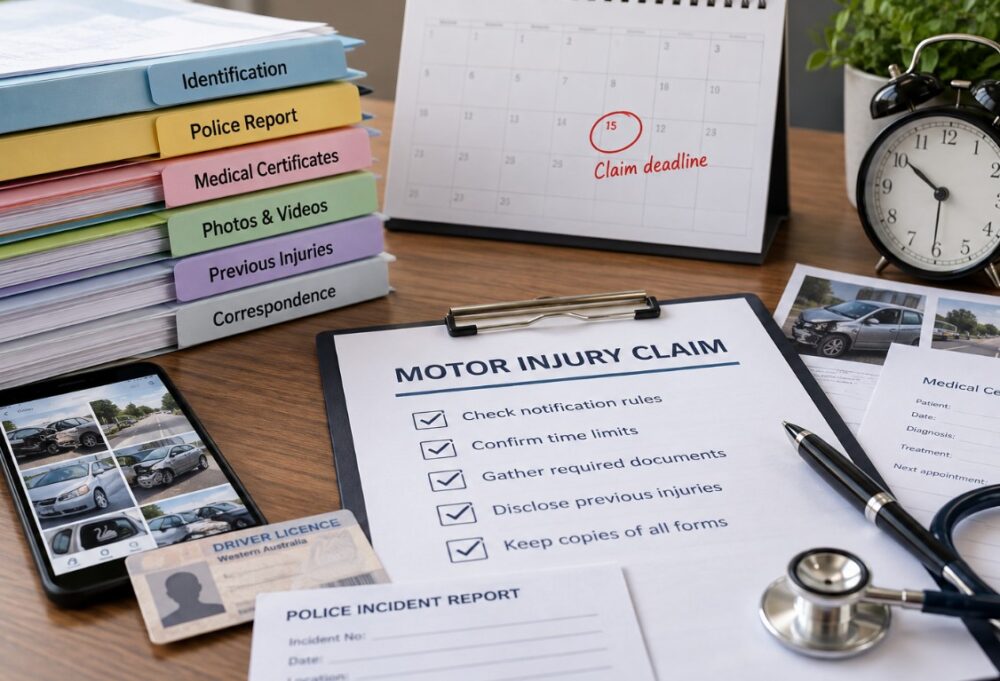
Motor vehicle injury claims in Australia are handled under state and territory insurance schemes, each with its own rules, forms and time limits. In Western Australia, the Insurance Commission of Western Australia administers motor injury claims. Report the crash and check the correct claims process promptly rather than waiting to see how you feel.
Limitation periods set a hard deadline for lodging a claim, and they vary by claim type and state. If you miss the deadline, you may lose your right to claim. There may also be an early notification window that is much shorter than many people expect. For a Western Australian claim, a personal injury law firm such as Trewin Norman can explain the paperwork and deadlines that may apply before you sign anything.
Before lodging, gather your identification, police incident number, medical certificates and photos in one folder. List pre-existing injuries openly, along with dates and treatment. Disclosing previous injuries early can help prevent disputes later. Insurers may ask about relevant prior claims. The Insurance Commission also provides official motor injury insurance forms for claimants.
Keep copies of every form you send and receive. Note the date sent and the method used. If you provide a recorded account of events, ask for a copy or write down what you said immediately afterwards. Small changes in wording may be examined later. A well-organised file with dates shows that your account has remained consistent from the start.
Accident claim documents at a glance
| Document or evidence | What it helps establish | When to collect it |
|---|---|---|
| Police incident number and crash report | Basic details of the collision and parties involved | At the scene or as soon as the report is available |
| Scene photos, videos and dashcam footage | Vehicle damage, road conditions and possible fault | Immediately, when safe |
| Medical notes, referrals and treatment diary | Injury symptoms, treatment and the connection to the crash | From the first medical visit onward |
| Witness contact details and written account | An independent account and a record of what happened | At the scene or shortly afterwards |
| Receipts, pay slips and employer records | Out-of-pocket expenses and lost earnings | Throughout treatment and recovery |
| Claim forms and insurer correspondence | What was submitted, requested and agreed | Before and after lodgement |
Count every dollar: your economic loss file
Start a money file separate from your medical notes. Keep every bill and receipt as you go. Medical bills and travel records show direct costs, while time off work and pay slips show lost income. Retain proof of equipment and home help as well. You may not remember small amounts months later, so file them now.
What to keep receipts for
Sort costs into four groups: treatment, travel, home support and lost pay. Treatment includes GP visits, physiotherapy, scans and prescriptions. Travel includes petrol, parking, tolls and fares for attending care. Home support covers services such as cleaning or childcare that you now need, while lost pay includes missed shifts and overtime. Add a separate note for future needs, including planned surgery or reduced hours. Future earning capacity matters when an injury limits overtime or your ability to remain in a physical role next year and beyond.
Ask your employer for a letter confirming your role, hours, pay rate and time missed. Keep pay slips from before and after the crash side by side. If you are self-employed, retain invoices and bank entries showing the drop in income. For future care, ask treating doctors for written plans with likely costs. Those letters help turn estimates about the following year into evidence.
Keep Medicare statements and any Centrelink letters with the file. Both bodies can seek repayment from your settlement for crash-related costs they covered. A final payout is often divided into economic and non-economic loss. Economic loss covers money spent and income lost, while non-economic loss relates to pain and suffering. Many schemes cap the second part or apply a threshold that must be met.
After you lodge: handling insurers and settlement

Once the claim is lodged, the insurer or claims officer may request a recorded discussion. You do not have to guess at answers. Stick to facts you know and avoid speculating about speed or fault. If you are unsure, say that you will confirm the details in writing. Keep social media posts quiet as well. Photos from a weekend out may be drawn into a dispute even when they prove nothing about your pain.
Medical checks and old injuries
You may be sent for an independent medical examination. The insurer selects and pays the doctor to provide an opinion on your injury, which may then be used to assess your claim for ongoing care and time off work. Bring your treatment list and describe your symptoms plainly. Don’t play tough or exaggerate your pain. Tell the doctor about pre-existing injuries using the same terms you gave your GP. Previous back or neck problems do not automatically end a claim, but hiding them can cause difficulties. Disclosure helps keep your causation account consistent.
Keep a contact log after lodgement. Record each call, including the name, date, outcome and anything agreed. Save letters with envelopes showing postmarks. Claims can move slowly, and files may change hands. A caller might promise a return call that does not come. Your log reduces repeated requests and helps you follow up. If the process stalls, this article explains what to do when an insurance company delays your accident claim.
Don’t sign a release or accept a first offer without advice. A settlement closes the file, and you cannot reopen it if pain continues. Ask for a breakdown showing the economic and non-economic components separately. Check how fees, Medicare repayments, Centrelink repayments and other costs will be deducted. Obtain that advice in writing before agreeing. A rushed signature can cost more than a short wait.
Final claim file checklist
Before reviewing an offer or submitting additional information, check that you have:
- Saved the police incident number and the original crash-scene images.
- Collected medical certificates, referral letters and treatment records.
- Written down witness details and your own account of the collision.
- Organised receipts, pay slips and evidence of missed work.
- Stored copies of claim forms and insurer communications.
- Checked the applicable deadlines and obtained advice before signing a settlement agreement.
This checklist cannot remove the stress, but it can give you more control. Each step preserves evidence of fault and helps ensure your losses are counted.
This article provides general information, not legal advice. If you are hurt, seek medical help first and obtain advice early so deadlines do not decide the matter for you.