


You’ve been to a corporate session before, right? Forty-five minutes of bland slides, followed by a demo of a shiny chatbot and a “the future is now” pep talk, ending with you back at your desk, in need of a drink. And this, unfortunately, will be a wasted afternoon, since little to nothing you saw will actually impact you on Monday.
In truth, for a corporate briefing to be worth the time spent on it, it has to pass the week test: if you saw something that will stick with you through a lunch break, by Friday, you’ll have a queue of people by the door, eager to share what you taught them, if you covered the right topics. If you didn’t, save your budget and your car service, it’s a day lost.
Business-related use cases, not generic demos
72% of companies have embedded AI in at least one business function, yet fewer than 50% have seen significant gains in costs or revenues through automation (McKinsey). The root cause for this gap is that most corporate presentations showcase interesting capabilities but do little to demonstrate relevance. A presentation focused on poetry written by a chatbot will fail to educate the finance team on invoice reconciliation best practices.
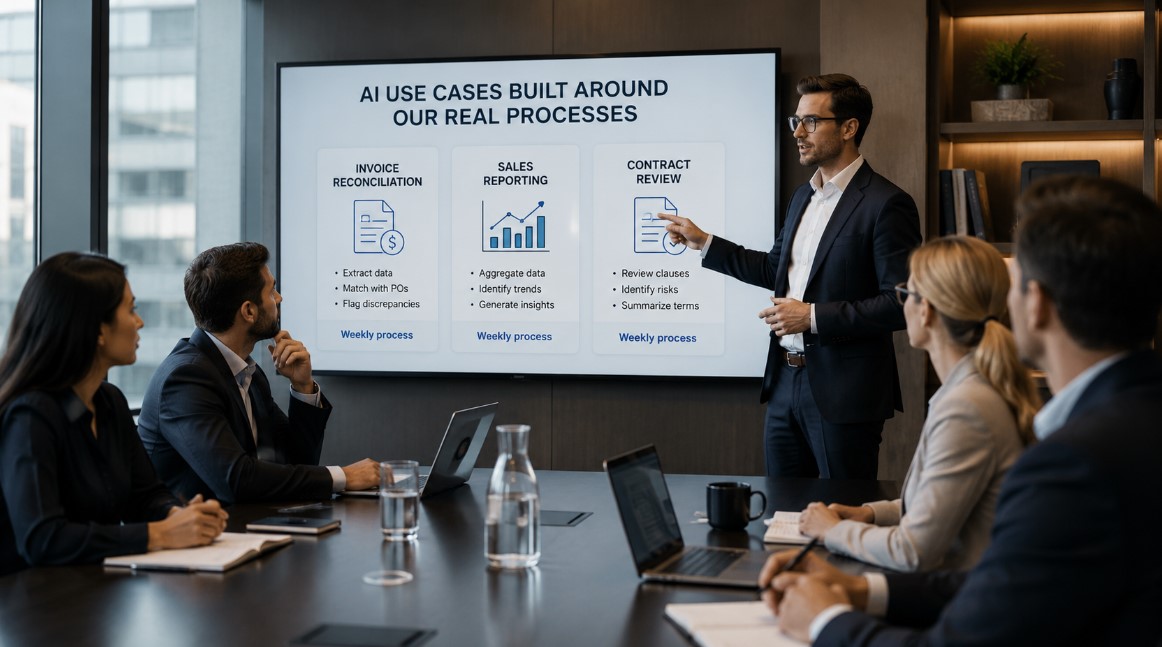
The fix is simple, and it’s rarely implemented: ask the speaker to design use cases using your actual processes ahead of the session. Share examples of 2 or 3 processes your teams do on a weekly basis, and ask the speaker to build examples around them.
Ask them to bring your real-world use cases to life; a competent speaker will have asked for this information before the briefing, as they know that designing a use-case around a generic process means shooting themselves in the foot in front of you.
Governance and responsible AI, simply explained
AI governance used to be a compliance obsession, but it’s now a board-level priority, fueled by both regulation (looking at you, EU AI Act), and the fact that employees are already adopting publicly available large language models, with little guidance from within the company on how to responsibly experiment.
Your session should make this a trust-building opportunity, rather than get mired in policy details; do the attendees have a good sense of what makes a model’s choices biased, what happens inside the model when they hit “enter”, or what’s the difference between “helpful automation” and “regulatory exposure” for the company?
Without this, you’ll either see employees disengaging from the tool or, more worryingly, using it irresponsibly. Either way, neither you nor your business benefits from either outcome.
What happens to people’s jobs – said out loud
This is a taboo topic for vendors, but it’s often the biggest concern for your teams, and one that change managers across the industry have been battling for years.
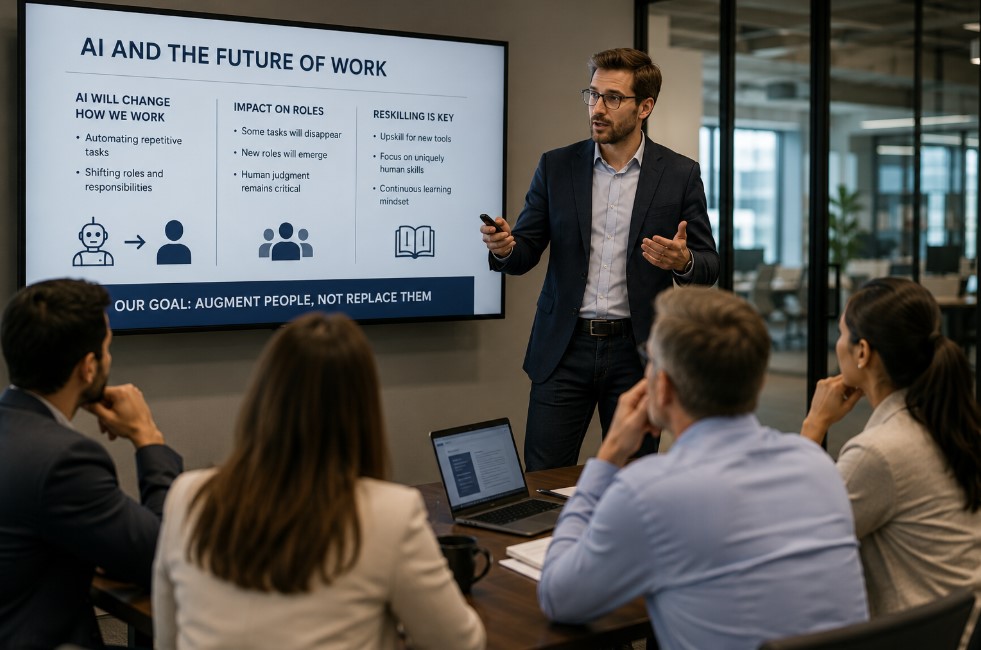
The fear of losing jobs to automation can often overshadow the benefits of adopting AI; your attendees will leave the session with the robot takeover narrative in the back of their heads, and actively push back against the implementation for the next 6 months
A competent speaker will tackle this head-on: what does the speaker see as the biggest impact on roles, and what kind of reskilling will be necessary for teams to actually reap the rewards of AI?
This isn’t a pep talk, it’s an honest conversation, and it’s needed to move forward; one that once again, requires a certain level of comfort from the speaker, since they have to balance between honest assessment and not undermining their own business in the process.
A roadmap from pilots to production
Finally, the most crucial one: a briefing without a concrete roadmap is little beyond a motivational talk. Your attendees need to leave the session with a set of attainable expectations for the next 6-12 months: what do they need to have in place for a pilot to happen, what’s the estimated investment (time or otherwise) on their end for a proof of value, and what’s the business case for moving from one project to production, including the risks that it entails (e.g. little to no revenue gains if they’re looking to find defects).
Make It Interactive
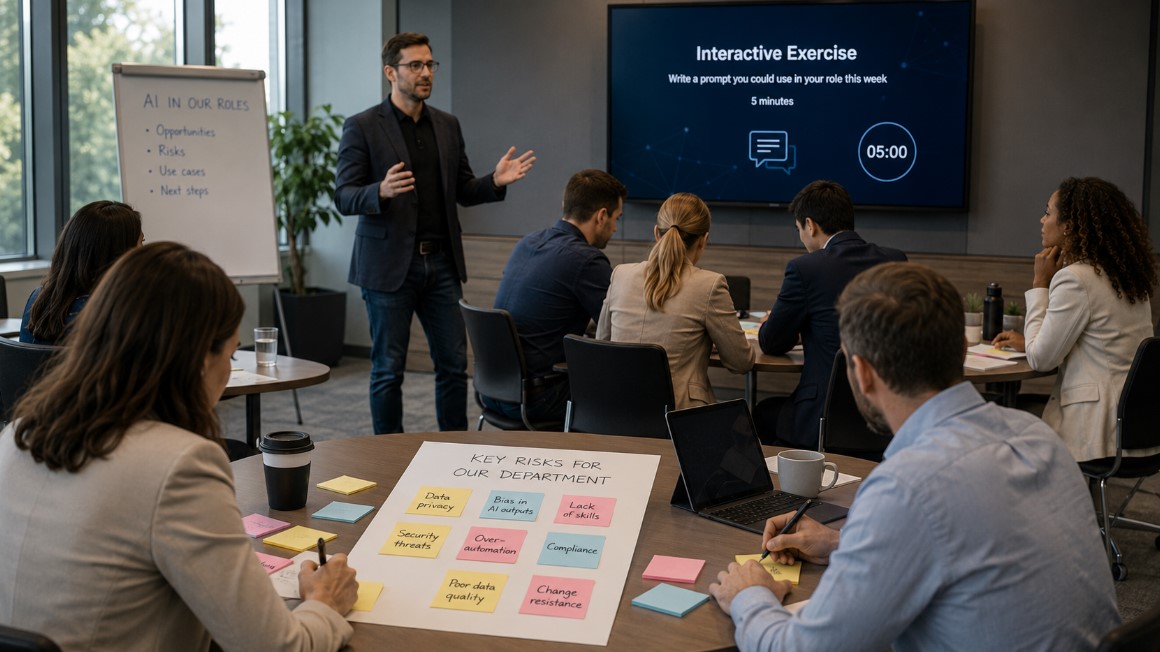
This is where having a live interactive segment can really help, be it through a workshop or a simple exercise where a few members of the audience can spend 5-10 minutes outlining the main risks for their department, given the direction of the presentation; having people write a sample prompt based on the application of AI to their role is a great way to engage people and leave them with a lasting impression, compared to a generic slide that’s shown for a minute.
None of the four topics above can be delivered in a truly memorable way by someone who can’t adapt to the audience’s needs mid-session and change examples on the fly; instead, they’re signs of a speaker with the competencies and flexibility to create a briefing that actually connects with the audience and helps them in their own journey with AI, rather than a generic presentation that’ll be quickly forgotten. That’s why you should aim to shortlist an ai expert speaker with enterprise experience, not merely a technically competent one; a seasoned expert knows what they’ve seen after years of presentations, and what they haven’t, and will be able to tailor the session to your specific needs much better than someone who’s done a few talks.
Prepare the Speaker for Your Audience
Give the speaker a briefing pack, not a topic list. This is a simple tip, but it’s often overlooked: when setting up the call with the speaker, send them a one-pager with information about the audience, as well as the state of AI adoption at your company. Brief them on 3 things that you want to know more about, rather than leaving them to guess at the topic of the briefing.
Because topic selection is often one of the most challenging aspects of these types of programs, both for the speaker and the event planner, it’s worth noting that both sides benefit from a briefing that’s tailored to the needs of the audience; in reality, even a competent but generic session will see the attendees left wanting, since the speaker will have to use general examples that don’t reflect the audience’s reality.