

LinkedIn has been citing the same headline number since roughly 2017: profiles with a photo get 21 times more views and nine times more connection requests than profiles without one, according to LinkedIn’s own sales blog.
That stat is nearly a decade old and it hasn’t moved, so if the multiplier hasn’t changed, why does the photo suddenly feel like it’s carrying more weight in 2026 than it did in 2021?
After digging through LinkedIn’s own policy pages, a handful of 2026 hiring studies, and the AI-headshot mess currently flooding the platform, it appears the statistic was never really the point.
What changed is what happens in the 10 seconds after someone clicks on your profile, and three things happened at once to make that moment higher-stakes than it used to be.
The Old Case for a Good Photo
Princeton researchers Janine Willis and Alexander Todorov found that people form trustworthiness judgments from an unfamiliar face in about 100 milliseconds (a tenth of a second).
Giving someone more time to look barely changes the verdict, only their confidence in it. This finding is from their original 2006 study, and it’s held up well enough that it still anchors most serious writing on first impressions today.
When you add LinkedIn’s own engagement numbers on top of that, the case writes itself: more views, more connection requests, more of the algorithm’s attention.
It’s important to note that LinkedIn’s own help center quotes a much more modest “up to two times more profile views and three times more connection requests” for the same claim.
The direction is consistent: a photo helps, but the exact size of the boost depends entirely on which of LinkedIn’s own marketing pages you happen to land on. Worth remembering next time a stat this tidy shows up without a methodology attached.
What Is Different in 2026?

There are three factors at play, and none of them are about the photo itself getting more important in the abstract. They’re about the environment around it changing.
Your photo now has to survive a video call
Hiring stopped being a mostly in-person process a while ago, but 2026 is the year it became almost entirely video-first.
Roughly 90% of organizations now use video interviews at the early stages of hiring, and 82% of hiring managers say they use virtual interviews somewhere in their process, according to industry data compiled by recruiting platform Truffle.
Separately, workforce researchers at cvmark.io put the figure for virtual-first first rounds at over 82% of companies.
When it comes to your headshot, a static photo is now a preview of a video call that’s going to happen a week later, rather than a first impression.
If your LinkedIn photo is five years, 20 pounds, or one hairstyle out of date, the recruiter may experience doubt before your camera ever turns on. That mismatch is a trust problem now in a way it never used to be, because the gap between photo and Zoom-you gets tested within days instead of months.
AI headshots changed what a professional photo signals
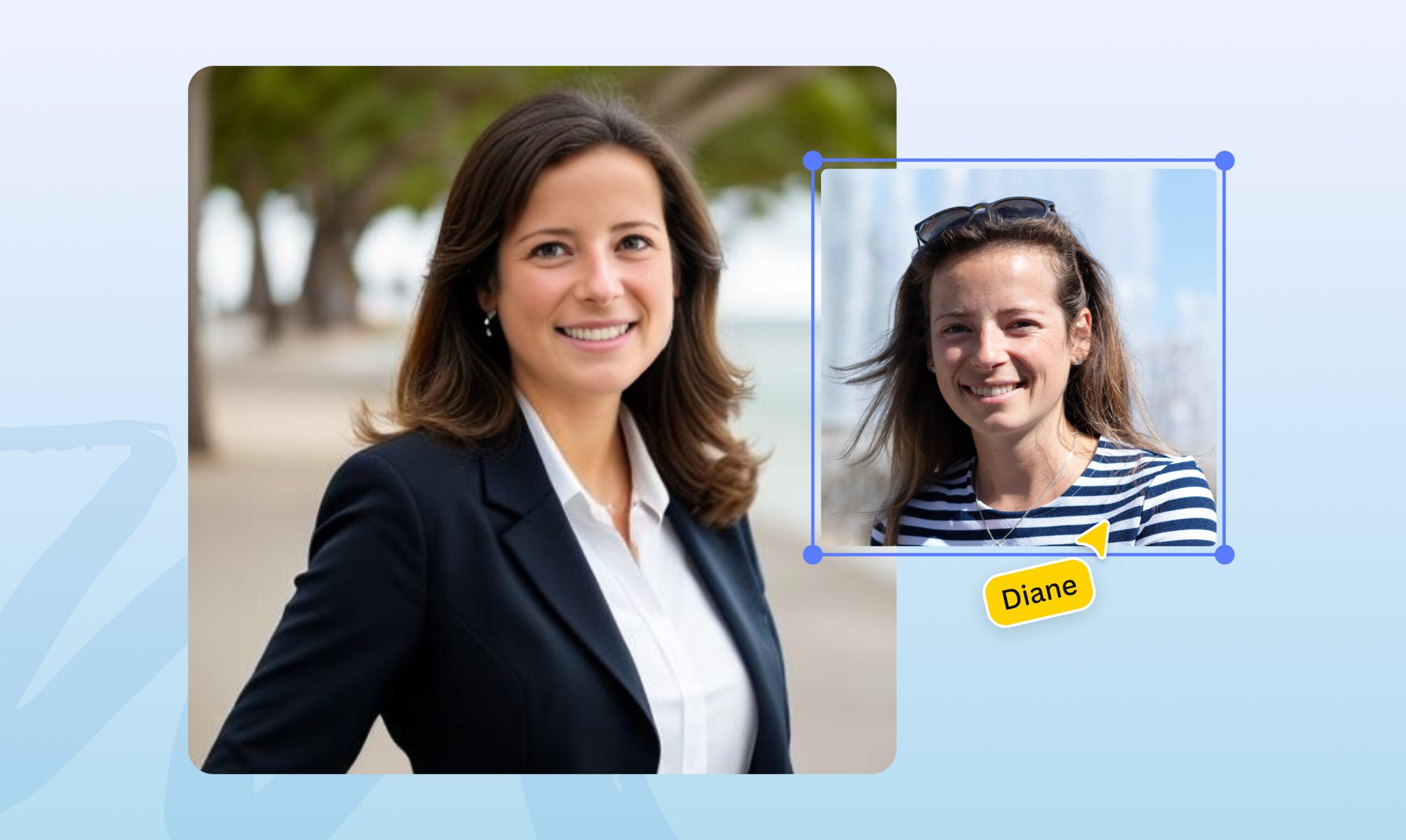
AI headshot generators are now common enough that Business Insider reporter Ana Altchek ran her own test in July 2026, feeding a real photo of herself into ChatGPT Enterprise and Gemini and asking colleagues to guess which image was real. Her verdict, and the headline of the piece: people mostly couldn’t tell.
That’s consistent with the largest formal study on the question. Ringover surveyed 1,087 US recruiters in June 2024 and found that 76.5% preferred AI-generated headshots over real ones in a blind comparison, until they were told which was which.
Once informed, 66% said they’d be put off by a candidate using an AI photo, and 88% believed AI use should be disclosed. Recruiters correctly identified which headshot was AI-generated only about 40% of the time, barely better than a coin flip, per reporting from PetaPixel’s coverage of the survey.
LinkedIn is quietly grading your photo’s authenticity
LinkedIn’s own trust and safety team has been training deep-learning models to detect AI-generated profile photos since at least 2023, when it published research with UC Berkeley professor Hany Farid claiming 99.6% detection accuracy against GAN generated faces.
The catch, buried in LinkedIn’s own paper: that detection method was trained on older GAN architectures (StyleGAN1 through 3) and explicitly does not generalize well to diffusion-based generators, which is what most current AI headshot tools, including the ones people are using on LinkedIn right now, actually run on.
In practice, that means LinkedIn’s fraud detection is aimed at fake accounts wholesale-inventing faces, not at real members using AI to polish a real photo.
A LinkedIn spokesperson confirmed as much to CNBC in 2025, saying the platform allows AI tools “to enhance or create profile photos,” but that “the photo must reflect your likeness“.
When you combine that with a platform that just crossed 1.3 billion members (up from 1.2 billion earlier this year, per LinkedIn’s own pressroom), the picture is one of more competition for the same finite amount of attention, with a platform that has both the incentive and the tooling to notice when your photo doesn’t look like you.
The Wrong AI Headshot Debate
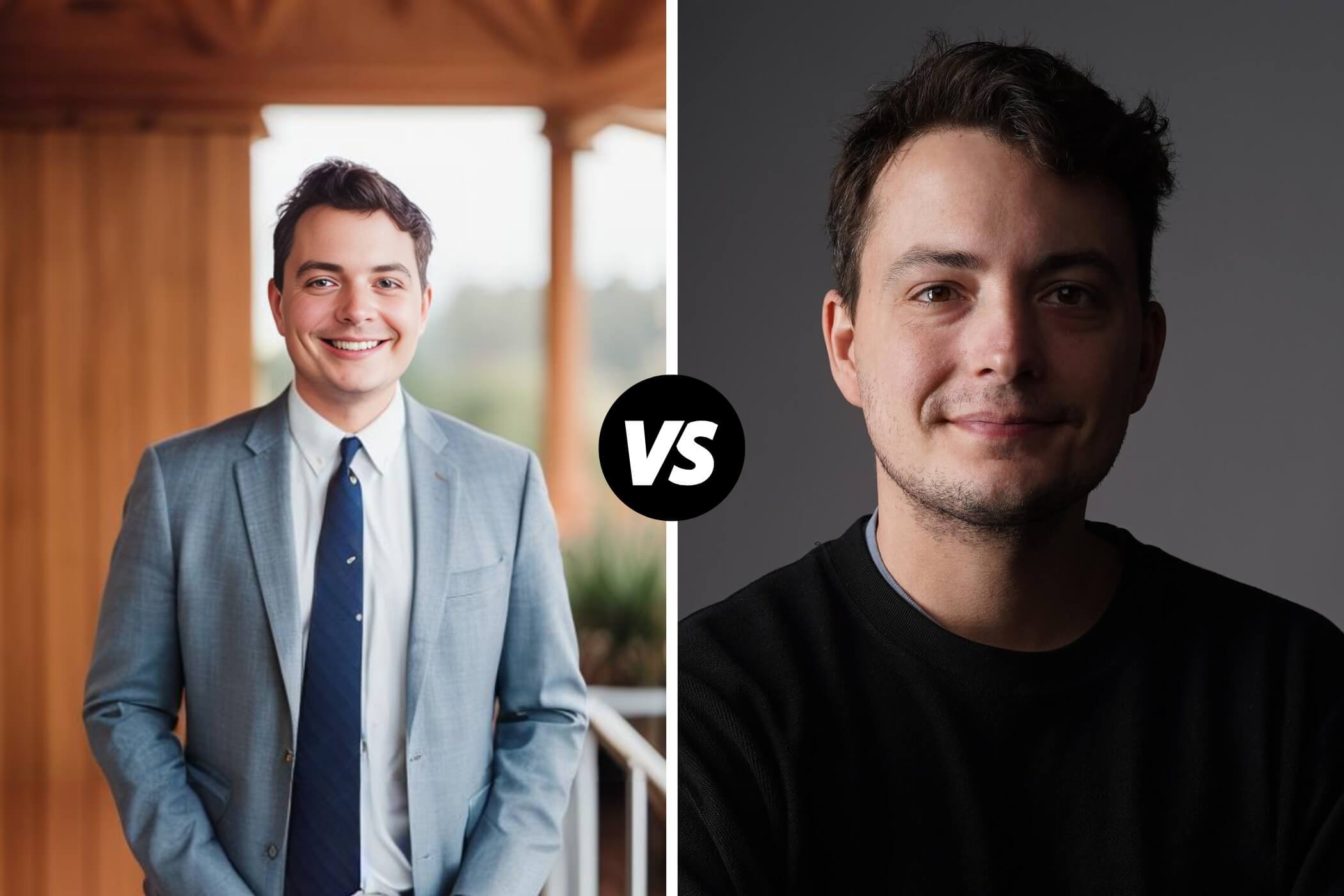
When it comes to the standard debate over AI headshots, there are generally two camps: the first believes AI headshots are a soulless scam, while the second believes they are indistinguishable from the real thing.
What people are missing is that the tool matters less than the result. An AI headshot built from your own real photos, that keeps your actual face and just fixes lighting and background, is functionally identical to a professionally retouched studio portrait. A fully synthetic face, or one that quietly smooths 10 years off your appearance is a different story.
A slightly less flattering, entirely real photo costs you almost nothing. A flattering photo that doesn’t match the person who turns their camera on costs you the first 30 seconds of a conversation you were trying to win.
What the Options Actually Cost
If you’re deciding how to actually get a current photo, here’s what the three realistic routes look like, based on pricing reported by headshot-industry analysis site Capturely in its 2026 breakdowns of both LinkedIn headshot options and team headshot ROI.
|
Option |
Typical Cost | Turnaround |
Where it falls short |
|
Smartphone selfie / friend with a phone |
Free | Minutes |
Lighting and background |
|
AI headshot generator |
$20 to $75 per person | Minutes to hours |
Lowest perceived competence, disclosure risk if discovered, unreliable when it comes to hair, jewelry, and dental |
|
Live professional photographer (virtual or in-studio) |
$45 to $80 per person for virtual sessions, $150 to $450 for traditional | Same day to about a week |
Highest cost and requires scheduling |
Pricing as reported by Capturely, current as of March 2026; expect regional variation, and treat AI generator pricing as especially likely to shift.
If you’re leaning toward the professional route and you’re based in or near a major market, it’s worth booking a session rather than defaulting to the generator currently trending on your feed this month.
A same-day sitting at a dedicated NYC headshot studio can solve the likeness problem entirely because there’s no likeness question to begin with: it’s just you, photographed the way you actually look right now.
Does This Matter if You’re Not Job Hunting?

LinkedIn’s growth to 1.3 billion members means more competition on the feed for anyone posting, commenting, or sending a cold connection request.
Sales teams see this most directly: profiles with current, professional photos get measurably more inbound messages, and consistent visual branding across a team has been linked to a 33% revenue lift in analysis from Lucidpress and Demand Metric, cited repeatedly in Capturely’s ROI research.
How Often Should You Update It?
Every two to three years is the rough consensus, and sooner if your appearance has changed noticeably (new hairstyle, significant weight change, you’ve simply aged past recognizability from the old shot) or if you’ve changed roles enough that the background or attire in the old photo no longer fits. A quick test you can implement is that if a colleague would hesitate for even a second recognizing you from the photo, it’s time.
Endnote
The 21x-more-views stat isn’t why your photo matters more now; that number has been sitting there unchanged for years.
What changed is that video-first hiring turned your photo into a promise you have to keep on camera days later, AI headshot tools made “professional-looking” cheap and common enough that authenticity became the actual differentiator, and LinkedIn itself got better at noticing when a photo doesn’t add up.
This means the margin for a photo that quietly doesn’t match reality got a lot thinner than it was five years ago, and the fix is to take a recent, real, well-lit photo of theperson who’s going to show up on the call.
Methodology
Facts and figures here were checked against LinkedIn’s own pressroom, help center, and engineering blog, a 2024 Ringover survey of 1,087 recruiters as reported by PetaPixel and TechRadar, 2026 hiring-industry data from Truffle and cvmark.io, Capturely’s 2026 headshot pricing and ROI research, and the original 2006 Willis & Todorov study on face-based first impressions, all accessed in August 2026.
Pricing figures for headshot services will shift and should be rechecked before budgeting; LinkedIn’s own member-growth and engagement figures update quarterly with its earnings releases.