

Leasing a car sounds simple until the quote lands in front of you. There is the monthly payment, the “due at signing” amount, taxes, fees, and sometimes a down payment that may or may not be required.
So, how much is the average down payment on a car lease? For many everyday leases, it usually sits around $1,000 to $3,000, though plenty of drivers lease with $0 down when the deal and their credit profile allow it.
The Real Average Is Often Lower Than Expected

A car lease down payment is different from a down payment when buying a car. When you buy, your upfront money helps create equity because you are paying toward ownership. When you lease, you are paying to use the vehicle for a set term, usually based on depreciation, rent charges, taxes, and fees.
That is why many shoppers avoid putting too much cash down. A smaller lease down payment keeps more money in your account and still lets you drive the car. A practical starting point is simple: put down only what makes the monthly payment comfortable, not everything you have saved. For many drivers, that means $0 to $1,500 upfront.
Down Payment vs Amount Due At Signing
This is where many lease offers become confusing. A lease down payment, also called a capitalized cost reduction, lowers the amount used to calculate your monthly payment. Amount due at signing is broader. It may include the first month’s payment, acquisition fee, registration, documentation fee, taxes, security deposit, and the down payment if you choose one.
So, a lease advertised as “$2,999 due at signing” does not always mean $2,999 is reducing the vehicle cost. Some of it may be startup money. That distinction matters if you are comparing offers or reviewing older finance agreements, including PCP, HP, or car finance claims where understanding what you paid upfront can make the paperwork clearer.
Why A Bigger Down Payment Looks Tempting
A bigger upfront payment can make the monthly number look nicer. That is why it appears in so many lease ads. If you put $3,000 down instead of $0, the monthly payment may drop enough to feel like a better deal. But the full lease cost may not change dramatically.
Here is what a larger car lease down payment usually does:
- Lowers the monthly payment
- Reduces the adjusted capitalized cost
- Makes the advertised deal look cheaper
- Leaves less cash available after signing
The risk is worth noting. If the leased car is stolen or totaled early, you may not get that upfront money back. Gap coverage may help with the payoff, but it usually does not refund your personal down payment.
A Simple Way To Think About The Numbers
Imagine a 36-month lease on a car with an agreed value of $34,000 and a residual value of $21,000. The lease is mainly built around the $13,000 difference, plus rent charges, taxes, and fees. If you add $2,000 upfront, the monthly payment drops, but you have basically prepaid part of the lease.
| Lease style | Upfront down payment | Monthly payment | Cash flexibility |
|---|---|---|---|
| Low upfront | $0 | Higher | Stronger |
| Moderate | $1,500 | Balanced | Reasonable |
| High upfront | $3,500 | Lower | Weaker |
The middle path often feels best. It lowers the payment a little without draining the money you may need for insurance, fuel, repairs, parking, or normal life expenses. It also keeps the deal easier to compare.
When A $0 Down Lease Makes Sense
A $0 down lease can be a smart option when the money factor is low, your credit is solid, and the monthly payment still fits your budget. It also keeps your savings available, which matters more than people admit. Cars are not the only thing asking for money every month.
Important note: “$0 down” does not always mean “$0 due today.” You may still owe the first payment, taxes, registration, and other signing fees.
So the better question is not only “how much is the average down payment on a car lease?” It is also “how much total cash do I need before I can drive away?” That small distinction protects your budget.
What To Check Before Signing
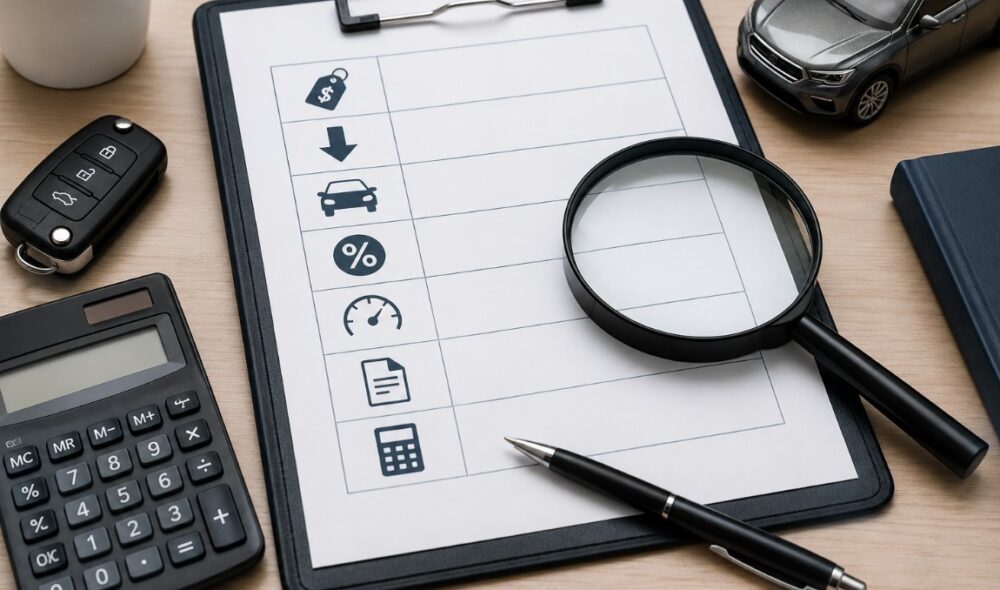
Before signing, ask for the full lease worksheet. Do not judge the deal only by the monthly payment. You want to see exactly how that payment was built and which costs are being paid upfront.
Check these items carefully:
- Gross capitalized cost
- Capitalized cost reduction
- Residual value
- Money factor
- Mileage allowance
- Acquisition and documentation fees
- Total amount due at signing
Ask the dealer to separate the true down payment from taxes and fees. If the explanation feels vague, pause. Clear numbers are part of a good lease deal. A clean worksheet makes every charge visible.
So, What Is A Good Down Payment?
For most people, a good down payment on a car lease is the smallest amount that keeps the monthly payment comfortable while preserving cash. In plain English, do not overpay upfront just to make the monthly number prettier. A typical range of $0 to $3,000 covers many mainstream leases, but the best amount depends on the vehicle price, incentives, credit profile, term length, and local taxes.
The smartest move is to compare the same lease three ways: $0 down, $1,000 down, and $2,000 down. Then look at the total lease cost, not just the monthly payment. That usually reveals which offer is actually better and keeps the decision grounded.
FAQs
At last
Leasing works best when you stop chasing the smallest monthly payment and look at the full deal.
The average down payment on a car lease is usually modest, and in many cases, less is better.
Keep upfront cash reasonable, understand what is due at signing, and compare total cost before signing.