

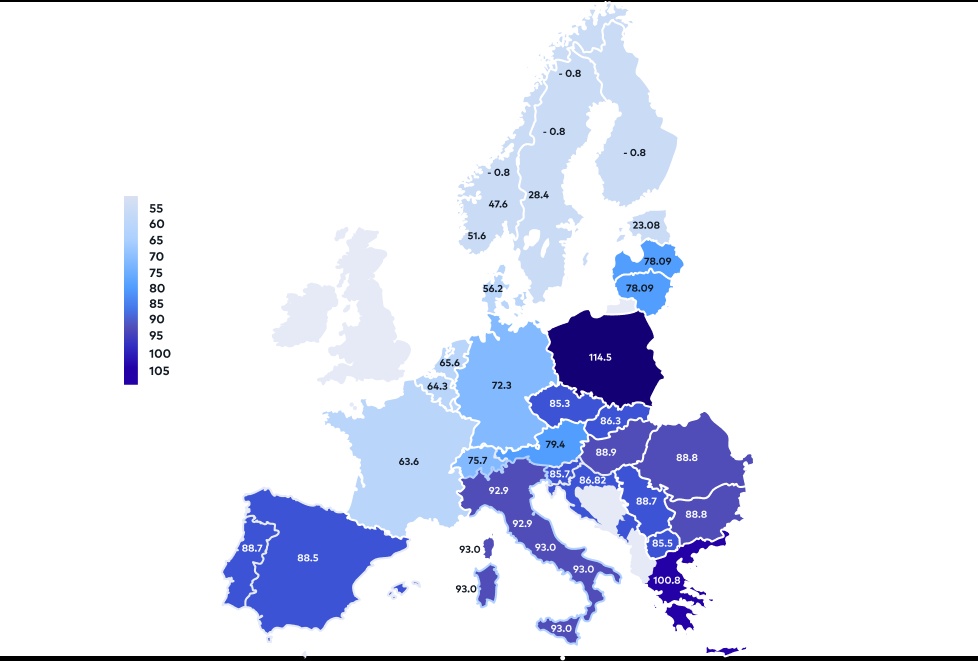
Electricity prices remain one of the most discussed household expenses across Europe in 2026. While the energy crisis of 2022 is no longer at its peak, consumers are still paying more for electricity than they did before that period.
The answer to the question is not as simple as a single number because electricity prices vary significantly between countries, suppliers, taxes, and network charges.
Still, recent data gives us a reliable benchmark for understanding where Europe stands today.
Average Electricity Price In Europe In 2026

When people ask about the average price of electricity in Europe in 2026, they are usually looking for a practical figure they can compare with their own bill.
According to Eurostat’s May 2026 release covering the second half of 2025, the average household electricity price across the European Union was €28.96 per 100 kWh, or approximately €0.29 per kWh.
That figure represents a small increase from the first half of 2025 and remains considerably higher than pre-2022 levels.
For consumers comparing suppliers rather than countries, switching tariffs can sometimes make a meaningful difference. In competitive markets such as the UK, households often look beyond the headline unit rate and compare standing charges, contract terms, and supplier incentives. If you are researching available options, this guide to the Octopus referral code explains one example of a supplier incentive available to customers considering a switch.
The European average provides a useful reference point, but actual prices can differ substantially depending on where you live.
Why Electricity Prices Differ Across Europe
Looking at average electricity prices alone can be misleading because every country has a different energy system.
Several factors influence what households ultimately pay:
- National taxes and levies
- Grid maintenance and network charges
- Renewable energy policies
- Dependence on imported natural gas
- Local market competition
According to Eurostat’s 2026 electricity price statistics, taxes and levies represented nearly 29% of the final household electricity price across the EU during the second half of 2025.
This explains why neighboring countries can have noticeably different electricity bills even when wholesale power prices are similar. The final amount consumers pay often depends just as much on policy decisions and infrastructure costs as on the electricity itself.
Which European Countries Have The Highest And Lowest Electricity Prices?
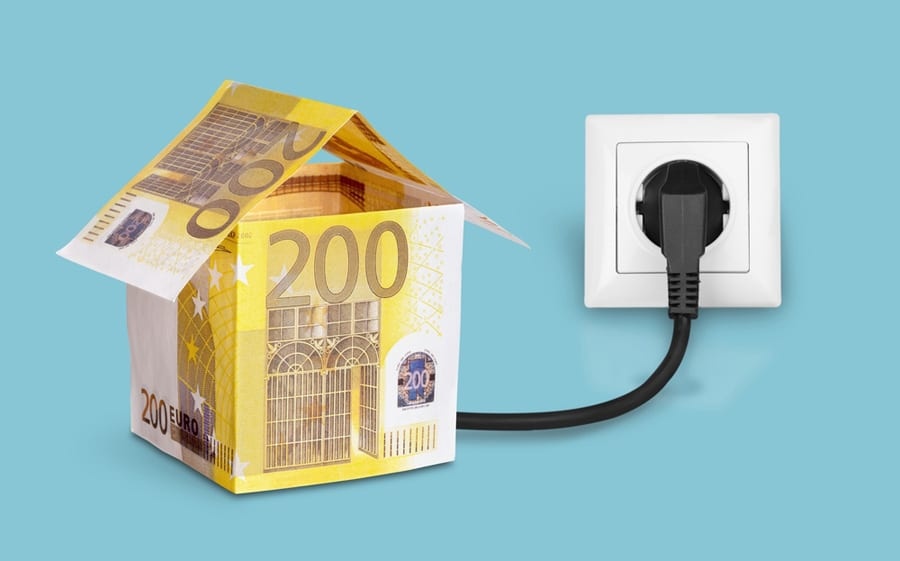
Price differences across Europe remain substantial in 2026.
Countries with high electricity prices generally combine higher taxation, stronger environmental levies, or greater dependence on imported energy. Meanwhile, countries with abundant hydroelectric, nuclear, or renewable generation often enjoy lower prices.
| Category | Typical Examples |
| Higher-price markets | Germany, Ireland, Belgium, Czechia |
| Mid-range markets | France, Spain, Italy, Austria |
| Lower-price markets | Finland, Sweden, Hungary (varies by tariff structure) |
For business users, Eurostat reported that average non-household electricity prices across the EU fell to €18.37 per 100 kWh during the second half of 2025. Ireland, Cyprus, and Germany recorded some of the highest business electricity prices, while Finland and Sweden were among the lowest.
These differences highlight how national energy strategies directly affect electricity affordability.
What Is Driving Electricity Prices In 2026?
Several market forces continue to shape electricity prices this year.
A key factor remains the relationship between electricity generation and natural gas prices. Although renewable energy continues to expand across Europe, gas-fired power plants still influence electricity pricing in many markets.
According to the International Energy Agency’s Electricity 2026 report, European electricity futures for 2026 averaged around USD 95 per MWh at the beginning of the year, remaining broadly similar to 2025 levels before easing in later years.
Important price drivers include:
- Natural gas market volatility
- Grid congestion and transmission costs
- Weather conditions affecting wind and hydro output
- Carbon pricing mechanisms
- National tax policies
These factors can cause noticeable price differences even within the same year.
Important fact: Eurostat reported that household electricity prices increased in 17 EU countries and decreased in 10 during the second half of 2025, demonstrating that electricity costs are still moving in different directions across Europe depending on local conditions.
How Renewable Energy Is Affecting Electricity Costs

Renewable energy continues to play a larger role in Europe’s electricity market.
The International Energy Agency stated in its 2026 Electricity report that renewable generation in the European Union is expected to exceed combined non-renewable generation by 2026, with renewables accounting for an increasingly large share of electricity production (https://www.iea.org/reports/electricity-2026/supply).
This shift matters because renewable sources generally have lower operating costs once facilities are built.
However, lower generation costs do not automatically translate into lower household bills. Consumers still pay for:
- Grid expansion projects
- Energy storage investments
- Network modernization
- Balancing and backup generation
As a result, renewable growth helps stabilize long-term electricity costs but does not eliminate other components of the final bill.
Will Electricity Prices Fall In The Coming Years?
Most analysts expect electricity markets to remain volatile, although many forecasts suggest a gradual improvement compared with the most severe years of the energy crisis.
The International Energy Agency expects European electricity demand to grow steadily through 2030 while renewable generation continues expanding.
Whether consumers see lower bills will depend on several developments:
- Speed of renewable deployment
- Natural gas market stability
- Electricity grid investments
- Government tax policies
- Cross-border energy trading efficiency
In practice, some countries may experience lower prices while others continue facing upward pressure due to infrastructure costs or fuel dependency.
Final Thoughts
The average household electricity price in Europe in 2026 is approximately €0.29 per kWh, based on the latest EU-wide data. While that provides a useful benchmark, actual costs vary widely from one country to another.
Taxes, grid charges, energy mix, and supplier competition all play a role in determining what consumers ultimately pay.
For households looking to reduce costs, comparing suppliers and understanding local tariff structures remains one of the most effective strategies.
FAQs
1. Why is electricity more expensive in some European countries than others?
Electricity prices vary because countries have different tax systems, grid costs, energy mixes, and levels of dependence on imported fuels. These factors influence the final retail price consumers pay.
2. Do renewable energy sources always lower electricity bills?
Not necessarily. Renewable generation can reduce wholesale electricity costs, but consumers may still pay for grid upgrades, storage systems, and network maintenance.
3. Is electricity cheaper for businesses than households in Europe?
Generally, yes. Businesses often pay lower rates because household tariffs include VAT and other consumer-focused taxes and levies.
4. What part of an electricity bill is usually not the electricity itself?
A significant share of many European electricity bills comes from taxes, levies, and network charges rather than the electricity supply cost alone.
5. Can two households in the same country pay different electricity prices?
Yes. Different suppliers, contract types, fixed-rate agreements, and time-of-use tariffs can result in different electricity costs for households within the same market.