

In the year 2025, a significant increase in bankruptcies in America was recorded. Analysts expect the trend to continue through 2026. This finding is in line with the statistics from Epiq AACER bankruptcy analytics’ platform and the Administrative Office of the U.S. Courts during the calendar period 2025 when a total of 565,759 bankruptcies were filed.
Individuals declare bankruptcy as a last resort when they are facing critical credit reports that could be detrimental to their future. Questions concerning how long a bankruptcy will stay on their record is often asked by someone who has had to file for bankruptcy
How long does bankruptcy stay on your record? Let’s find out!
How Long Does Bankruptcy Stay on Your Credit Report?

There are various types of bankruptcy, and its duration on one’s credit is dependent on the type of bankruptcy one files. Filing for Chapter 7 bankruptcy will make it difficult for you to apply for credit for a period of 10 years, while Chapter 13 is less severe with only a 7-year ban.
That difference matters more than people realize. With Chapter 13, the repayment plan typically runs three to five years. By the time the plan finishes, only two to four years usually remain before the bankruptcy itself disappears. Chapter 7 cases close in three to four months, but the credit report entry sticks around for the full decade.
Filing for bankruptcy is not the end. Don’t think that bankruptcy entirely ruins one’s life. According to bankruptcy lawyer Timothy M. Pletter, people can take advantage of bankruptcy and start to rebuild their credit and qualify for a low-balance credit card within a relatively short amount of time.
The Federal Trade Commission regulates how credit bureaus report this information. Timelines for bankruptcy are based on federal law rather than being a mere suggestion of the lender.
Chapter 7 vs. Chapter 13: Why the Timelines Are Different
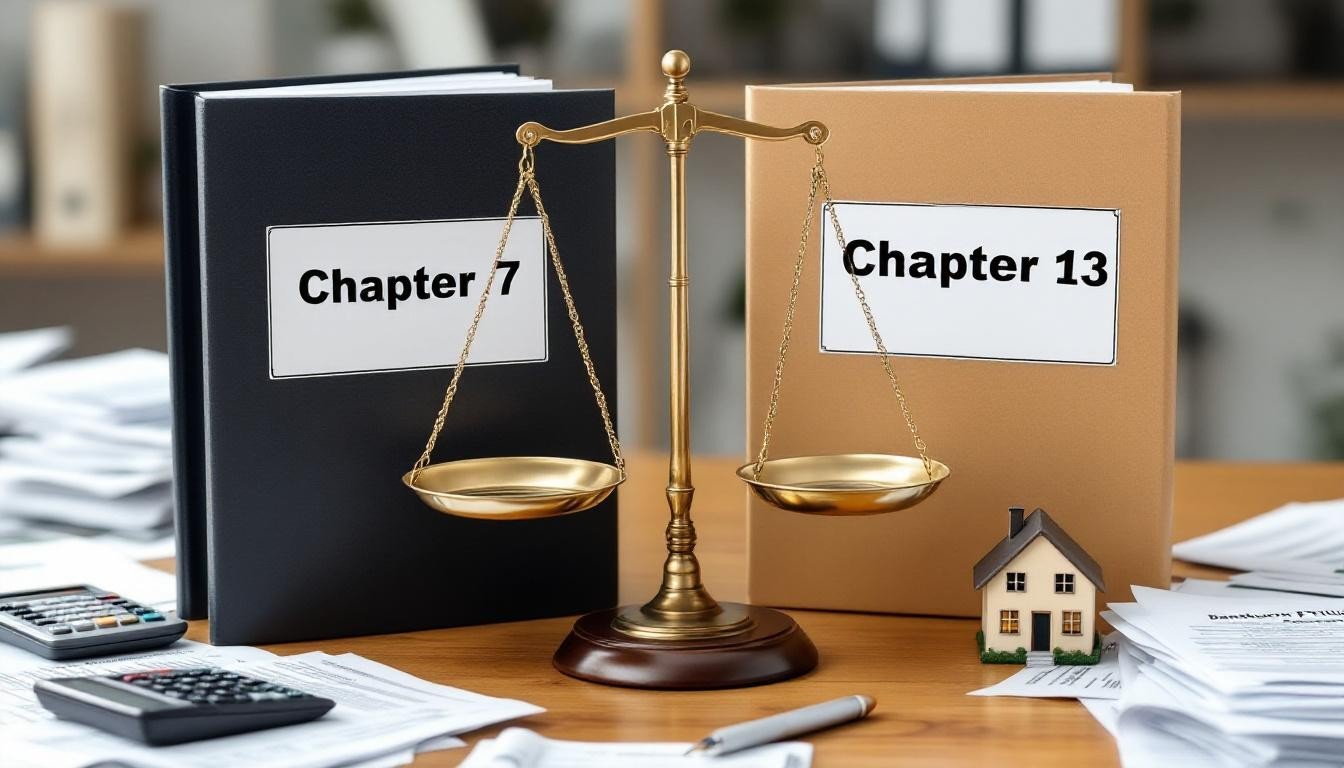
There is nothing random about the extensive stay of Chapter 7 on a credit record compared to Chapter 13. The two bankruptcy types do very different things, and credit bureaus weigh them accordingly. Chapter 7 and Chapter 13 together make up roughly 99 percent of personal bankruptcy filings. Only Chapter 7 is more common than the others by a wide margin.
According to Epiq AACER bankruptcy data, consumer Chapter 7 filings reached 332,706 in 2025. That is in contrast with 200,055 Chapter 13 filings.
Chapter 7: Liquidation Bankruptcy
Section 7 of the bankruptcy code is well known for its ability to liquidate unsecured debts such as credit cards, health bills, and personal loans.
Most debtors keep everything they own through state and federal exemptions, but a trustee can pay creditors from the sale of non-exempt assets. Usually, the debtor receives a discharge, which relieves him or her of his or her debts after the case is filed for about three to four months.
After the personal filing of the Chapter 7 bankruptcy has been concluded, the entry usually remains on the credit report for almost a decade since the debts are just written off rather than resolved through payment.
Chapter 13: Reorganization Bankruptcy
Chapter 13 refers to a type of bankruptcy where the court assists you in drawing up a repayment plan that lasts 3 to 5 years. Filers can keep their assets, including their home and car. In this case, they make monthly payments to a trustee who distributes the money to creditors.
For Chapter 13, the debtor pays back at least part of what is owed. Credit bureaus report it for 7 years. More information on the detailed workings of Chapter 13 plans and the criteria to be met can be obtained from the U.S. Courts.
Chapter 11 and Chapter 12
Companies often use Chapter 11 bankruptcy. In some cases, individuals with substantial debts file them. It stays on a credit report for 10 years.
Chapter 12 is for family farmers and fishermen and stays for 7 years. Most people never need to think about either one.
Credit Recovery Begins Before the Bankruptcy Disappears

The individual accounts included in a bankruptcy fall off a credit report 7 years from the original delinquency date, which is usually months or even years before the filing.
The bankruptcy filing is a separate public record with its own clock. For Chapter 7, it may stay on a credit record for a decade, but the underlying accounts that contributed to the bankruptcy usually fall off sooner.
The bankruptcy line item gets less weight as it ages, the underlying delinquencies drop off, and any new positive credit built during recovery starts carrying the score. When these outcomes are realized, people start to see real credit score recovery long before the seven- or ten-year mark. In most cases, positive outcomes can be seen in just 18-24 months.
Steps to Rebuild Credit While the Bankruptcy Is Still on Record

Recovery does not mean sitting idly until the bankruptcy happens. The actions carried out in the first couple of years are critical.
- Always request copies of the credit reports from all three bureaus and ensure that the debts discharged do not contain any outstanding balance.
- Get a secured card that will carry out low charges and commit to paying it in full every month.
- It is also best to keep credit to a minimum, fewer than 30 percent of the limit and ideally less than 10 percent.
- Make it a point to pay all the rent, utilities and telecommunication expenses, as they amount to 35% of a credit score.
- It might also be a good idea to get some help by requesting a family member or very close friend if you can become an authorized user of their credit card.
None of these steps require taking on new debt. They rebuild the proof points lenders look for.
What to Do If a Bankruptcy Stays on Record Past Its Expiration Date
The removal of bankruptcy in one’s record should be automatic. In some cases, unfortunately, there are credit bureaus that make mistakes.
According to a decade-long research conducted by the Federal Trade Commission, about a fifth of the credit reports that were analyzed proved to contain errors. Approximately a quarter of the errors heavily impacted the consumer’s credit rating.
In case a bankruptcy is still operating on a credit report even after 7 to 10 years, such consumers shall be entitled to dispute all adverse credit activities under the provisions of the Fair Credit Reporting Act. In this case, the credit bureau is required to investigate and correct or remove inaccurate information.
Disputes need to be filed with each bureau where the error appears. Equifax, Experian, and TransUnion each have their dispute processes. Filers should provide their filing date, the chapter filed, and any documentation showing the entry has expired. Bureaus usually have 30 days to respond.
What Changes When Bankruptcy Falls Off a Credit Record

Once the bankruptcy disappears, lenders looking at the credit report no longer see the public record entry. Scores typically jump, sometimes significantly. According to credit education materials from FICO, a bankruptcy can cause an initial score drop of 130 to 240 points depending on the starting score. Removal of the entry triggers a reversal. Better interest rates on auto loans and mortgages, more credit card options, and cleaner rental applications usually follow.
That said, the disappearance will not excuse an individual from credit scrutiny. Lenders making large loans sometimes ask directly on a written application whether a bankruptcy has ever been filed. Lying on a credit application is a serious problem. Be honest and tell how you applied for bankruptcy and that it went off the record after a few years.
The Timeline That Actually Matters
The 7- or 10- year timeline is the maximum, not the active recovery period. The bankruptcy line item is just one entry on a report full of newer information. Keep in mind that the older it gets, the less weight it carries.
The pattern in the data is consistent. The fastest recoveries don’t come from choosing the right bankruptcy type or filing at the right time. They come from treating the post-discharge period as a fresh start rather than a sentence. It would help your financial situation if you establish a new positive credit history and let the old entry quietly age out.