

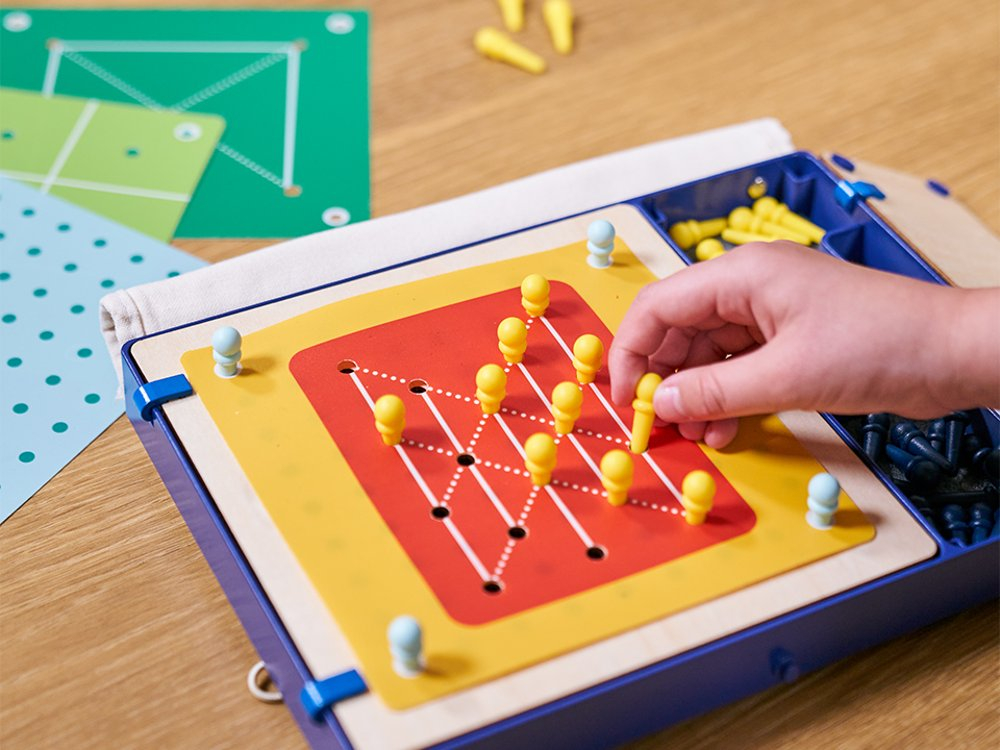
Pegboard games are almost absurdly simple: release a ball or chip, watch gravity send it through a field of pegs, and wait to see where it lands. Yet that basic mechanic has survived parlor games, arcades, television, and the shift to digital platforms.
According to the Entertainment Software Association’s 2026 Essential Facts About the U.S. Video Game Industry, released June 3, 2026 with research conducted by YouGov, 67% of Americans ages 5 to 90 play video games for at least one hour per week.
So why does such an old format still work? And what changed once the physical board became software?
Here’s What’s Inside
This guide follows that evolution through several important stages:
- Bagatelle established the sloped board, obstacles, scoring pockets, and launching mechanisms that later influenced pinball.
- Plinko turned the pegboard into a television spectacle that audiences could understand instantly.
- Pinball and pachinko added faster play, machine-based entertainment, sound, visual feedback, and repeated action.
- Browser and mobile games recreated the same visual loop using software instead of wood, metal, balls, and mechanical components.
The result is a game format that can change its presentation without losing its basic identity.
Before Arcades, Bagatelle Established the Mechanical Blueprint
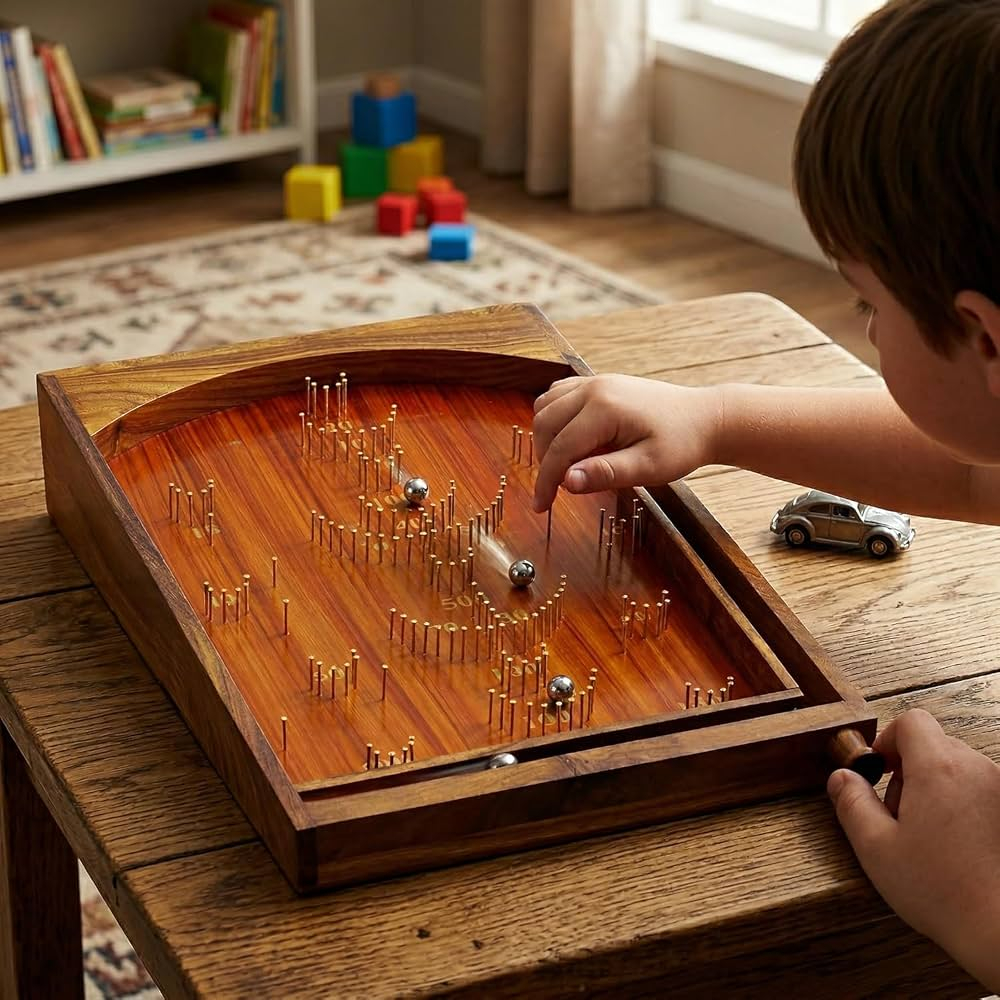
The roots of modern pegboard games stretch back well before electronic arcades. One important step was bagatelle, a tabletop game in which balls traveled across an inclined playing surface toward scoring areas.
The Smithsonian’s National Museum of American History holds Montague Redgrave’s 1871 patent model for an “Improvement in Bagatelle Game.” The museum describes the device as an early version of the pinball machine, complete with a wooden cabinet and spring mechanism used to shoot balls into play.
Redgrave’s design matters because several ideas later associated with arcade machines were already visible: launch the ball, let the board alter its path, and assign value according to where it finishes.
Historical note: The Smithsonian specifically identifies Redgrave’s spring release and sloped playing surface as elements later incorporated into modern pinball arcade games.
Plinko Made the Pegboard Format Perfect for Television
Television stripped the idea back to its most readable form. Instead of asking players to master flippers, launch controls, or complicated scoring systems, Plinko turned the entire experience into one highly visible drop.
CBS archive material published through Paramount Press Express confirms that Plinko debuted on The Price Is Right on January 3, 1983, during Season 11.
That format was ideal for spectators because the action explained itself. A chip started at the top, bounced through a large field of pegs, and eventually reached a prize slot.
The same visual language now appears on digital platforms. For example, McLuck Plinko online places the familiar pegboard concept in an online setting, showing how easily the basic drop-and-bounce format can move from a physical board to a screen.
Pinball and Pachinko Turned the Idea Into Machine Entertainment
Pegboard mechanics became much more energetic when they moved into machine-based entertainment. Pinball developed the bagatelle idea into a more interactive format, while pachinko created another distinctive variation built around many small balls moving through a vertical obstacle field.
Japan Guide describes pachinko as a combination of elements associated with slot machines and pinball. Players control the speed at which numerous small steel balls are launched into the machine; most fall through, while some enter special openings that can trigger additional game events.
This stage changed the experience in several ways. Play became faster, machines added stronger visual and audio feedback, and repeated ball movement became part of the attraction.
Here’s the thing: players still did not need complicated instructions. They could watch an object enter the board, collide with obstacles, and follow its path toward a result.
Why Pegboard Games Translate So Naturally to Digital Screens
Some traditional games lose part of their identity when physical equipment disappears. Pegboard games have an advantage: most of the information a player needs is already visual.
The starting position is visible. The obstacles are visible. The moving object is easy to follow. And the destination usually communicates the result without requiring lengthy explanation.
| Physical pegboard element | Digital equivalent | What stays familiar |
| Ball or chip | Animated object | A clear object to follow |
| Peg field | Digital obstacle grid | Multiple possible routes |
| Physical gravity | Simulated movement | Downward progression |
| Scoring pockets | Result zones | Clear finishing point |
Digital designers can therefore change graphics, themes, sound effects, speed, and interface controls while preserving the recognizable drop, bounce, land structure.
That consistency is one reason digital pegboard games can feel immediately understandable even to someone opening one for the first time.
Flash Gave Way to Browser-Native Game Technology
The move toward modern browser games was also shaped by a much wider change in web technology. Adobe officially ended support for Flash Player on December 31, 2020 and later blocked Flash content from running in Flash Player. Adobe cited increasingly mature open standards including HTML5, WebGL, and WebAssembly as viable alternatives to Flash content.
Modern browsers can now handle much of the visual work that once required separate plug-ins. Mozilla’s MDN documentation explains that the Canvas API allows graphics to be drawn through JavaScript and can be used for animation and game graphics; MDN lists Canvas as widely available across browsers since July 2015.
For pegboard-style games, that means animated objects, movement, visual effects, and interactive controls can all be presented directly through modern web technologies.
Physical Bounces Became Digital Game Logic
Moving a pegboard game onto a screen creates an important distinction. With a physical board, players can watch a real ball interact with real obstacles. With a digital version, the visible animation and the logic determining the result are created by software.
That does not mean every digital game works identically. Depending on the product, developers may use simulated physics, random number generation, predetermined calculations, or combinations of different systems.
For regulated remote gambling products in Great Britain, the UK Gambling Commission’s Remote Gambling and Software Technical Standards require random number generation and game results to be “acceptably random.” The standard says outcomes should be unpredictable and distributed in line with expected or theoretical probabilities.
For users, the practical takeaway is simple:
- Read the platform’s rules before playing.
- Check how results and payouts are explained.
- Do not assume that the animation alone reveals how an outcome was calculated.
What Modern Digital Pegboard Games Add to the Formula

Digital platforms can add features that would be difficult or expensive to reproduce on a mechanical board. Themes can change instantly, results can be calculated automatically, and interfaces can be designed for phones, tablets, or desktop browsers.
At the same time, adding more features does not automatically improve a pegboard game. The strongest designs usually keep the central action obvious rather than hiding it beneath menus and effects.
Useful digital additions can include:
- touch or mouse controls;
- clear explanations of landing zones;
- adjustable sound or animation settings;
- immediate score or result displays;
- help sections that explain the rules before play.
Modern web technology also gives developers several ways to create that presentation. MDN documents the HTML <canvas> element as a tool for drawing graphics and animations, while WebGL can provide hardware-accelerated 2D and 3D graphics through the same canvas environment.
The Core Mechanic Has Changed Less Than the Technology Around It
The evolution of pegboard games is striking because the underlying idea has remained so stable. Redgrave’s 1871 bagatelle patent already combined a launched ball, obstacles, an inclined surface, and scoring possibilities. Pinball and pachinko expanded that idea into machine entertainment, while Plinko simplified it into a television format audiences could follow immediately.
Digital platforms changed the materials rather than the basic experience. Wood became pixels, mechanical components became software, and physical scoring areas became interface elements.
The lesson for game designers is useful: novelty does not always require reinventing the rules. Sometimes a durable mechanic survives because new technology makes it easier to access while leaving the satisfying part untouched.
Pegboard Games Keep Evolving Without Losing Their Appeal

From early bagatelle tables to arcade machines, television boards, and digital platforms, pegboard games have repeatedly adapted to the technology available around them. Their staying power comes from a simple interaction that remains easy to understand: release something, follow its unpredictable route, and discover the result.
If you want to explore modern versions, start by comparing one or two rather than focusing on flashy features. Look at how clearly the rules, landing zones, controls, and outcomes are presented. Digital technology can make the experience faster and more convenient, but the best versions still preserve the visual suspense that made physical pegboards interesting in the first place.