


Several thousand lawsuits linked to Roundup in the United States claim a connection between exposure to glyphosate and the probable cause of cancers. By 2025, analysts estimate that approximately 61,000 legal cases involving Roundup will still be pending, following settlements in August 2025. Many of these settlements have been in state court, especially in Pennsylvania.
Individuals who got cancer or other illnesses after exposure to Roundup herbicide can claim compensation by filing a Roundup lawsuit in the US. In most cases, researchers claim that extended use of glyphosate, the key ingredient in Roundup, worsens the effects of illnesses. Non-Hodgkin’s lymphoma is among the conditions that can be severely affected by glyphosate.
There are individuals who may have cause to file a lawsuit, such as those who have handled Roundup and have been diagnosed with non-Hodgkin’s lymphoma during the past three years of exposure, according to North Carolina roundup lawsuit attorney William M. Graham.
People can seek compensation for medical expenses, damages for earning capacity, physical and mental anguish, among other losses.
Let us now look into the circumstances in which Roundup Lawsuits can be filed and take a look at who would qualify.
What Connects Roundup to Cancer
Glyphosate, which is the main ingredient in Roundup, has been extensively utilized for controlling weeds around agriculture for a period spanning over four decades. After reviewing research data indicating that workers who are heavily involved in agriculture are more at risk of developing non-Hodgkin’s lymphoma, it has been classified as a carcinogen for humans by the International Agency for Research on Cancer.
The federal court unsealed internal Monsanto emails in 2017 which showed the company had known about the cancer connection since prior years while they attempted to hide research results and sway government assessment processes. The company reached settlements with multiple plaintiffs who filed lawsuits after the revelations became public.
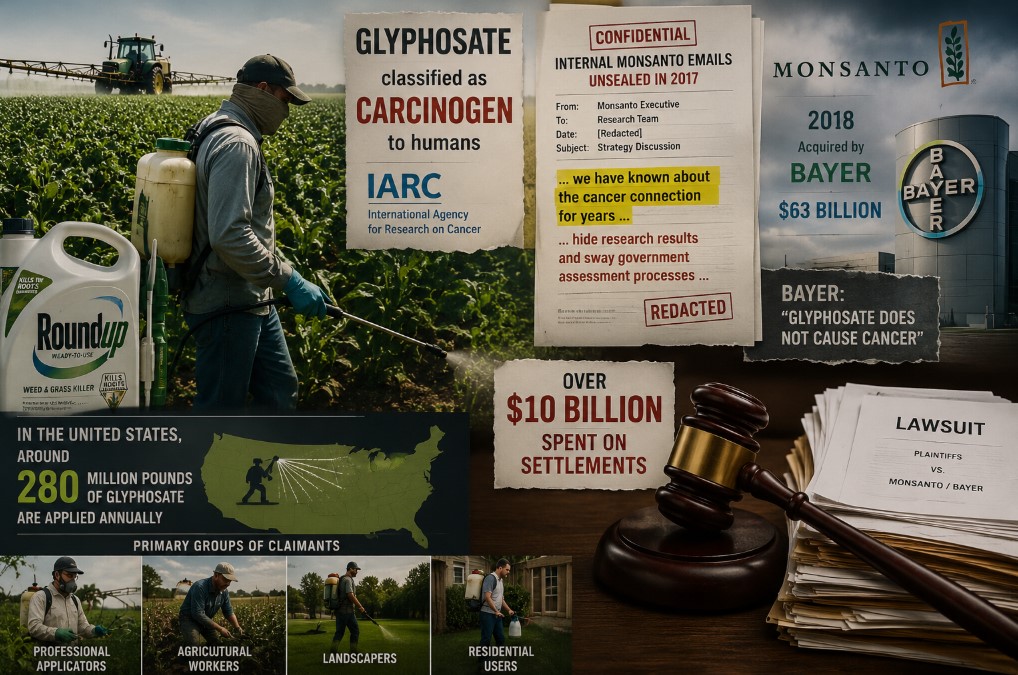
Bayer, which purchased Monsanto for 63 billion dollars in 2018 inherited the ongoing lawsuits and has spent more than 10 billion dollars on settlements while claiming that glyphosate does not result in cancer.
The United States applies around 280 million pounds of glyphosate to treat both agricultural crops and weed infestations annually. The primary group of claimants consists of professional applicators, agricultural workers, landscapers, and residential users who used Roundup for multiple years.
Who Is Eligible to File a Roundup Lawsuit
Eligibility for a Roundup lawsuit attorney consultation is based on three criteria that consistently appear across active claims: exposure history, diagnosis, and timing.
Exposure History
The standard exposure threshold which lawyers and judges use as a general standard, requires individuals to demonstrate three years of regular Roundup or glyphosate herbicide contact which totals 40 hours.
This group includes all farmers, agricultural workers, nursery workers, greenhouse workers, landscapers, groundskeepers, park maintenance crews, golf course staff, and homeowners who applied Roundup to their gardens and yards.
Workers in an office environment usually experience higher exposure levels since they maintain their work period for extended hours while using their equipment. Home users have achieved important legal victories in multiple cases.
Diagnosis
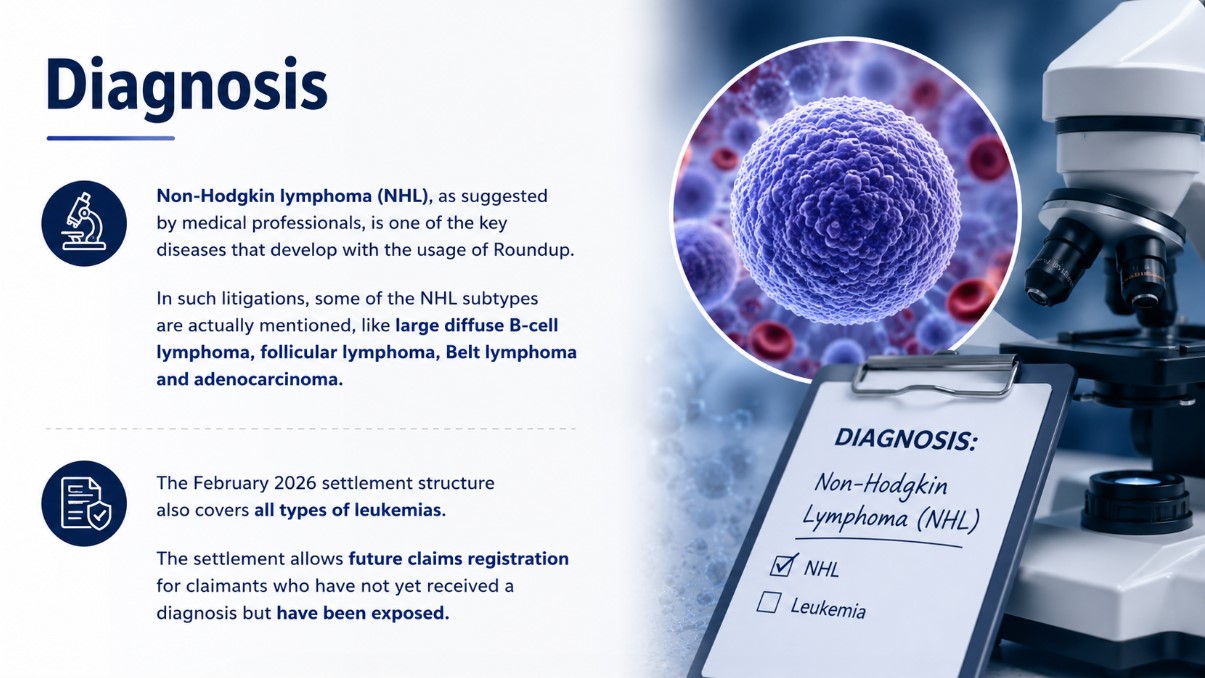
Non-Hodgkin lymphoma (NHL), as suggested by medical professionals, is one of the key diseases that develop with the usage of Roundup. In such litigations, some of the NHL subtypes are actually mentioned, like large diffuse B-cell lymphoma, follicular lymphoma, Belt lymphoma and adenocarcinoma.
The February 2026 settlement structure also covers all types of leukemias. The settlement allows future claims registration for claimants who have not yet received a diagnosis but have been exposed.
Timing – State Filing Deadlines
The state establishes its unique time limit for filing personal injury lawsuits through its legal statutes. Most states permit a time frame of two to three years, which begins on either the date of diagnosis or the date when the link between Roundup and the disease became known or should have become known.
The legal system rejects all cases that miss this time frame since it creates an absolute barrier to accessing legal rights. The public tends to ignore this specific information, which explains why immediate action after receiving a diagnosis is important.
Can Family Members File a Claim?
Yes, in two distinct situations. It is completely within the bounds of the law for surviving family members to file a claim for wrongful death on behalf of a relative who succumbed to non-Hodgkin lymphoma after being exposed to Roundup. The settlement reached in February 2026 declares that claims from close family members made on behalf of deceased relatives will be accepted. There is no condition that says one’s immigration status or proof is a hindrance in making a claim.
Family members residing with someone who extensively used Roundup may take the necessary legal steps, as they may have encountered collateral exposure. The establishment of secondary exposure cases requires more complicated procedures but they have been successfully resolved through legal proceedings.
What the $7.25 Billion Settlement Means for New Claimants
Bayer made public a $7.25 billion settlement deal in February 2026, which will cover all existing and upcoming Roundup lawsuits. The court will conduct its last approval hearing in July 2026. The settlement establishes various payment levels, which depend on the severity of the disease and the victim’s age at diagnosis. The length and strength of the patient’s contact with the disease and other specific criteria will also be assessed.
Claimants who had their first exposure at home or who got sick after reaching senior citizen status can choose quick-pay options, which will provide them with payments between $6,000 and $165,000 for standard-tier claims. The program will deliver bigger awards to more serious cases.
The settlement does not stop individual lawsuits since it creates legal pathways for plaintiffs to pursue their claims through the court system. If the parties do not wish to participate in class action and their claim falls out of its scope, they can always refer the case back to court. For instance, in March 2025, a jury in Georgia returned a verdict in a Roundup case where they awarded a farmer more than $2 billion.
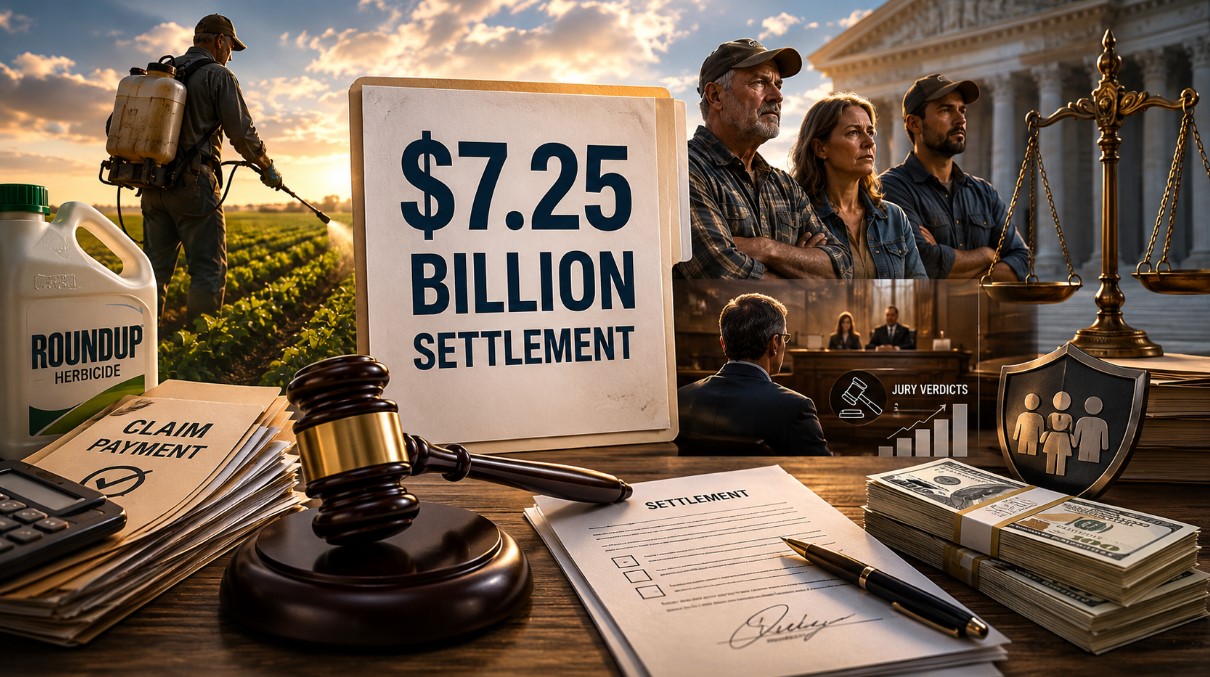
In October 2024, a jury in Philadelphia awarded a lawn worker the sum of $78 million. ‘Roundup’ cancer attorneys pursued a judgment totaling approximately $6 billion from the various jury trials held from 2024 to 2025, according to the practice of one of the primary attorneys involved in the litigation.
The presence of an enormous existing settlement does not eliminate the need for people with valid and immediate claims to sue. All state filing deadlines continue to run even when settlement talks are happening. People who delay past their state’s statute of limitations may find themselves ineligible for both the settlement and any independent legal action.
Evidence That Supports a Roundup Claim
The process of constructing a Roundup case requires documentation that links exposure to the diagnosis. The most convincing kinds of proof necessary include the types of evidence outlined below:
- Medical documentation confirming the existence of non-Hodgkin lymphoma or other similar illnesses, including written records of defined pathological analysis and the course of treatment.
- Evidence of exposure to Roundup: shopping receipts, accounts of purchases, pictures, records of work of any job involving the direct use of such a herbicide, or an employer’s documentation on its application responsibilities.
- Personal records of frequency and duration of exposure. This record should include last and first use dates.
- Witnesses employed by the claimant, members of their family, or other local residents in relevant capacities can speak on the risk of the disease being work-related.
- An expert’s opinion on the relationship between the carcinogenic effects of glyphosate and its exposure in an individual’s body will be useful.
Work documents that can physically prove the work with herbicides are of value in the investigation of possible occupational exposure. Previous court decisions in residential cases used purchase records and photographs of product usage on residential properties as supporting evidence.
The Window Stays Open, But Not Indefinitely
The litigation against Roundup is currently progressing. Plaintiffs have strong financial support while the case generates positive results. Bayer has allocated more than $16 billion to settle claims yet still faces jury decisions that exceed one billion dollars. The court is waiting to approve a $7.25 billion settlement while individual lawsuits progress through state courts throughout the country.
People who used Roundup on a regular basis and later developed non-Hodgkin lymphoma need to understand that state filing deadlines function independently of settlement talks. appeal processes, and legislative activities.
The law establishes a time frame that people must adhere to before they can gain access to their rights under the law.