

Each year, consumers file claims against automakers over vehicle defects. In 2025, Ford set a record for safety recalls, affecting about 13 million vehicles, more than the combined recalls of nine other automakers.
A vehicle may qualify as a “lemon” if a defect substantially affects its use, safety, or value and remains unresolved after a reasonable number of repair attempts. Lemon laws protect buyers and lessees of new vehicles, though requirements vary by state. Common qualifying defects involve the engine, transmission, brakes, or electrical systems and usually must occur within the warranty period.
According to San Mateo lemon law attorney Kimberli Zazzi, you could have a valid claim if your vehicle has been in and out of the repair shop for any of these issues.
Let’s take a closer look at the legal standards that determine whether a vehicle qualifies as a lemon.
What the Law Actually Means by a Substantial Defect
The term “lemon” gets used loosely, but “lemon law” has a precise definition. To trigger legal protection, a vehicle must have what the statute calls a substantial defect. A “substantial defect” refers to a problem covered by the manufacturer’s warranty that significantly impairs the vehicle’s use, value, or safety.
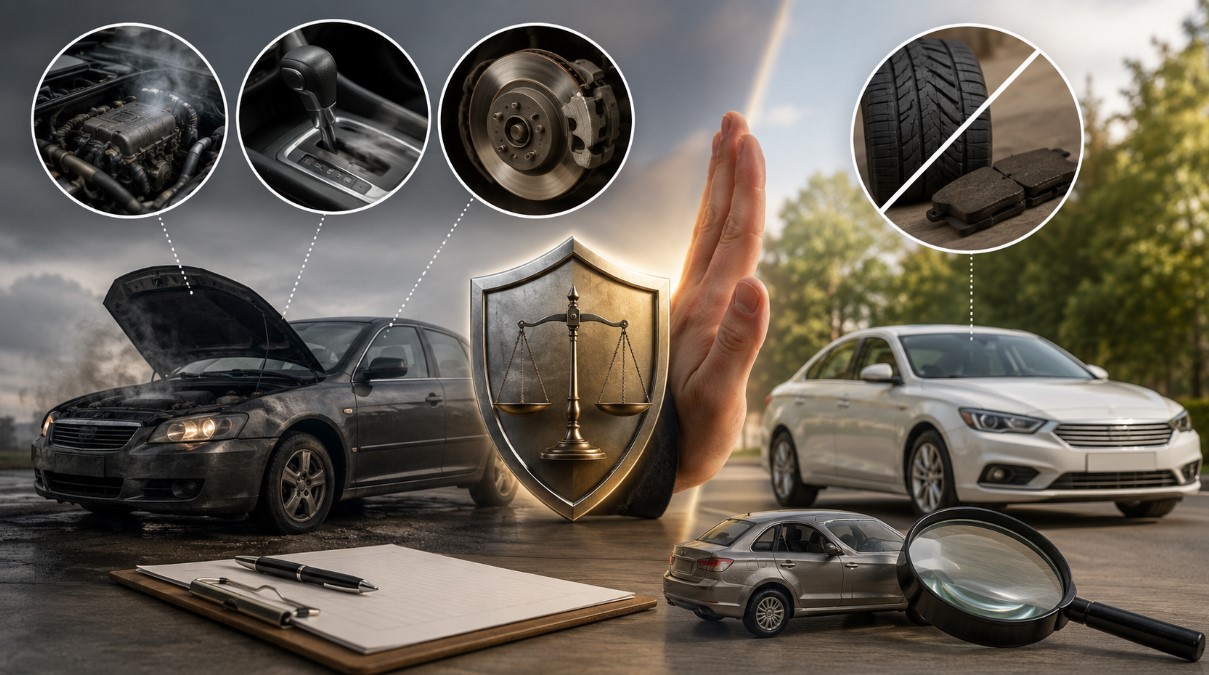
A rattle in the door panel that the dealer fixes in one visit is not a lemon law case. The law was created to handle defects, which include engines that stop working unexpectedly, transmissions that experience repeated slippage, and brake systems that show unpredictable performance.
Normal wear and tear does not qualify. Lemon laws do not apply to components of an automobile that are subject to constant usage, such as brake pads and tires. These parts may still be covered by the law if they can be linked to a serious defect in the vehicle. The defect must make the car less safe to drive, reduce its market value, or substantially interfere with the owner’s ability to use it as intended.
The Repair Attempt Thresholds That Trigger Protection
The lemon law protects customers only after the dealer has made their first attempt to repair a defect. The manufacturer needs an appropriate time frame to correct the defect. The definition of “reasonable” according to the state establishes specific numerical thresholds that differ according to the defect’s severity.
Safety Defects
Most states require only one to two failed repair attempts for protection to begin when defects can result in life-threatening injuries. These safety flaws can result in death through brake failures, steering malfunctions, and airbag defects. The explanation applies to practical matters since drivers need to stop operating their vehicles that have permanent safety defects. Drivers will need to wait until they obtain legal rights to handle their situation.
Non-Safety Defects
In a majority of the States, a vehicle is deemed defective if the manufacturer is unable to repair the same condition/damage after three or four attempts to fix the defect, particularly when such a problem is functional or cosmetic and involves no immediate danger to the vehicle. The repairs must address the same defect, not different problems that each repair visit fixes once. Having multiple single-visit repairs, which addressed four distinct problems, does not satisfy lemon law criteria in most regions. The repetition has to be for the same underlying defect.
The 30-Day Rule
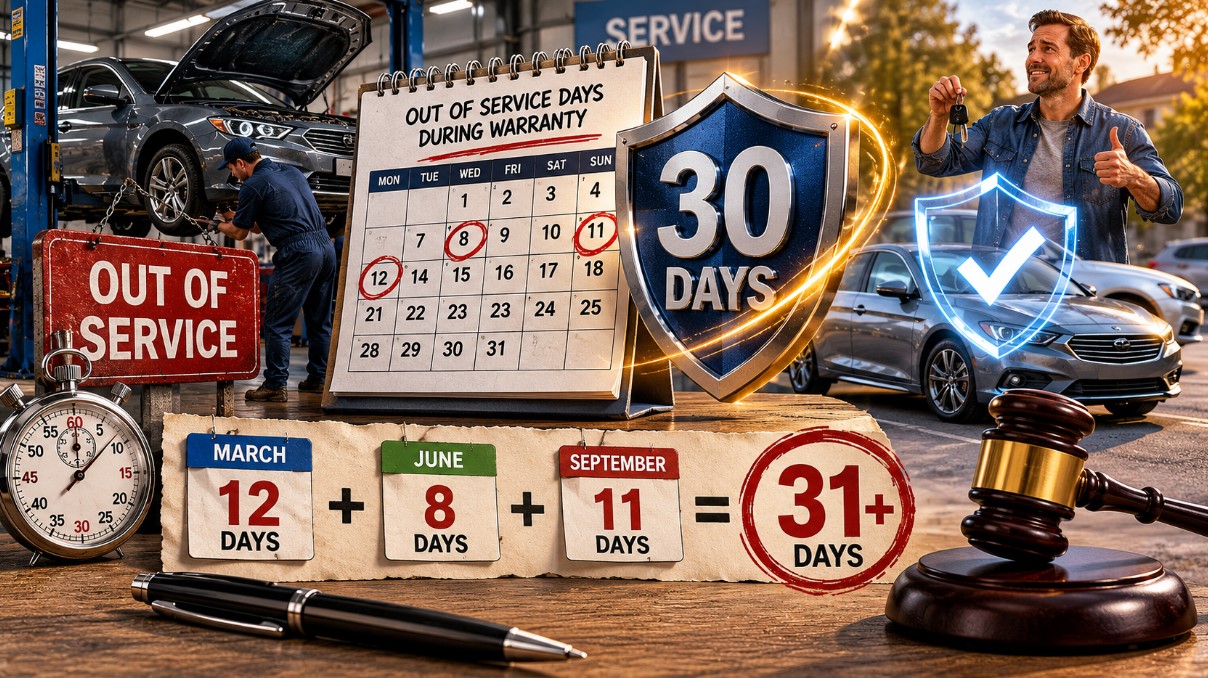
Lemon law allows for a car to be declared a lemon if it is out of service for 30 days or more within its period of warranty repair. It doesn’t matter how many times dealers tried to make repairs on the vehicle to reach 30 days out of service.
A repair span of 30 days does not have to be compressed within any specific point of time. To illustrate this, a case may be established of a vehicle that goes for repair for 31 days over different months, like 12 days in March, 8 days in June and 11 days in September. This particular scenario is helpful in instances where the dealership continues to conduct unwarranted repairs and expects the problem to be resolved.
Coverage Windows – When the Defect Has to Appear
Lemon law protection has a time and mileage boundary. The defect needs to be present and reported during the coverage period, usually within the original manufacturer’s warranty period. For new cars, the coverage period is within the first year or two of owning the vehicle or up to 12,000 to 24,000 miles driven, depending on the state’s regulations. Some states measure the window from delivery. Others measure it from the first repair attempt.
Vehicles covered by a written warranty are entitled to the protection under the Federal Magnuson-Moss Warranty Act, aside from the legal provisions of the state lemon law. An action can be brought under the state lemon law and the Magnuson-Moss Act together. Doing this action provides an advantage, particularly in tough strict liability states.
The Federal Trade Commission manages the enforcement of the Magnuson-Moss Warranty Act and provides the interpretation that sets the boundaries for the amount of warranty information that a manufacturer must divulge.
Most state lemon laws cover new vehicles only. A smaller number of states extend protection to used cars that are still under the original manufacturer’s warranty or a certified pre-owned warranty. Most states provide coverage for leased vehicles, but Nevada and New Mexico stand out as the two states that do not offer this coverage.
What Lemon Law Does Not Cover
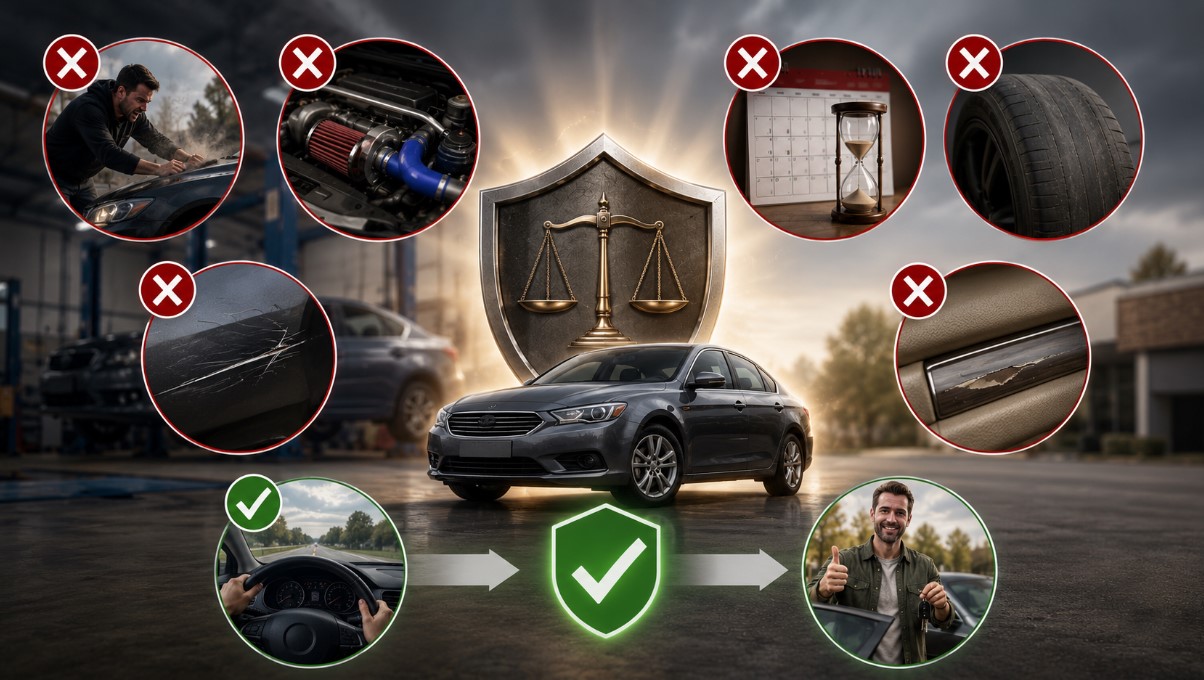
Several categories of problems fall outside lemon law protection regardless of how many times a dealer attempts to fix them:
- Defects which the owner directly created through vehicle abuse, misuse, and through unauthorized vehicle modifications
- Problems that emerged after the warranty coverage period ended except for defects which the customer reported during the warranty period and which remained unbroken
- Normal wear items that become damaged through regular usage
- Cosmetic defects, which include minor paint imperfections, interior trim issues, and surface blemishes. These defects require assessment of their impact on vehicle market value for determination of their severity
The protection does not extend to minor inconveniences that do not interfere with driving or decrease resale value.
The law addresses vehicle defects that genuinely cannot be made reliable through a reasonable number of repair attempts.
The Documentation Habit That Determines Whether Claims Succeed
The strength of a lemon law claim depends almost entirely on paperwork. A vehicle with six failed repair attempts on the same defect is difficult to prove without documentation. A vehicle with three failed attempts, all clearly documented, is a straightforward case.
Every trip to the dealer should generate a written repair order. The order requires documentation of the date, current mileage, all details of the owner’s complaint, the diagnostic results, and the completed repairs. It is important to craft a meaningful complaint description. Repeating the exact same words to describe the exact same flaw during many interactions helps prove that the issue keeps reoccurring and is not being rectified.
Consumers should monitor the prolonged period when the car is grounded in relation to individual check-ups. The claim foundation requires a running log that includes all repair orders and all written communications with the manufacturer or dealer.
The National Highway Traffic Safety Administration (NHTSA) is where drivers can report any auto-related problems. If there’s a document in NHTSA’s system with a complaint, it can be used to demonstrate that the vehicle is a lemon by showing how the defect has been reported to national authorities. NHTSA complaint data is accessible and can help car owners check if other similar cars have experienced the same problems.

Defective Vehicles Have a Legal Definition
Lemon law does not necessarily have to be triggered only in the worst-case scenario. When a vehicle demonstrates a major problem and the producer fails to repair it within the legally stipulated periods, such laws come into play.
Most consumers do not realize that the documentation from the first visit shapes the outcome of a potential lemon law case. Repair orders from three years ago are far harder to reconstruct than they are to collect in real time.
The owners who fare best in lemon law disputes are those who started treating every dealer visit as a potential legal record from the moment the first problem appeared.