

With over 12,000 lives lost each year in crashes involving alcohol-impaired drivers, drunk driving continues to be a major public safety issue in the United States.
Compared to first-time offenses, a second DWI offense carries heavier punishments. Many states impose stricter penalties after a second conviction because of the higher risk of future impaired driving incidents associated with repeat DWI offenses.
Here’s what to do after a second DWI, and let’s learn how an attorney can help minimize your penalties.
How the Penalties Change the Second Time
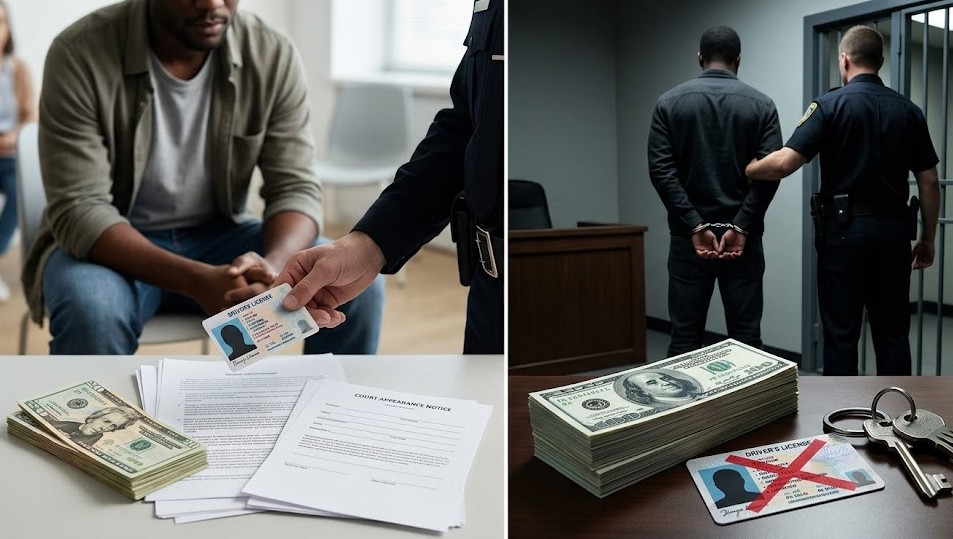
For a second DWI, the mandatory penalties end up being more severe than for a first offense in almost every state. The consequences for offenders typically involve double fines, plus significantly longer jail time, and also extended stretches where the driver’s license gets suspended.
In a lot of states, a second offense ends up being about one year of jail time and fines that go past $4,000, while people who are first-time offenders get shorter maximum jail terms and lower penalties, sort of.
The charge itself may also escalate in classification. Your state legal statutes permit the escalation of your case from a misdemeanor DWI charge to a Class A misdemeanor charge.
The difference between these two kinds of categories matters. It may end up determining which employment background checks and which professional licensing duties get pulled into the mix. This also includes what your potential sentencing outcomes might look like if you ever end up with a future third offense.
It would be best to review the specific statutes in your state through your state’s department of motor vehicles or the National Highway Traffic Safety Administration (NHTSA) for applicable standards.
What the Lookback Period Means for Your Case
Most states use a lookback period to determine whether a new DWI counts as a second offense. The lookback period defines the time frame that courts use to search for prior DWI offenses. Lookback periods vary widely, from five years in some states to a lifetime in others, with the national average sitting around ten years.
If your first DWI occurred outside your state’s lookback window, a second charge may be prosecuted as a first offense for sentencing purposes. You must take note of the specific timeline of your prior conviction. It might lead to a different outcome based on state statutes.
Your attorney will need to pull the exact date of your prior conviction and compare it against the current statute in your jurisdiction. You should not make assumptions about the situation.
Your Driving Privileges After a Second DWI
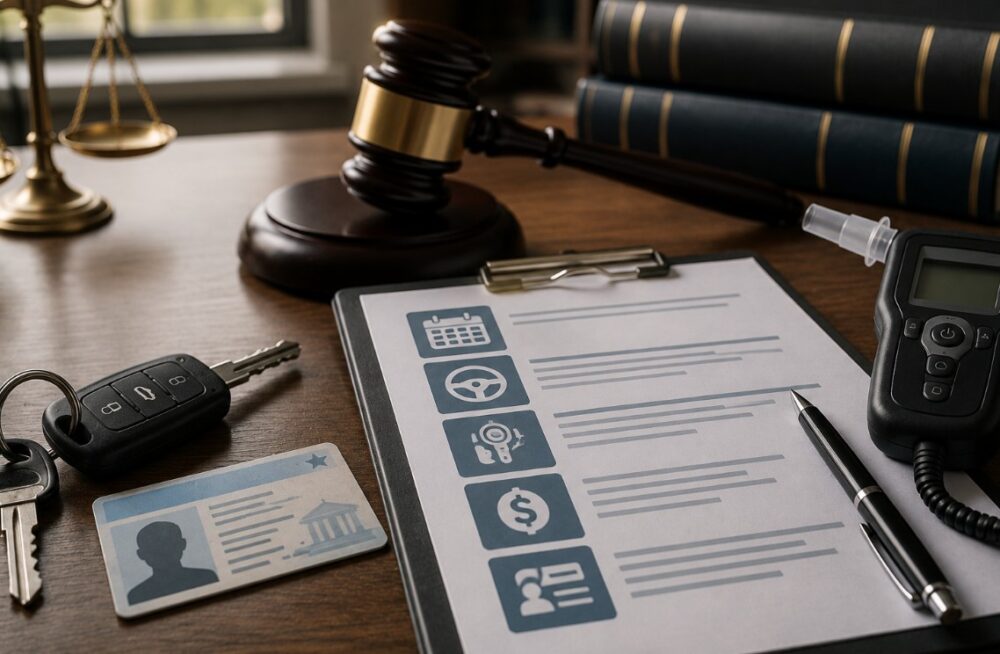
According to Indianapolis DUI lawyer Andrew J. Baldwin, when it comes to license suspension, it will take up to two years or 30 days followed by 180 days of probationary driving, which only allows you to drive for employment purposes.
In many states, suspension periods for a second offense range from 180 days to two years, compared to 90 days to one year for first offenses.
Most states require all second-offense DWI offenders to complete ignition interlock device (IID) training before they can regain their complete driving rights. A vehicle equipped with an IID system will not start until the driver provides a breath sample. The organization MADD reports that ignition interlocks decrease repeat drunk driving offenses by approximately 67%.
The offender must pay for both installation costs and monthly monitoring expenses. This typically ranges from $70 to $150 for installation and $60 to $80 for monthly service fees.
Some states permit you to obtain a restricted or hardship license during your suspension period, which allows you to drive for work or school purposes. Your eligibility for this program depends on whether you submitted to chemical testing during your arrest and whether you have completed the IID program.
The Role of an Experienced DWI Attorney
The complexities of DWI cases require specialized legal defenses, which depend on the particular circumstances surrounding your arrest. An experienced lawyer who specializes in second DWI cases will investigate four defense strategies, which include Breathalyzer calibration errors and improper stop procedures and blood sample chain of custody issues and Miranda rights violations.
The American Bar Association (ABA) recommends consulting a criminal defense attorney as early as possible after any arrest. Your case will reach its most critical point when you wait between your arrest and your initial court hearing for second DWI charges.
Your lawyer might ask for evidence suppression motions ahead of the trial. That can be problematic during plea talks even if the motion does not become successful.
Choose an expert lawyer who deals with DWI cases. Be sure that they are proficient in handling second offenses.
Mandatory Programs and What Happens If You Skip Them
All second DWI offenders have been mandated to attend and complete alcohol education classes, undergo substance abuse evaluations, and even go for treatment in some circumstances. These tasks are mandatory since they have been imposed.
If individuals fail to participate in court-mandated treatment programs, probation violation takes place, which may lead to incarceration even though the sentence for their DWI case did not require imprisonment.
According to the Substance Abuse and Mental Health Services Administration (SAMHSA), there is a treatment locator service that helps people locate a program that meets the criteria of court-approved services. Many programs have a sliding scale payment system, although some areas offer financial support to those with limited means.
One underreported fact about court-ordered programs: completing them ahead of sentencing can influence the outcome. Judges in second DWI cases hold power to decide outcomes between two options when defendants show treatment engagement before their trial results.
What a Second DWI Does to Your Record and Insurance
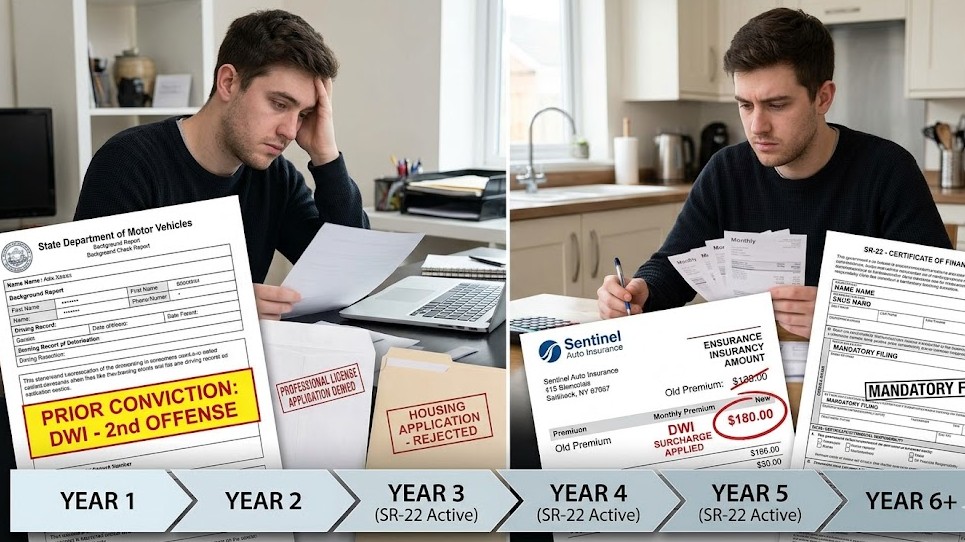
A second DWI conviction will appear on your criminal record and, in most states, on your driving record for the entire lookback period and for additional time. The impact extends beyond the determination of upcoming sentence lengths.
The results prevent people from working in positions that need clean background checks. They stop people from obtaining professional licenses in healthcare and law and finance, and they restrict their capacity to secure housing in specific areas.
The insurance outcomes carry major weight. The state requires SR-22 filing after a second DWI arrest. This will be handled by your insurance company. They will submit a financial responsibility certificate to the government.
According to the Insurance Information Institute (III), SR-22 requirements extend from three to five years following a conviction. During this period, drivers experience substantial premium increases.
Where This Leaves You
Your second DWI charge requires you to make legal decisions that demand more careful thought than your initial case. The prosecution will pursue greater penalties against you, while the administrative consequences will extend beyond courtroom proceedings. Your response time and your response method will determine which outcome will result.
The process of finding a qualified DWI defense attorney requires you to learn about your state’s lookback period, and you must start all necessary programs at an early stage. NHTSA research shows that structured programs that combine alcohol treatment with monitoring systems achieve a reduction in recidivism that approaches 50 percent.
The legal process is serious, but it does not predetermine the result. The choices made in the first weeks after a second charge often matter more than people expect.