

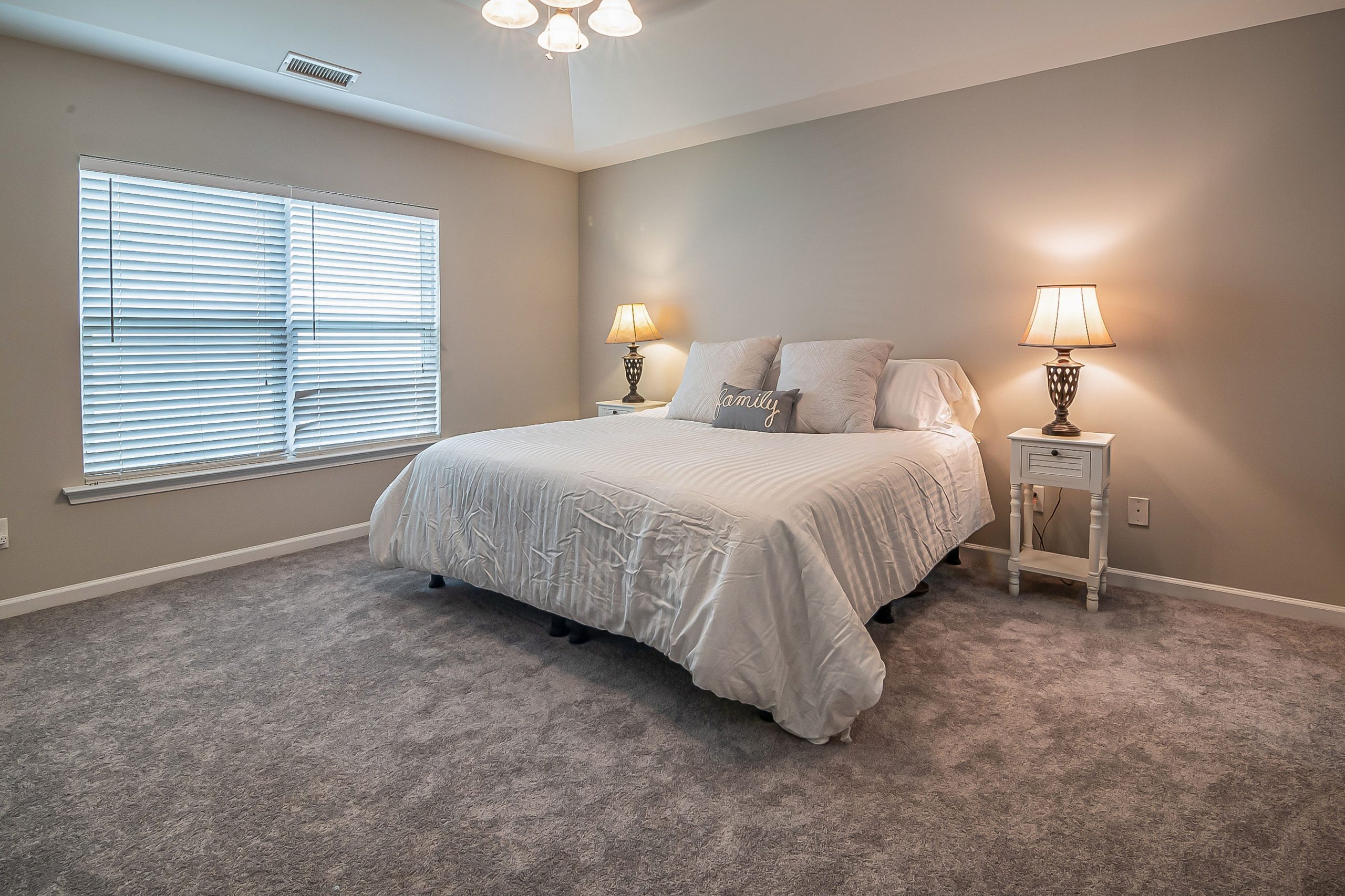
Every flooring showroom will tell you hardwood is the “premium” choice and carpet is the budget fallback. Nobody at the showroom will tell you what happens to your feet at 6 a.m. in January. That’s the question this article actually answers: not which floor looks better in listing photos, but which one is measurably warmer and quieter where you sleep.
The short version, before the caveats: carpet wins on both counts, and the margin is bigger than the usual “it’s a matter of taste” framing suggests. Where it gets interesting is why – and where hardwood still legitimately wins the bedroom argument anyway.
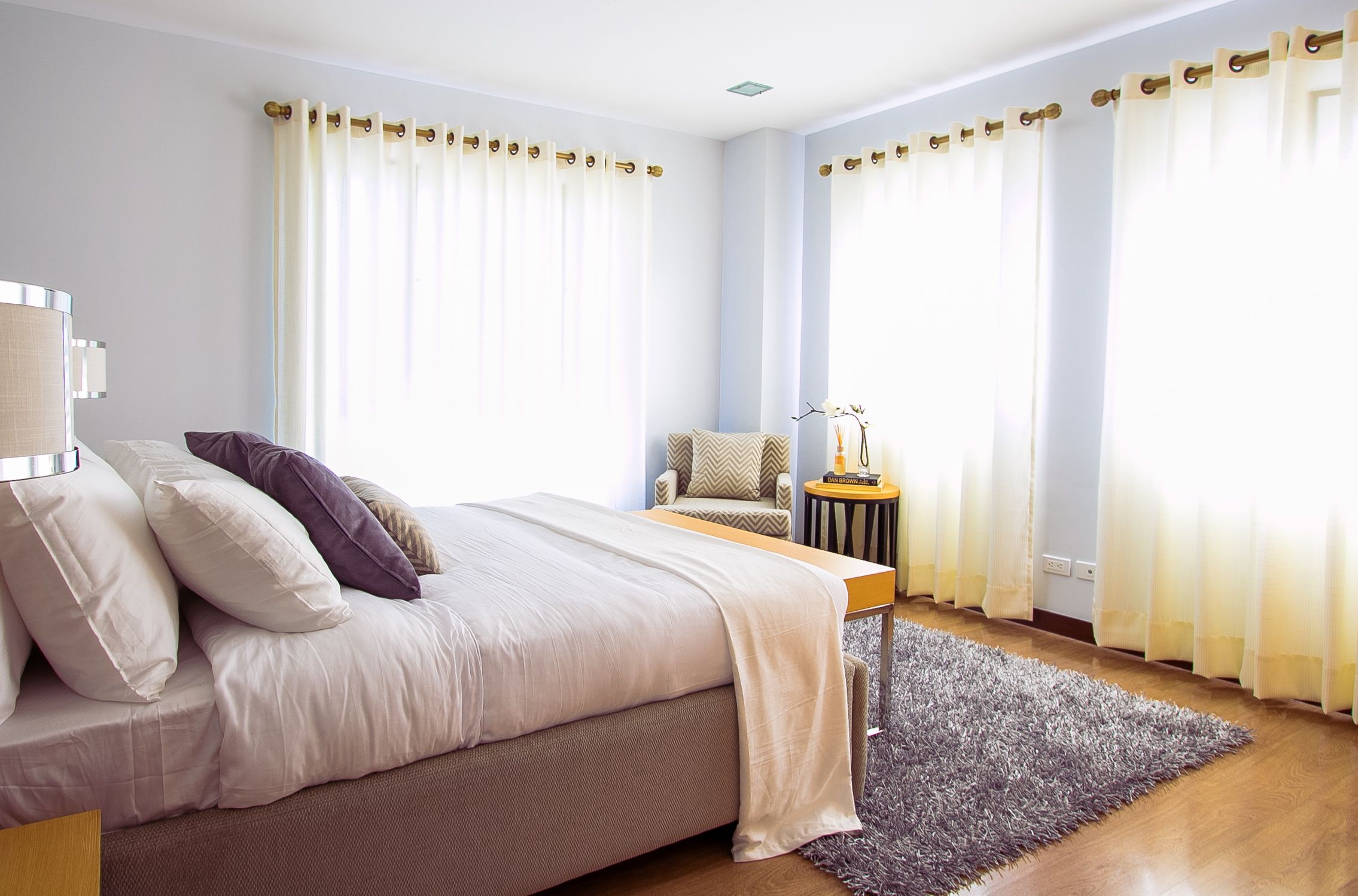
The cold-floor problem, in actual numbers
Flooring thermal performance is measured in R-value – the same unit used for wall and attic insulation. Higher R-value means the floor resists heat loss better, so less warmth escapes from the room (and from your feet) into whatever is underneath.
Solid hardwood runs about R-0.6 to R-0.9 per typical ¾-inch thickness. Engineered hardwood is usually lower, often closer to R-0.5, because the plywood core conducts heat more readily than solid wood. Carpet, by contrast, starts around R-1.5 with a basic pad and climbs from there. The Georgia Institute of Technology’s textile engineering program, in research later adopted by the Carpet and Rug Institute and floor-covering manufacturers, found R-values are additive: a carpet rated R-1.3 over a pad rated R-1.6 gives you a combined R-2.9 (the formula multiplies carpet thickness in inches by roughly 2.6, so pad thickness alone can matter as much as the carpet on top of it). Wool carpet, denser and more resilient under compression, can push total assembly R-value past 4.0.
That’s a three-to-five-times difference in insulating capacity between a carpeted bedroom floor and a bare hardwood one. It’s not a marginal edge.
Why it feels warmer than the numbers alone explain
R-value measures resistance to heat flow through the floor. It doesn’t fully capture what your bare foot notices, which is a separate phenomenon: thermal conductivity at the point of contact. Hardwood pulls heat away from skin fast, which your nervous system reads as “cold” even when the room thermostat says 70°F. Research on this perception gap puts carpeted rooms at roughly 1–2°C (2–4°F) warmer-feeling than identical rooms with hard flooring, with air temperature held constant. That perceived difference is large enough to change behavior – homes with carpet see later start dates for winter heating and lower average thermostat setpoints, which is where any real energy savings from carpet actually come from, rather than from the R-value alone.
My read: for the specific job of a bedroom floor, the physics is close to unanimous. Carpet is warmer, both in the number you’d measure with an instrument and the number your foot reports at 6 a.m., and no amount of “timeless hardwood” showroom talk changes that.
Quiet: this is where the gap gets wider, not narrower
Sound in a floor-ceiling assembly is measured two ways. STC (Sound Transmission Class) rates airborne noise – voices, a TV, music. IIC (Impact Insulation Class) rates structure-borne impact noise – footsteps, a dropped phone, a dog’s claws on the floor above. Bedrooms care about both, but IIC is the one that actually ruins sleep, because footfall noise from a floor above is the classic bedroom complaint.
Standard nail-down solid hardwood on a wood-joist subfloor typically tests at IIC 35–45 without added underlayment – below the International Building Code’s minimum of IIC 50 for multi-family dwelling separations. Carpet with a quality pad routinely tests at IIC 60–75 on the same structure, a 20-to-30-point swing. Because the IIC and decibel scales are logarithmic, a 10-point improvement corresponds to roughly halving the perceived loudness of the impact – so the jump from bare hardwood to carpet-with-pad isn’t a mild improvement, it’s closer to cutting footstep noise by half or more.
| Bedroom floor type | Typical R-value | Typical IIC (impact noise) | Notes |
|---|---|---|---|
| Carpet + 8 lb rebond pad | 2.5 – 4.0 | 60 – 75 | Highest of any common residential flooring |
| Solid hardwood, nail-down | 0.6 – 0.9 | 35 – 45 | Below IBC’s IIC 50 minimum without added underlayment |
| Engineered hardwood, floating | ~0.5 | 40 – 50 | Cross-grain core dampens vibration slightly better than solid wood |
| Hardwood + thick area rug and pad | Improves toward 1.5+ (localized) | Improves 10–20 points (localized) | Closes much of the gap only where the rug actually sits |
R-value and IIC figures compiled from the Carpet and Rug Institute’s carpet cushion research, Georgia Tech textile engineering data, and standard ASTM E492/E2179 assembly testing referenced across flooring acoustics literature, current as of 2026. IIC is assembly-dependent – the same flooring tests differently on concrete versus wood joists.
The one honest caveat: IIC ratings describe the whole floor-ceiling assembly, not the flooring alone. A hardwood floor over a concrete slab in a single-story house has nobody living underneath it to bother, so impact noise stops mattering much. It’s the two-story house, or the condo, where this becomes the deciding factor.
Does the allergy argument for hardwood actually hold up?
This is the point where most articles just repeat the same line: hardwood is better for allergies because carpet traps dust mites. It’s not wrong, exactly, but it’s more contested than the confident tone suggests.
Carpet does hold more dust, pet dander, and dust-mite allergen than a hard floor of the same age and traffic – that part isn’t in dispute. The American Lung Association and most allergists recommend replacing bedroom carpet with hard flooring specifically for people with diagnosed dust-mite allergy or asthma, and that clinical guidance should carry more weight than anything below.
But a 2018 peer-reviewed review of the indoor air quality literature complicates the “just rip it out” version of the advice. The authors found no updated research showing modern carpet is actually safe from an air-quality standpoint – but they also documented something the anti-carpet argument usually skips: walking on carpet resuspends less particulate into the breathing zone than walking on hardwood with the same dust load, because the fibers hold particles rather than letting them bounce back into the air with every step.
“We have not found updated peer reviewed evidence that carpeted floor is unproblematic for the indoor environment.”
– Becher et al., International Journal of Environmental Research and Public Health, 2018 (the review, and nobody appears to have run a larger follow-up study since)
I think the standard bedroom-allergy warning gets repeated with more confidence than the underlying research supports. Carpet is a bigger reservoir, but a reservoir you can vacuum weekly with a HEPA machine is arguably safer than a smooth floor that keeps re-launching the same dust into the air you’re breathing for eight hours. If you or a family member has a diagnosed dust-mite allergy, follow your allergist’s advice and go with smooth flooring – that guidance is specific to your case and outranks any general argument here. If nobody in the house has a diagnosed sensitivity, the allergy case for ripping out bedroom carpet is weaker than it’s usually presented.
The cost timeline nobody mentions until you’re already committed
Carpet installed with pad typically runs $2–$11 per square foot depending on fiber and pile; solid hardwood runs $9–$25 per square foot depending on species, with engineered hardwood landing in between at roughly $6–$14. On a 300-square-foot bedroom, that’s the difference between a $600–$3,300 project and one costing $2,700–$7,500.
Carpet’s advantage narrows over time. It typically needs full replacement every 8–15 years in a bedroom (bedrooms are low-traffic, so carpet there tends to last toward the long end of that range), while hardwood can be refinished three to seven times over a 30-to-100-year lifespan. Industry cost-guide estimates for 2026 put the break-even point – where hardwood’s higher upfront cost is fully offset by carpet’s repeat replacement cost – somewhere around year 9 to 12 for a typical mid-grade comparison.
So here’s the actual decision, stripped of showroom language: are you optimizing for the next decade, or the next three? If you’re planning to stay in the house 15-plus years, hardwood’s long-run economics are real. If you’re renovating a starter home you’ll likely sell within a decade, you’re probably paying a premium for durability you won’t personally use.
What I’d actually do
If I were flooring my own bedroom over a cold basement or an unheated crawlspace, I’d take carpet over hardwood without much hesitation – the months of the year I actually notice a bedroom floor underfoot are the cold ones, and that’s exactly where carpet’s R-value advantage matters most. I’d also lean toward carpet in any bedroom directly above a living space someone else uses, purely for the impact-noise math.
Where I’d go the other way: a ground-floor bedroom over a heated slab, in a household with a diagnosed allergy, or a bedroom in a home you’re staging for sale within the next year or two, where buyer expectations (fairly or not) still skew toward hardwood in the primary bedroom of higher-end listings. I’d argue that logic applies far more weakly to secondary bedrooms than to the main living areas buyers actually linger in, but resale psychology doesn’t always follow physics.
A reasonable middle path, and the one most flooring pros will steer you toward if you ask: hardwood or engineered hardwood as the base floor, with a dense, well-padded area rug covering most of the walking surface. It doesn’t match wall-to-wall carpet’s IIC numbers, but it closes a meaningful chunk of the gap exactly where your feet actually land, and you keep the option to swap rugs instead of refinishing a whole floor.

If you do go with wall-to-wall, the padding matters as much as the carpet itself for both warmth and sound – a good carpet installer can tell you in a few minutes whether your subfloor and budget support a denser 8-pound rebond pad versus a thinner one, and that choice affects your R-value and IIC numbers more than the face fiber does.
Frequently asked questions
Is carpet actually warmer than hardwood, or does it just feel that way?
Both. Carpet has a genuinely higher R-value (typically 1.5–4.0 with pad versus 0.5–0.9 for hardwood), and it also feels warmer underfoot because it conducts heat away from skin more slowly, producing a perceived temperature difference of roughly 2–4°F even at the same room temperature.
How much quieter is carpet than hardwood, really?
On the same subfloor, carpet with pad typically scores IIC 60–75 for impact noise versus IIC 35–50 for hardwood. Since the scale is roughly logarithmic, that gap corresponds to something closer to halving perceived footstep loudness, not a marginal reduction.
Does hardwood really cause fewer allergy problems in a bedroom?
It reduces the total allergen reservoir, which matters for people with diagnosed dust-mite allergy or asthma – follow your allergist’s guidance if that applies to you. But it doesn’t eliminate airborne allergen exposure, since walking on hard floors resuspends settled dust more readily than walking on carpet does.
Can I get carpet’s warmth with hardwood’s look?
A thick area rug over hardwood, ideally with its own dense rug pad, recovers a meaningful share of both the thermal and acoustic benefit in the areas it actually covers, though it won’t match wall-to-wall carpet’s numbers across the whole room.
Does the flooring choice in a bedroom specifically affect resale value?
Buyers and agents generally weight hardwood more heavily in primary living areas and primary suites than in secondary bedrooms. Fresh, well-maintained carpet in a secondary bedroom rarely hurts a sale; worn or stained carpet is what actually costs sellers money, regardless of material.
What’s the realistic break-even point between carpet and hardwood cost?
Current cost-guide estimates put it around 9 to 12 years for a typical mid-grade comparison, once carpet’s replacement cycle and hardwood’s occasional refinishing are both factored in. Shorter ownership horizons tend to favor carpet’s lower upfront cost.
How this article was put together
The R-value and IIC figures here come from Carpet and Rug Institute technical bulletins, Georgia Institute of Technology textile engineering research, and standard ASTM E492/E2179 assembly testing as summarized across current flooring acoustics literature. Allergy claims are drawn from a 2018 peer-reviewed indoor air quality review and current American Lung Association guidance, checked in 2026. Cost figures are ranges compiled from multiple 2025–2026 flooring cost guides rather than a single source, since per-square-foot pricing varies by region and material grade; treat them as planning estimates, not quotes. IIC and R-value are assembly- and product-specific – get manufacturer numbers for your actual subfloor before finalizing a decision.