

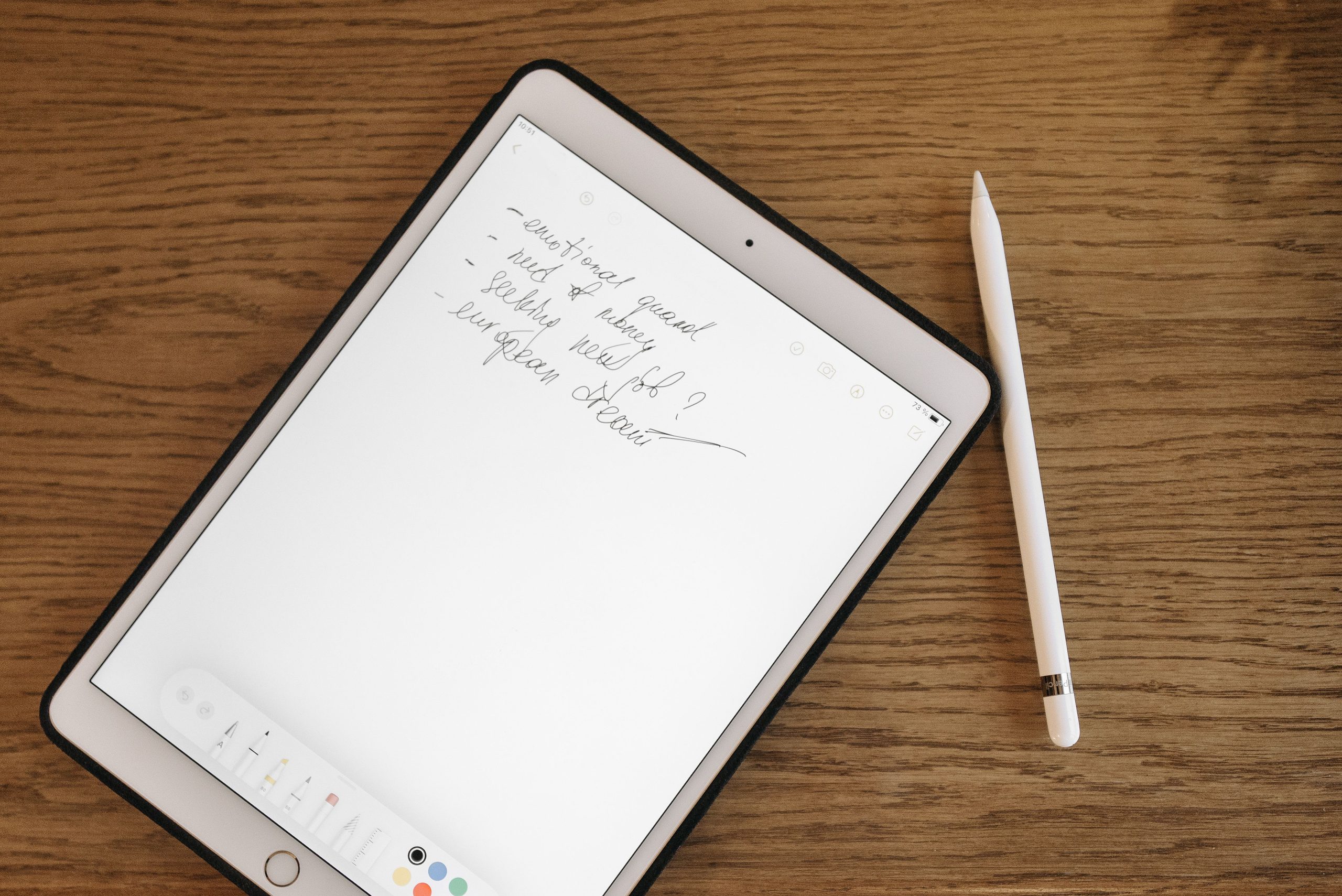
Effective digital note-taking depends on how you will use the material. Paragraphs help with history essays but complicate physics revision. Diagrams explain biological processes but may not help you recall terminology.
Choose a note-taking method based on the task: solving, comparing, explaining or recalling. Different layouts can still share one digital notebook.
Start with the task, not the template

Before opening a page, identify the goal: reconstruct a calculation, defend an interpretation, describe a system or recall a definition?
Let the answer guide your layout:
- Outlines reveal a hierarchy of arguments and supporting ideas.
- Worked examples keep calculations, assumptions and corrections together.
- Diagrams make stages, structures and relationships visible.
- Question-and-answer notes turn information into retrieval practice.
- Cornell notes separate lecture details, review cues and a summary.
Formats can overlap. Chemistry might need equations and a process diagram; history might need a timeline before an argument. Choose the simplest layout for your next task.
Compare digital note-taking methods by subject
Choose by assessment requirements, not by the most attractive template.
If your notes cannot support a practice question, change the method.
For maths and physics, preserve the reasoning
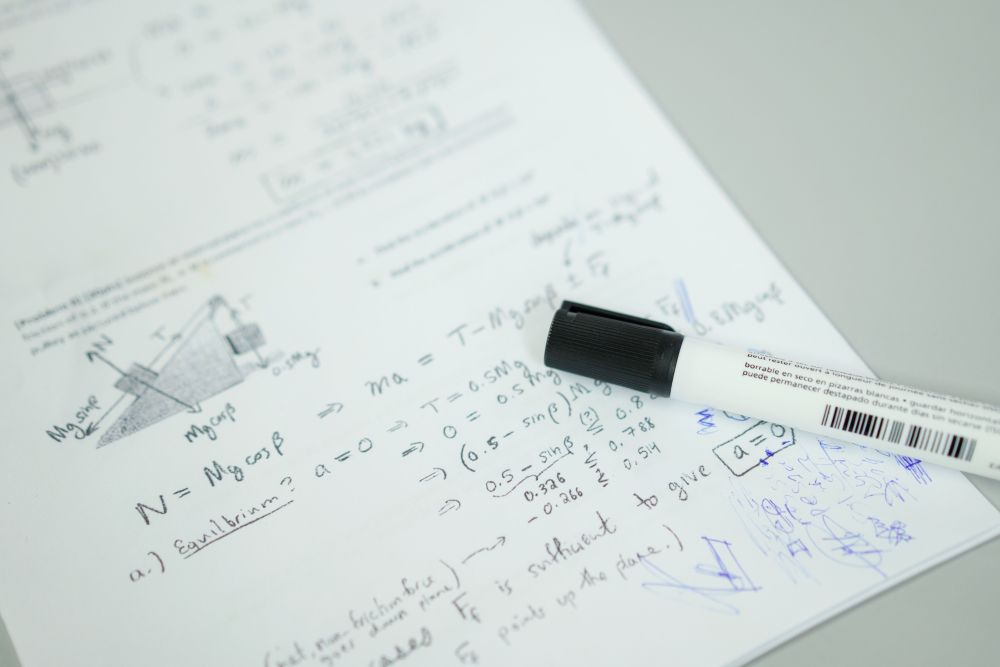
Final answers alone rarely help with unfamiliar problems. Keep formulas, assumptions, units and calculations visible.
Handwrite symbols and graphs; type brief explanations when useful. Combine both if possible without interrupting the lesson.
After each worked example, create a short practice problem. Try it with the solution hidden. When you make a mistake, record its cause: a sign error, a missing conversion or an incorrect assumption. Those notes become a personalised checklist before your next test.
For essay subjects, organise claims and evidence
History, literature and philosophy often ask you to connect ideas rather than reproduce a lecture in order. Organise notes around a question or theme instead of collecting long, disconnected paragraphs.
Start with a possible claim, add supporting evidence, then record an alternative explanation. Put page numbers next to quotations and distinguish your own interpretation from the author’s words. This saves time when preparing references for an essay.
For example, a literature page could compare how two characters respond to authority. A history page could weigh different explanations for a major decision. Finish by writing one sentence explaining what the evidence proves and another identifying what remains uncertain. Highlight disagreements between sources rather than flattening them into one conclusion.
For science, combine processes with explanations
A process diagram can show how stages connect, but labels alone may not explain why a stage happens. Pair the diagram with a few sentences in your own words.
For example, draw the sequence first, then add a question beside each arrow: what causes this change, and what would happen if it did not occur? Leave room to answer after class if the lecture moves quickly.
A tool such as the Kilonotes note-taking app can provide a place to bring handwriting and study documents together. The important choice remains what you put on the page. A well-labelled explanation is more useful than a diagram copied without understanding.
For vocabulary and terminology, build prompts
Digital lists collect terms efficiently, but rereading cannot prove recall. Turn essential terms into questions you answer before seeing the definition.
In a language class, write a sentence with a missing word rather than relying only on direct translation. In anatomy, hide the labels on a diagram. For technical subjects, ask what a term means and when it applies.
Check your answers against reliable course materials, correct errors and revisit difficult prompts over several study sessions. Keep the set small enough to review consistently. Quality matters more than the number of cards you produce.
For lectures, separate capture from review
During a fast lecture, prioritise the main argument, examples and questions. Use a simple symbol to flag information you missed. Trying to build a perfect page while listening can distract you from understanding the speaker.
After class, review the rough notes while the discussion is still familiar. Fill gaps using assigned materials, clarify confusing calculations and add headings that make ideas easier to locate. End with a brief summary or two questions you should be able to answer next week.
If audio recording is allowed, obtain any required permission and follow institutional rules. Treat a recording as a backup for checking details, not a replacement for active listening.
Keep digital notes organised across subjects
Different formats do not require different filing systems. Use the same folder structure and naming conventions so you can find your notes quickly, even when the pages look different.
For a practical weekly workflow:
- Create one folder or notebook per subject.
- Name pages consistently, such as “Week 04 – Cell division.”
- Keep lecture notes, readings and practice questions clearly labelled.
- Add links to related pages when concepts overlap.
- Back up or sync your work and check that important files remain accessible offline when needed.
Avoid adding too many tags or colours. Searchable titles and a predictable structure usually do more for revision than elaborate organisation.
Test the method before making it a habit

Try a new layout on one topic for a week. Then close your source and attempt a realistic task: solve a problem, explain a mechanism, define a term or outline an essay. Your ability to use the information matters more than how polished the page appears.
Ask yourself whether you can locate important details, see why ideas connect and spot what you still do not understand. If not, adjust one element. Perhaps an outline needs a comparison table, or a diagram needs written explanations.
Frequently asked questions
Is typing or handwriting better for digital notes?
Neither is universally better. Handwrite notation or sketches; type searchable explanations. Choose whichever supports understanding.
Should I use the Cornell method for every subject?
No. Cornell notes can help structure lectures and review questions, but calculations may need dedicated working space and spatial topics may need diagrams.
How often should I review digital notes?
Review soon after a lesson to correct gaps, then revisit material through practice and recall. Increase attention to topics you repeatedly miss rather than simply rereading everything.
Ultimately, effective digital note-taking is flexible: keep your files consistent, choose layouts for the work ahead and judge each method by what you can actually remember, explain or solve.