

Table of Contents
- The Short Answer: Several Parties Can Share Responsibility
- The Legal Framework Behind Shared Responsibility
- Who Does What on a Multi-Employer Site
- The Role of the Controlling Employer
- Practical Steps for Each Party
- Shared Site Conditions and Environmental Risks
- Closing Thoughts
The Short Answer: Several Parties Can Share Responsibility
The subcontractor is the worker’s direct employer, so it carries the most obvious duties: training, supervision, equipment and daily safe-work practices. However, a subcontractor is rarely the only party responsible. The general contractor, the site owner, and sometimes a construction manager can all be held accountable if they controlled the site, created a hazard, or failed to act on a known danger. In practice, responsibility is layered rather than handed to one company.
The Legal Framework Behind Shared Responsibility
Workplace safety laws are built around the idea that whoever has control over a risk should manage it. In the United States, federal OSHA rules allow citations against more than one employer for the same hazard. In Australia, the model Work Health and Safety laws use the concept of a “person conducting a business or undertaking” (PCBU), which can capture subcontractors, principal contractors and even clients engaging the work.
Both systems recognize that a worker’s employer is not always the only company with influence over the job site. A helpful way to think about it is to ask three questions:
- Who employs the worker and directs their daily tasks?
- Who controls the physical site, the schedule, or the sequencing of trades?
- Who created the hazard, or was in a position to notice and fix it?
Each “yes” points toward a duty holder. Multiple yeses usually mean multiple duty holders.
Who Does What on a Multi-Employer Site
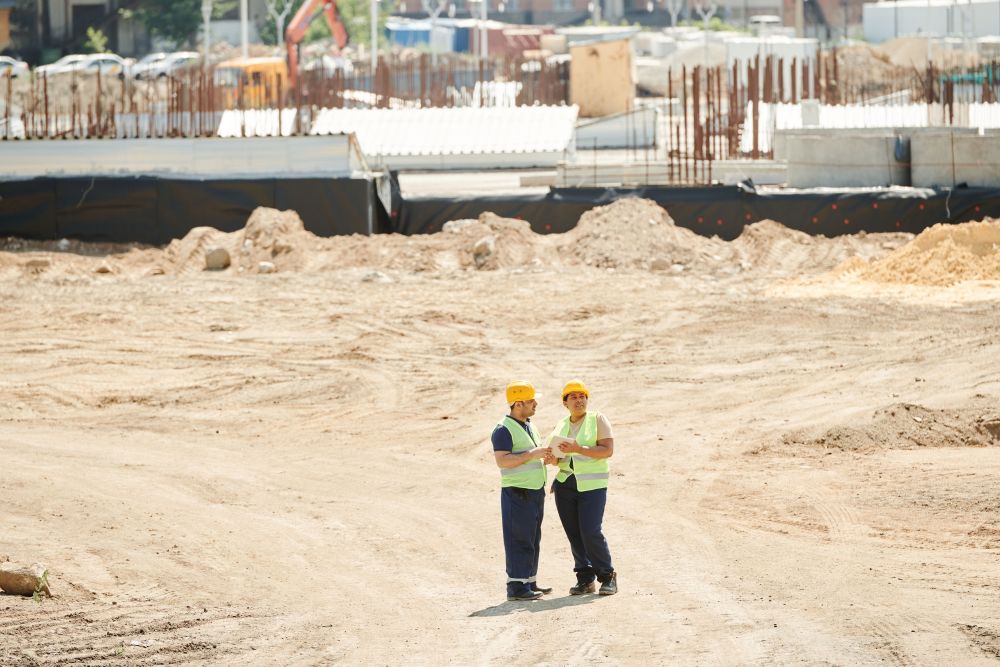
The table below summarizes how duties are commonly divided among the main parties on a site where subcontracted employees are working. Exact obligations depend on the jurisdiction, the contract, and the facts of each case.
The Role of the Controlling Employer
The concept that matters most on a shared site is the “controlling employer.” In the US, OSHA’s Multi-Employer Citation Policy describes a controlling employer as one with general supervisory authority over the worksite, including the power to correct hazards itself or require others to correct them. Control can come from a contract or simply from how the site is actually run.
A controlling employer is expected to use reasonable care to prevent and detect violations. That duty is usually less demanding than the duty owed to its own employees, but it is still real. A general contractor that walks past an unguarded floor opening every day, and does nothing, is unlikely to be able to say it had no responsibility.
Australian guidance takes a similar approach. Safe Work Australia’s WHS duties in a contractual chain factsheet explains that each business in a chain of contractors and subcontractors has its own duties, and that those duties can overlap where more than one party can influence the same risk.
Practical Steps for Each Party
Knowing who is responsible is only useful if each party acts on it. The following steps help reduce gaps between companies:
- Verify competence before work starts. Review the subcontractor’s safety plan, training records, and incident history.
- Write safety obligations into the contract. Specify reporting timeframes, inspection frequency, and who has authority to stop work.
- Hold a joint induction. Every worker should know the site rules, emergency routes and who to contact, regardless of employer.
- Run coordinated pre-start meetings. Trades that share a work area should agree on sequencing and exclusion zones each day.
- Inspect and document. Regular walkthroughs with written findings show that hazards were detected and tracked.
- Act on reports quickly. A hazard that is reported but ignored can shift liability to whoever knew about it.

Shared Site Conditions and Environmental Risks
Some risks cannot be assigned to a single trade. Heat, dust, noise and poor ventilation affect everyone in a work area, so the party controlling the site environment often carries the greatest practical responsibility. On remote or hot sites, for example, employers sometimes install mining air conditioning in crib rooms, control cabins or enclosed work areas so that workers from different subcontractors can recover from heat exposure safely. Decisions like this are rarely made by one subcontractor alone, which is why they belong in the shared planning conversation.
The same logic applies to inspection checklists. A site-wide inspection program that includes environmental conditions, access routes and shared equipment is more likely to catch problems that fall between two contractors’ scopes.
Closing Thoughts
When employees work for a subcontractor, the subcontractor is their employer and carries the core duty to keep them safe. But on a shared site, the general contractor, the site owner and any party with real control over a hazard can share that responsibility. The safest approach is to treat safety as a shared system: define duties in contracts, verify competence, coordinate trades daily and act on every report. Companies that do this are better placed to protect workers and to show, if something goes wrong, that each party did its part.