

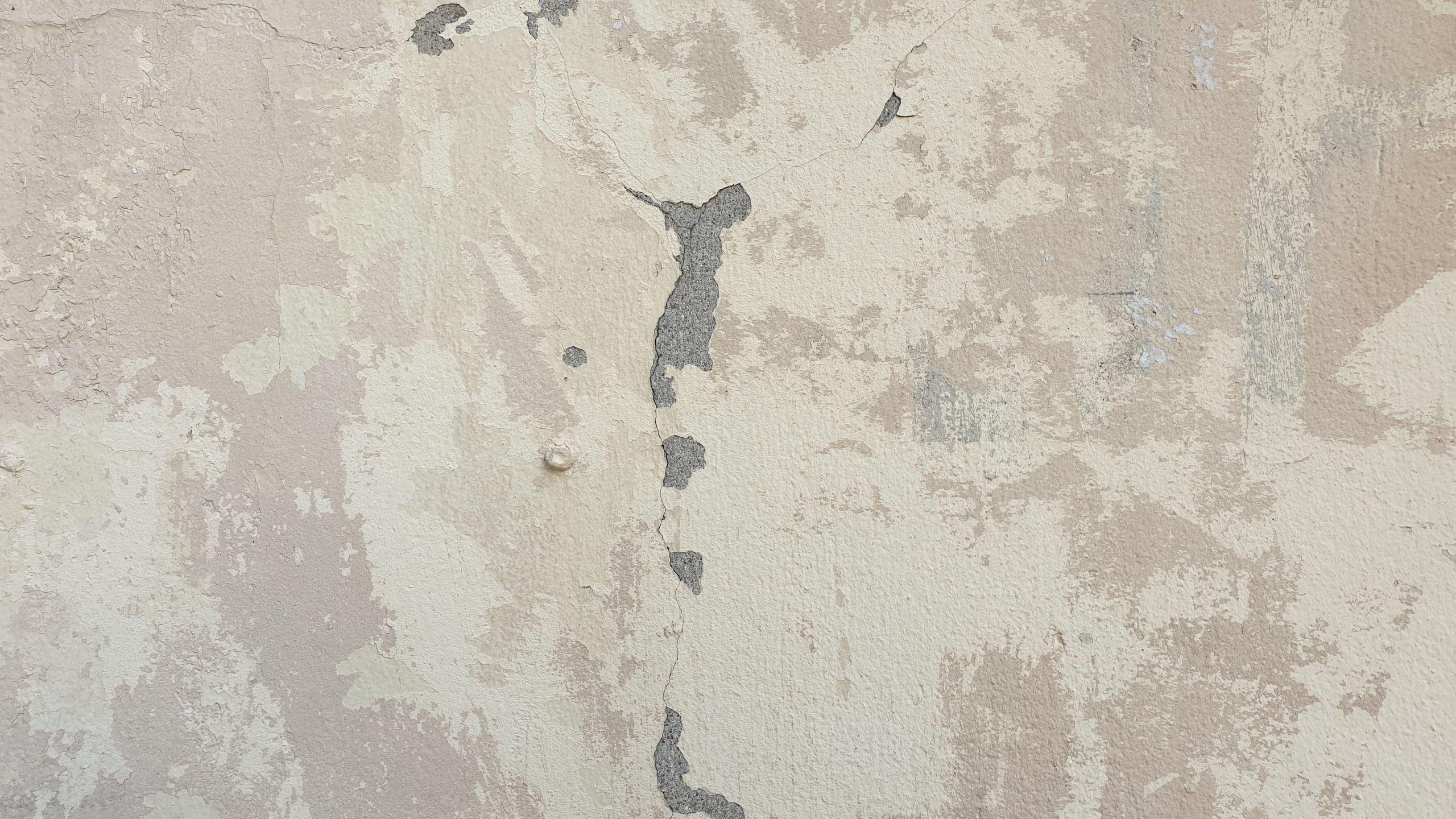
Stand at the kerb on a bright afternoon and look at your house the way a buyer would – the way you probably looked at it the day you first saw it. What your eye lands on first is the facade. What most of us forget is that it is also the only thing standing between everything we own and the weather. The first signs that it is losing that battle look purely cosmetic. The second wave is not.
Here is the encouraging part: exterior walls fail in a fairly predictable order, and almost every symptom on that list is a water problem wearing a disguise. A 2026 analysis of 2,100 real building-damage investigations found rain and snow were the single most common source of damage, and that nearly a quarter of all damage traced back to maintenance that was simply not done. Which is another way of saying: most of these fixes are far cheaper if you catch them in the cosmetic phase.
So before you read further, do one slow lap of the house. Not the Sunday-afternoon stroll version – the version where you actually look at the walls. The seven signs below are the things you are hunting for.
The crack that keeps moving is the one to worry about
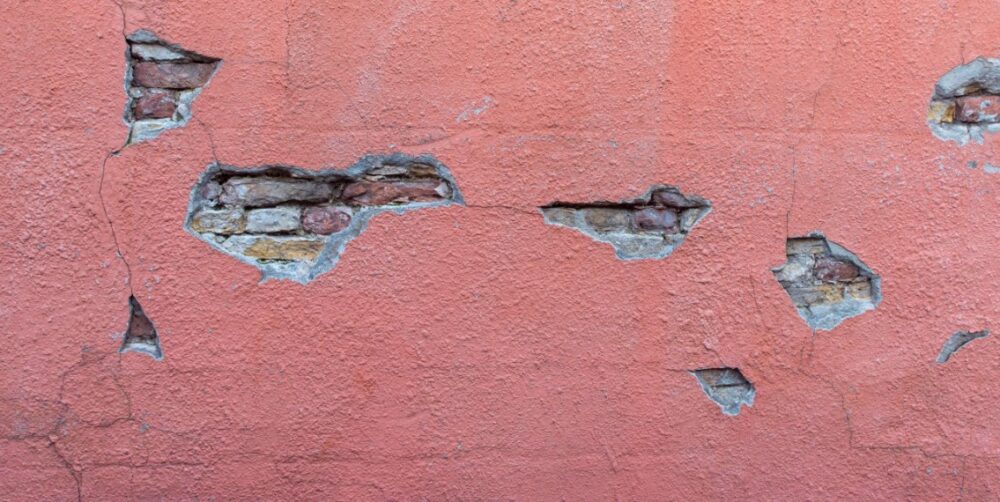
Every masonry wall eventually shows hairline cracks. Render, brick and mortar all expand and contract with temperature and settle over time, so a thin, stable crack on its own is usually nothing. In fact, I would argue most homeowners do this backwards: they panic over a hairline crack the width of a pencil line and ignore a crack that is quietly widening over two years.
The difference matters. A crack that changes width between summer and winter, that runs in a deliberate straight or diagonal line rather than following the surface, or that shows up as a stair-step through the mortar joints is the wall telling you something is still moving. That is a structural conversation, not a paint-prep conversation. An Wall Crack Repair Sydney assessment will tell you whether you are dealing with a failed render coat or movement in the structure behind it – and that is the kind of diagnosis worth getting before you spend a dollar on patching.
Paint that peels, bubbles, or dusts off on your hand

Run the flat of your hand across a painted wall. If it comes away chalky, the paint film is breaking down. If you can see bubbling or peeling down to the substrate, the film has already failed – and on timber that is serious, because the paint is often the only waterproof membrane the wood has.
Exterior paint is a sacrificial coating with a built-in expiry date. Dennis Fiorilli, senior director at Sherwin-Williams, puts it plainly: most homes need repainting every seven to ten years, and the exact timing depends on climate, surface condition and how well the last job was prepped. My read is that people get roughly a decade out of good paint and roughly three years out of a cheap repaint over a badly prepared wall – the substrate, not the paint, decides the outcome.
| Exterior surface | Typical repaint cycle | What usually kills the coating |
|---|---|---|
| Timber weatherboards | 3–7 years | Water at joints; cracks let moisture behind the film |
| Aluminium siding | About 5 years | Chalking and oxidation in sun-exposed areas |
| Render / stucco | 8–12 years | UV breakdown and micro-cracking, then moisture ingress |
| Painted brick | 15–20 years | Stable substrate, but only with correct prep and a breathable system |
Intervals are indicative – coastal salt air and harsh sun can shorten every one of them by a third or more. These figures come from Angi’s exterior paint guide, which is a useful reality check against the “just paint it once and forget it” crowd. The one exception to the panic: bubbling or blistered paint usually means moisture is sitting behind the film. Painting over that without finding the leak is how people repaint a wall every two years.
White, chalky stains that keep coming back
Efflorescence looks like a white powder bloom on brick or render – most people assume it is bird droppings or a bad patch, wipe it off, and never think about it again. That is exactly the wrong response, because the deposit is not the problem; it is the receipt.
The mechanism is straightforward: water moves through porous masonry, dissolves mineral salts inside, and deposits them on the surface as it evaporates. A one-off white haze after a wet winter is common and mostly harmless. The danger is when it returns in the same spot, because that tells you water has a regular route through your wall – and salt crystallising just below the surface is one of the things that eventually crumbles masonry from the inside. The US home-inspection body InterNACHI treats persistent efflorescence as an early warning of exactly this kind of moisture-driven masonry deterioration. Fix the water path first: a blocked gutter, a downpipe emptying against the wall, a parapet cap, splashback from the ground. Wash the stain afterwards, not before.
Moss, algae and green streaks on brick or render
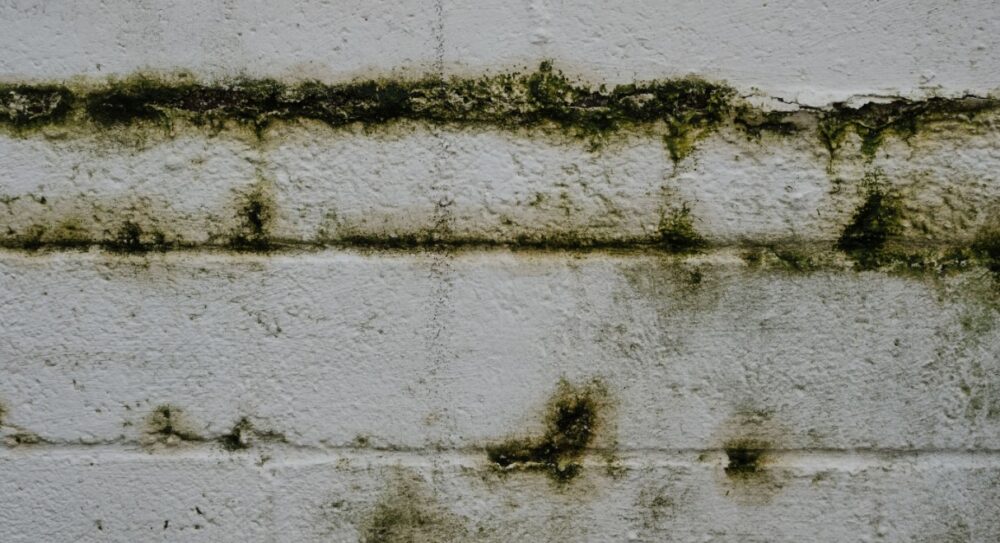
Plants growing on your walls are not decoration. Moss and algae only thrive where a surface stays damp, so their presence is a moisture clue in itself – usually a shaded elevation, a failed gutter keeping a corner wet, or splash zone that never dries out. And they are not passive: moss holds water against the wall, and in cold climates that trapped moisture freezes, expands and slowly pops the faces off bricks and mortar joints.
A word of caution about the obvious fix. High-pressure washing a mossy brick wall feels like progress, but it can drive water into already-softened mortar and blast out material that was holding on. Low pressure, a soft brush, and fixing whatever is keeping the wall wet beats a pressure washer every time. The growth will return in a season if the dampness that feeds it is still there.
Hollow-sounding walls and brick faces falling off
Knock on your render with your knuckles. A solid wall gives a dull, flat thud. If a patch rings hollow – drummy, in the trade – the render has lost its bond to the wall underneath, and it is only a matter of time before it lets go. You are hearing the difference between a wall and a hollow shell.
Spalling is the brick version of the same story: the surface of the brick flakes, chips or craters, because moisture inside froze, expanded and exceeded what the material could hold. Where efflorescence is a clue, spalling is damage already done – material has been lost and cleaning cannot bring it back. If you can hear hollow sections across a rendered elevation, or you are sweeping brick chips off the path, this is past the repaint stage. That wall needs cutting out and re-rendering or repointing, and the longer it is left, the bigger the blown area gets each winter.
Soft timber and curling weatherboards
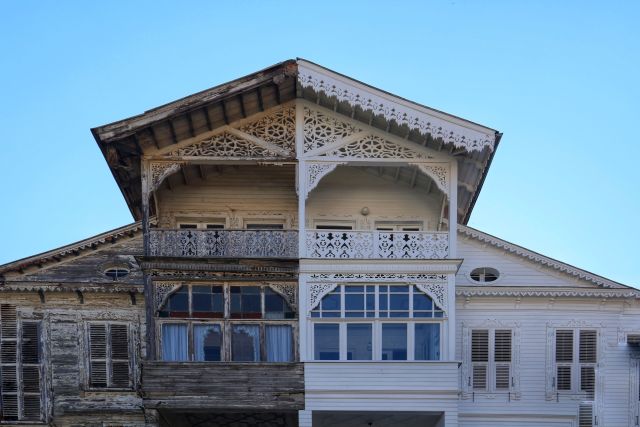
Timber fails differently from masonry, and it fails faster. Where paint has worn through on weatherboards, poke the exposed wood with the blunt end of a pencil. If it sinks in, that board is rotten, and rot does not stop at the board – it travels along the frame behind the cladding.
The giveaway sequence is almost always the same: a failed paint seam at a joint, water wicking in behind the board, then soft timber that only becomes obvious once you push on it. On rendered and brick homes, the timber to check is the trim – window sills, door frames, fascia and eaves, the places where wood meets the wall and water collects. Catching one rotting board while it is still one board is a weekend job. Catching it two seasons later is replacing a section of wall.
The smell indoors that points outside
The last sign is the one that is easy to misattribute, because you smell it inside: a musty note in a bedroom that never quite goes away, damp patches on a wall that reappear in the same place every winter, wallpaper lifting or paint bubbling low on an internal wall. When those symptoms line up on the same elevation as exterior damage, you are not dealing with an interior problem. Water is coming through the wall, and the interior is just where it arrives.
This is why rendered-facade research keeps finding the same thing: in a study of more than 2,000 documented facade defect cases, water infiltration was the single most common fault, ahead of condensation dampness and material falling off. Rain gets in through failed coating, cracked render or open joints at the top of the wall and travels down inside the structure, surfacing somewhere it was never expected. Fix the outside, dry the inside, and the smell resolves itself. Paint the inside and ignore the outside, and you will be repainting that patch every year.
Repaint, patch, or re-render?
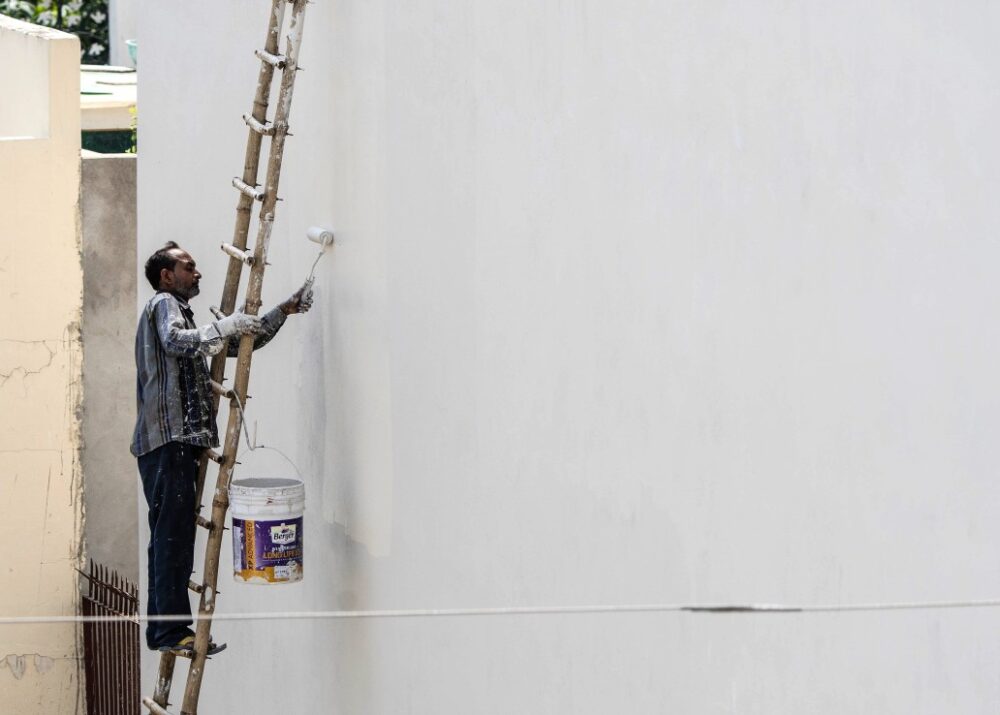
Once you have identified your sign, the decision is usually one of three. The single biggest mistake I see is repainting over a problem that has not been fixed yet – a cracked or blown render coat, a damp wall, a rotten board. Paint is a band-aid, not a repair, and a band-aid over an active wound fails fast.
Here is the practical rule of thumb. If the wall is structurally sound but tired – fading, chalking, stained – it needs a repaint, full stop. A decent paint system over sound render buys you roughly a decade, which is how a well-maintained cement render lasts its full 20 to 30 years instead of dying at fifteen. If the render is locally blown or badly cracked, it needs a targeted repair: cut out the failed section, re-render, blend, then coat. Only when a wall is broadly hollow, falling off, or covered in movement cracks does it genuinely need a full re-render – and that is the expensive end of the scale.
The order of operations that actually holds
Whatever your fix, do it in this order and resist every urge to skip ahead:
- Stop the water first. Clear gutters, redirect downpipes, fix failed seals. Paint over a wet wall and you are trapping moisture behind the new film.
- Repair the substrate. Cut out blown render, fill and reinforce cracks, repoint open mortar, replace rotten timber.
- Let the wall dry. This is the step everyone rushes. A wall that has been absorbing water needs weeks, not days, to dry out before it is coated.
- Prep and prime. Clean the surface properly, scrape and sand anything loose, and prime bare patches. Skipping prep is how a five-year paint job becomes an eighteen-month one.
- Only then, coat. And when you do, buy decent paint. The difference between budget and premium exterior paint is a few hundred dollars and five to seven extra years of protection.
What “I’ll deal with it next year” really costs
There is a reason maintenance advice keeps coming back to the same two words: catch it early. In the Swedish damage dataset mentioned at the top, a large share of the harm came from components used past their intended service life – walls, roofs and windows that were simply never renewed. The repairs were expensive; the neglect was cheap to avoid. The researchers’ conclusion is blunt: most of this damage was elementary and easily preventable, and it sat mostly with property owners.
Put a dollar figure on it. A timely repaint of a rendered facade might cost a few thousand. Re-rendering the same house after the coating has been left to fail typically runs far higher – Sydney renderers quoted full single-storey re-renders in the mid-to-high four figures to low five figures in 2026, before scaffolding on two-storey homes. The blown patch that was a $200 repair in year three is the $8,000 re-render in year twelve. Same wall. Different invoice.
And there is the side of this nobody likes to admit: the facade is what sells the house. Buyers form their first opinion from the street, and damp patches, cracked render and mossy brick all read as “what else has been ignored?” on inspection. A maintained exterior is not vanity. It is the cheapest insurance policy your biggest asset has.
Frequently asked questions
Are hairline cracks in render normal?
Yes. Fine, stable cracks from shrinkage and thermal movement are common and mostly cosmetic. The ones to worry about are cracks that grow, change width with the seasons, or run in deliberate straight or diagonal lines.
Can I just paint over a crack?
Not a live one. A thin, stable crack can be filled with flexible filler and painted over, but painting over a crack that is still moving simply hides it until the new paint cracks too. If in doubt about whether a crack is live, photograph it against a ruler and compare it a season later.
Is efflorescence dangerous?
The white deposit itself is not, but treat it as a warning: it means moisture is travelling through your masonry on a regular route. Chasing the water source is the fix, not scrubbing the stain.
How often should exterior walls be repainted?
Most homes need a fresh coat every seven to ten years, but timber weatherboards may need it sooner (every three to seven years) while painted brick can last fifteen to twenty. Check each elevation once a year, and more often if you live near the coast.
When do I need an engineer rather than a renderer or painter?
If a crack is wide, growing, step-like through mortar joints, or accompanied by sticking doors and windows, get a structural opinion before any cosmetic work. Surface problems – blown render, spalling, failed paint – are a renderer’s or painter’s job. Getting the diagnosis backwards is the expensive mistake.
How this article was put together
This piece was researched in early September 2026. It draws on the 2026 Swedish study of 2,100 building-damage investigations, a published analysis of 2,000+ rendered-facade defect cases, home-inspection guidance on efflorescence and spalling from InterNACHI, and 2026 repainting and rendering guides from Angi and Sydney-area contractors for the repaint intervals and re-render costs quoted. Cost figures are in Australian dollars and were current when retrieved; paint and render lifespans are estimates that vary with climate, coastal exposure and prep quality, so recheck figures before budgeting.