

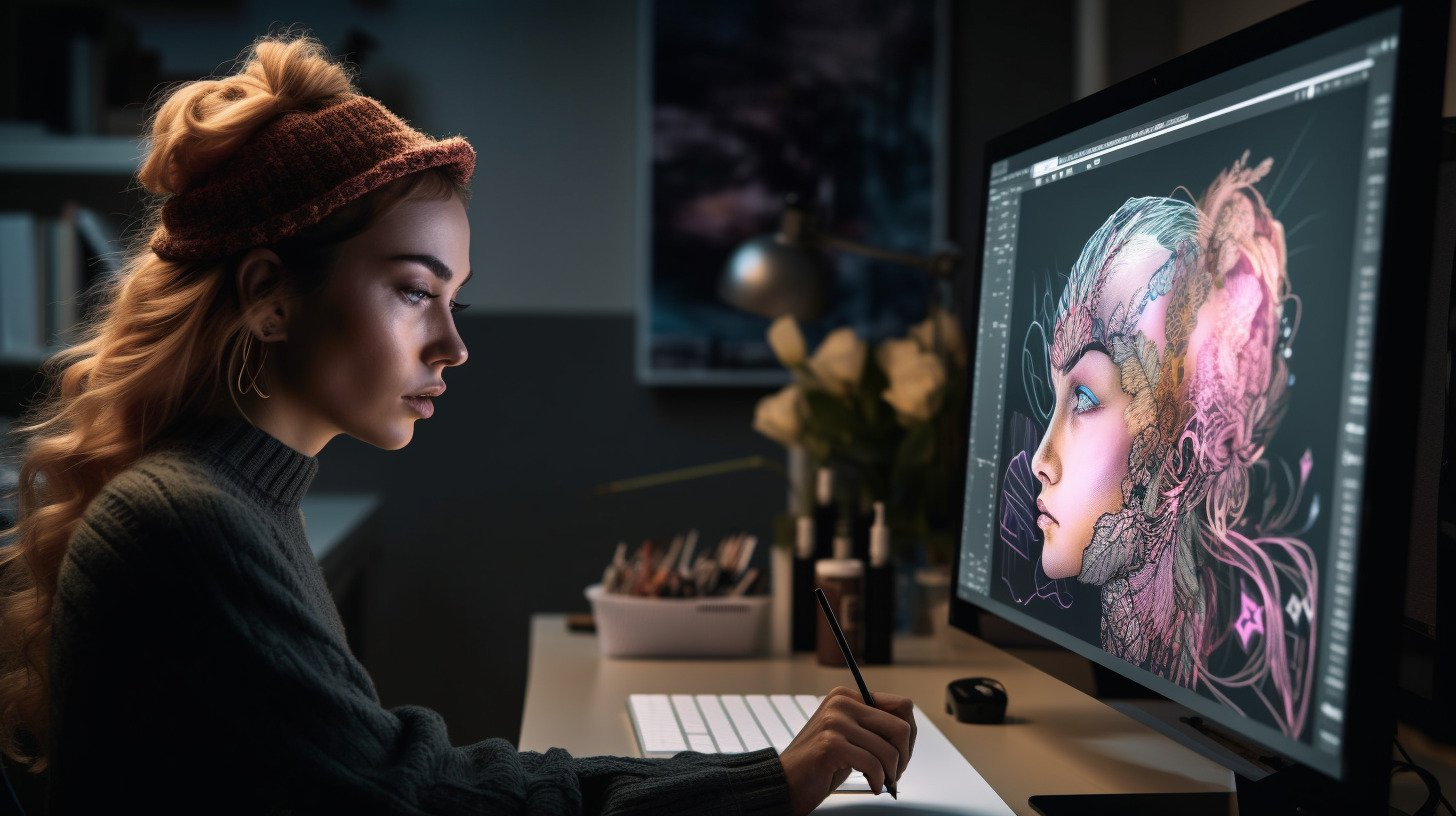
Digital art production changed fast in the last three years. Most artists I know are no longer asking if they should use AI tools. They are trying to figure out where AI actually fits into their workflow without damaging the quality of their work. That is a very different conversation.
Some artists use AI for concept sketches. Others use it to clean backgrounds, generate references, speed up animation, or organize huge batches of content. The interesting part is that very few experienced creatives are handing the entire process over to AI. Most are treating it like an assistant that saves time on repetitive tasks.
That shift matters because clients are changing too. Faster turnaround times are becoming normal, and creative teams are expected to produce more versions of the same idea than ever before.
AI Tools Are Changing the Earliest Stage of Creative Work
The biggest impact of AI is happening before the final artwork is even created. Brainstorming, ideation, moodboarding, and rough drafts are now dramatically faster.
I noticed this while talking to a freelance illustrator friend recently. He said he used to spend half a day gathering references before starting a campaign concept. Now he generates multiple directions in under thirty minutes, then refines the strongest one manually. Honestly, that makes sense. Creative work still needs taste and judgment, but AI reduces the slow setup phase.
A 2024 paper published in PNAS Nexus called Generative artificial intelligence, human creativity, and art examined how text to image systems are reshaping artistic execution and workflow efficiency in digital creation environments. The study focused on how AI systems assist rather than fully replace artistic decision making.
Faster Video Production Is Changing Client Expectations
Video creation is moving through the same shift right now. Short form content, ads, animated explainers, and social clips are being produced at a pace that was unrealistic a few years ago.
A lot of creators are experimenting with tools like the AI video generator because clients increasingly expect quick revisions and multiple concepts early in production. That pressure is real. Have you noticed how many brands now ask for five or six content variations instead of one polished draft? AI tools are part of the reason.
What surprised me most is how many professionals still heavily edit AI generated video afterward. Most outputs still need pacing fixes, visual consistency, or stronger storytelling decisions.
Important fact: AI speeds up production, but it does not automatically improve creative judgment. Experienced editors and artists still make the final work feel intentional.
Human Taste Matters More Than Before
One strange thing happened after AI image tools became common. Good taste became easier to notice.
When everyone has access to fast image generation, audiences start paying attention to smaller creative details. Composition choices matter more. Color grading matters more. Editing rhythm matters more. People can usually tell when something was generated quickly without much thought behind it.
A 2025 academic paper titled AI as a Creative Partner: Enhancing Artistic Creation and Acceptance discussed this issue directly. Researchers noted that AI tools improve efficiency and idea generation, but artists still provide emotional context, refinement, and final direction in professional creative work.
Here are a few areas where experienced artists still stand out clearly:
- Narrative consistency across large projects
- Strong visual identity
- Knowing when to simplify an image
- Understanding audience expectations
- Revision control during client feedback
New artists sometimes underestimate how important those skills are becoming.
Creative Workflows Are Becoming More Collaborative
Something else changed that people rarely talk about. AI tools are forcing designers, editors, writers, and animators to work closer together.
A few years ago, departments often stayed separated. Now creative pipelines overlap constantly because AI tools combine text, image, audio, and video generation inside the same workspace.
| Workflow Area | Before AI Tools | Current AI Assisted Workflow |
| Concept sketches | Manual drafting | AI assisted rapid ideation |
| Video previews | Time intensive editing | Fast prototype generation |
| Background assets | Separate production stage | Instant variations |
| Client revisions | Limited due to time | Multiple rapid iterations |
The interesting part is that collaboration can become messy if nobody defines creative direction early. AI makes generating content easier. Managing consistency becomes harder.
AI may not be eliminating artistic jobs entirely, but it is reorganizing how creative work gets distributed across teams and workflows.
The Industry Is Starting to Push Back Against Generic AI Art
You have probably seen it already. People are getting tired of generic AI visuals online.
There is a growing difference between “fast content” and work that actually feels considered. Fashion, advertising, gaming, and entertainment companies are starting to realize that audiences notice repetitive AI aesthetics very quickly.
A recent Vogue report about backlash against low effort AI content explained how brands are now emphasizing visible human craftsmanship and authenticity because audiences increasingly reject generic generated visuals.
Did You Know? A 2026 VSCO survey reported that 83% of photographers already use AI tools somewhere in their workflow, mostly for editing assistance, planning, and business tasks rather than full creative control.
That detail is important because it explains where the industry is heading. AI is becoming infrastructure. It is not replacing artistic identity on its own.
Artists Are Learning That Control Is More Important Than Automation
One mistake many beginners make is assuming better prompts automatically create better art. Real production work is more complicated than that.
Professional artists revise constantly. They adjust details, remove distractions, rebalance scenes, and refine pacing over multiple rounds. AI tools still struggle with precise iteration. Many systems generate impressive results quickly, but maintaining consistency across an entire project is difficult.
I think that is why experienced creatives are not panicking as much anymore. They understand that clients still need human oversight. Somebody has to make decisions that software cannot fully understand yet.
A 2025 industry analysis from Amplify Partners argued that many AI creative systems still fail to support the real iterative nature of artistic work because creators need ongoing control rather than one click automation.
Additional Frequently Asked Questions
1. Do AI creative tools work offline, or do they always require cloud access?
Many advanced AI art and video tools still rely on cloud processing because generating high quality visuals requires strong GPUs and large computing infrastructure. Some lightweight tools can run locally on powerful PCs, but performance varies a lot depending on hardware.
Artists working with sensitive client material sometimes prefer local AI setups because they offer more privacy and control over project files.
2. How expensive are professional AI creative tools for artists?
Costs vary more than people expect. Some tools offer free limited versions, while professional plans can range from $20 to several hundred dollars monthly depending on rendering limits, video generation, team access, and commercial licensing.
The hidden cost is often time. Many artists spend hours testing prompts, fixing outputs, and organizing generated assets before they reach production quality.
3. Are art schools changing their programs because of AI?
Yes. Many universities and creative programs are already adding AI related coursework into design, animation, and media production classes.
A 2025 report from the University of the Arts London discussed how creative education is shifting toward AI assisted workflows, critical thinking, and ethical use policies instead of treating AI as a separate niche skill.
Students are increasingly expected to understand both traditional creative fundamentals and AI assisted production methods.
4. Can AI tools help small creative teams compete with larger studios?
In many cases, yes. Small agencies and freelance teams can now create prototypes, social campaigns, motion graphics, and concept visuals much faster than before.
That speed advantage helps smaller teams pitch ideas more competitively without needing huge production budgets upfront. The challenge is maintaining quality and originality while moving quickly.
Final Thoughts
AI creative tools are not slowing down. They are becoming part of everyday production in design, photography, animation, and digital marketing.
At the same time, audiences are becoming better at spotting lazy creative work. That changes the value of human decision making. Fast generation alone is no longer impressive.
The artists who will probably benefit most are the ones who learn how to combine speed with strong creative judgment. AI can help produce more content. It still takes a person to decide what is actually worth keeping.