

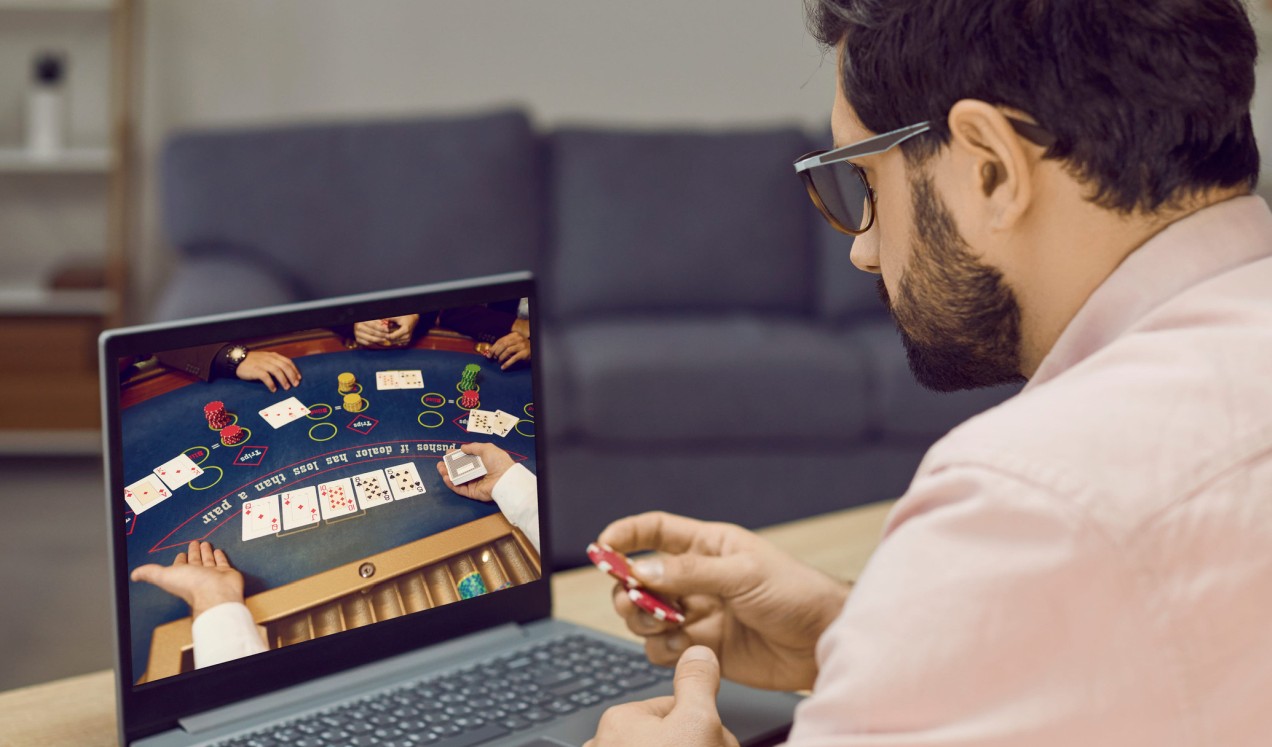
Ask ten card players to name a “pure skill” card game and you’ll get ten different answers, and at least six of them will be wrong. Poker gets treated as the gold standard of strategic card games, right up until a federal court or an economics paper looks closely and finds the truth is a lot more uncomfortable than either poker’s fans or its detractors want to admit.
That’s actually the most useful place to start, because “does this game reward skill” turns out to be an empirical question with real answers, not a matter of taste. And once you know how researchers actually measure it, choosing a card game that rewards strategy over luck gets a lot easier.
How do you actually measure whether a game rewards skill or luck?
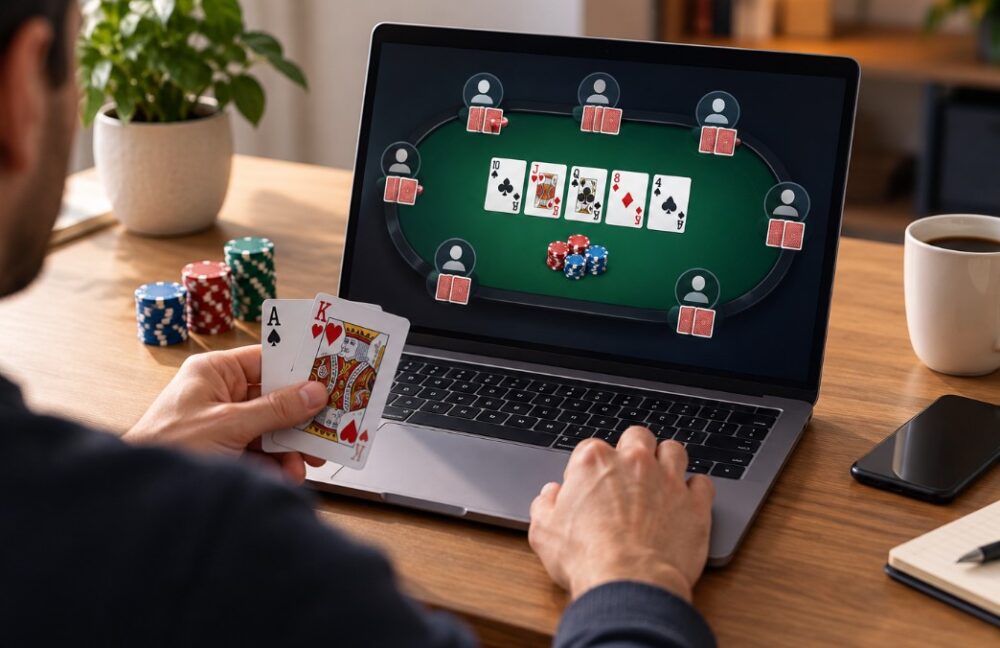
You rank players by an Elo-style rating and see how spread out the ratings get. That’s the core idea behind a widely cited method from economists Jan Lambrecht, Jörg Oechssler, and Peter Duersch at the University of Heidelberg: in a pure-chance game, the past has zero predictive power over the future, so everyone’s rating converges toward the same number. In a pure-skill game, strong players separate from weak ones and stay separated. Chess produces enormous rating spread. A coin flip produces none.
To make the comparison concrete, the researchers built a benchmark called “50%-chess”: take real chess results and randomly replace half of them with coin flips, then measure the resulting rating spread. Any game whose spread falls below that benchmark is, by their definition, predominantly a game of chance. Their finding for poker specifically is blunt: it lands at roughly the equivalent of “25%-chess,” well under the 50% line. A newer 2025 framework published on arXiv, using a different mathematical approach (a Skill–Luck Index built from game-tree decomposition rather than rating spread), lands in a similar neighborhood: chess scores a perfect +1, backgammon comes out perfectly balanced at 0, and poker sits at +0.33, meaningfully skill-leaning but nowhere near chess.
I’ll say the quiet part out loud: by both of these measures, poker is a chance-dominant game in any single hand, and the “skill game” argument only wins once you zoom out to thousands of hands.
Poker’s messy reputation (and why courts keep disagreeing about it)
This is where the legal system and the math start pulling in different directions. In 2012, a federal judge in the Eastern District of New York ruled in United States v. DiCristina that poker is predominantly a game of skill under the Illegal Gambling Business Act, a decision that directly contradicted how several state courts had ruled on the same question. Economists Steven Levitt, Thomas Miles, and Andrew Rosenfield made a related argument in a widely referenced University of Chicago Law School analysis: most courts apply a “dominant factor” test to a single hand of play, which is a strange place to look for skill, since no card game reveals its skill component in one deal. Skill in poker, like skill in most repeated games, is a property of the sequence, not the instance.
Levitt and Miles backed that argument with hard numbers from the 2010 World Series of Poker: 720 players identified in advance as highly skilled posted an average return on investment of 30.5 percent, while everyone else averaged negative 15.6 percent. That’s not a rounding error, that’s a canyon.
So which framing is right, the Heidelberg-style statisticians who say poker barely clears “25%-chess,” or the legal economists who point to a 46-point ROI gap between skilled and unskilled players? Honestly, both. They’re measuring different things. The rating-spread method asks how much a single hand is decided by the deal versus the decisions; the ROI method asks whether skill persists and compounds across a tournament’s worth of hands. Poker can be simultaneously chance-dominant per hand and skill-dominant over a career. That’s not a contradiction, it’s just two different questions wearing the same “is poker skill or luck” costume.
The distinction that actually matters if you hate variance
Here’s my actual opinion, and I’ll own it as opinion rather than fact: for someone choosing a card game to play regularly, the legal skill-vs-chance debate is close to irrelevant. What matters is when the luck happens relative to your decisions.
In Texas hold’em, luck keeps injecting itself after you’ve already committed chips: the flop, the turn, the river, each one a fresh roll that can undo a correct decision you made two streets earlier. In games like bridge, Chinese poker, or Spades, the luck is front-loaded. You get a fixed, unchangeable hand, and every subsequent decision is 100 percent yours. The dealing is random; the play isn’t. That’s a meaningfully different experience even when the underlying skill percentage is similar, and it’s the reason a lot of strategy-first players gravitate toward “fixed deal” games without being able to explain why they prefer them.
So here’s a genuine dilemma worth sitting with: would you rather play a game where your skill edge is nearly guaranteed to show up over a long session, but any single hand can still slip away to a bad run of cards mid-hand (that’s most poker and blackjack) – or a game where the deal is locked the moment the cards land, and the only thing left to determine is how well you use exactly what you were given? Chinese poker players tend to insist the second option feels more honest. Having read the research, I’m inclined to agree with them, though I’ll admit that’s a preference, not a proof.
Five online card games where strategy genuinely wins
With that framing in mind, here’s where strategy-first players actually get rewarded, and how each one compares on the things that matter: how much of the outcome is decided before you touch a card, how steep the learning curve is, and how big your online player pool actually is.
| Game | Luck resolves | Skill ceiling | Typical hand length | Where the edge comes from |
|---|---|---|---|---|
| Bridge | At the deal (duplicate scoring removes even that) | Very high | 10–20 min | Bidding systems, card reading, partnership signaling |
| Chinese poker / Pusoy | At the deal, fully | High | 1–3 min | Hand arrangement math, royalty tradeoffs, foul avoidance |
| Euchre | At the deal | Moderate–high | 2–5 min | Trump counting, bidding thresholds, partner signals |
| Spades | At the deal | High | 10–20 min | Bid accuracy, bag management, nil-bid risk calculus |
| Rummy variants | Continuously (fresh draws) | Moderate–high | 5–15 min | Discard-pile tracking, probability, opponent reads |
Skill ceiling and luck-resolution assessments are based on the game structures and strategy literature cited throughout this article, current as of September 2026.
Bridge – the one luck can’t fully touch
Bridge is the only card game with the same institutional recognition as chess: the International Olympic Committee formally recognized contract bridge as an Olympic mind sport in 1998, putting it in a category shared with exactly one other card-and-board game. What makes bridge special isn’t just the bidding system complexity (though four rounds of encrypted-by-convention bidding is plenty complex on its own), it’s duplicate scoring. In duplicate bridge, every pair at the tournament plays the identical deal, so your result is compared against everyone else who held your exact cards. The luck of the deal is mathematically subtracted from the outcome; what’s left is pure decision quality. Bridge Base Online now draws over 11.6 million monthly visits, making it comfortably the largest bridge club that has ever existed, physical clubs included.
Chinese poker (Pusoy) – thirteen cards, three separate arguments
Chinese poker, known across the Philippines as Pusoy, takes the “fixed deal” idea and makes it the entire game. You get 13 cards and split them into three poker hands: a 5-card back hand (must be your strongest), a 5-card middle hand (must be weaker than the back but stronger than the front), and a 3-card front hand (your weakest, limited to a pair or trips since there’s no room for a straight or flush in three cards). Arrange them out of order, back weaker than middle or middle weaker than front, and you “foul,” which typically costs you an automatic loss against every opponent at the table regardless of how strong your individual cards actually were.
That structure is what makes Pusoy a genuinely different strategic exercise from five-card poker. You’re not maximizing one hand, you’re allocating strength across three simultaneous comparisons, while also chasing royalty bonuses that many online scoring systems pay out to a strong middle or back hand even when you lose the round outright. If you want to see the argument about skill-versus-deal play out in real time rather than read about it, spinning up a few rounds of Pusoy online against ranked opponents makes the point faster than any paper: the thirteen cards you’re dealt barely matter next to how well you split them.
Euchre – the fastest skill test in cards
Euchre strips a standard deck down to just 24 cards (9 through Ace) and deals five per player, which sounds like it should be luck-heavy since there’s so little to work with. In practice, the opposite happens: the small card pool makes every decision trackable. There are only seven trump cards in the entire deck, including the two “bowers” (the trump-suit jack and its same-color twin, which jumps suits to become the second-highest card in play), and strong players count every one of them across a hand. The bidding phase alone has real teeth: calling trump on a marginal hand hands your opponents a free two points if you fail to win three tricks, so seasoned players follow seat-specific thresholds (a first-seat caller typically wants three trump including a bower; a dealer’s partner in second seat can call on less, since the dealer is about to get stronger from the exposed card). It’s a five-minute game with a genuinely deep decision tree.
Spades and Hearts – precision bidding versus avoidance math
Both are 52-card, 13-trick partnership or free-for-all games, and both punish sloppy thinking in completely different ways. Spades makes you commit to an exact trick count before a card is played; miss your bid in either direction (over or under) and you eat a penalty, which turns every hand into a probability exercise about your own hand’s ceiling and floor. Hearts flips the entire premise: you’re trying to avoid winning tricks that contain hearts or the dreaded queen of spades (worth 13 penalty points on its own), unless you’re going for “shooting the moon,” a genuine high-risk, high-reward gambit where you deliberately take every point card in the hand to flip the scoring on its head. Spades tends to have the higher skill ceiling of the two because of the bidding precision it demands, but Hearts rewards a different, harder-to-teach skill: reading which of three other players is quietly building toward the moon before it’s too late to stop them.
Rummy – the everyday game with a genuine learning curve
Rummy doesn’t get the “mind sport” treatment that bridge and chess get, but a 2024 statistical analysis of real player data from a major online gaming platform, published as a preprint on arXiv, found something worth taking seriously: rummy showed “stronger skill and learning effects” than Ludo, and dramatically more than Teen Patti, a game the same researchers describe as popularly perceived to have almost no skill and whose data backed that perception up. The skill in rummy isn’t exotic, it’s discard-pile tracking (every card an opponent picks up or throws away is public information about what they’re building), deadwood management, and knowing when a “safe” discard actually isn’t. It won’t get you IOC recognition, but it’s a more strategically honest game than its reputation as a family card-table filler suggests.
Where does that leave hold’em and blackjack?
Not nowhere, but not on this list either. Blackjack’s decisions (hit, stand, double, split) are genuinely correct-or-incorrect in a way basic strategy charts can teach in an afternoon, but once you’re playing correctly, the house edge does the rest; there’s no ongoing decision tree the way there is in bridge or Pusoy. Hold’em is the harder case, and the honest answer is that it belongs on a “skill over a very long run” list, not a “skill in the next ten minutes” list. If you’ve got the bankroll and the patience to grind volume, the WSOP numbers above say the skill edge is real and it’s large. If you’re looking for a game where your decisions feel decisive in the hand you’re playing right now, rather than in the aggregate across a season, it’s simply not the same category as the fixed-deal games above.
I’ll add one more honest opinion here: the Philippines’ own gambling framework kind of proves this point by accident. The Philippine gaming law guide published by Chambers notes that the Revised Penal Code defines gambling as any game “whose outcome depends wholly or chiefly on chance,” yet PAGCOR still requires online poker operators to hold a specific, separately licensed category (distinct from ordinary e-games) precisely because poker sits in the ambiguous middle. Regulators don’t resolve the skill debate any better than academics do, they just build a license category around the ambiguity and move on.
Common questions about skill versus luck in card games
Is poker really a game of skill or a game of chance?
Both, depending on the time horizon you measure. Statistical rating-spread models classify a single hand of poker as chance-dominant (roughly “25%-chess” by one commonly cited benchmark), while tournament ROI data shows skilled players substantially outperforming unskilled players over hundreds of hands. Courts have split on the question for exactly this reason.
What’s the least luck-dependent card game you can play online right now?
Duplicate bridge, because tournament scoring compares every pair against everyone else who held the identical deal, mathematically canceling out the luck of the cards. Chinese poker (Pusoy) is a close second since the entire deal is fixed and visible to you before a single strategic decision is made.
Why does bridge get called a “mind sport” while poker doesn’t?
Largely institutional history. The IOC recognized bridge as an Olympic mind sport in 1998 alongside chess, based on its standardized international rules and governing body; poker has never sought or received that kind of recognition, and its association with real-money gambling has kept the “sport” framing at arm’s length even where the skill argument is statistically strong.
Is Chinese poker or Pusoy considered gambling online?
That depends entirely on the platform, the stakes, and the jurisdiction’s specific licensing rules, which vary and change; this article isn’t legal advice. What’s true regardless of jurisdiction is the game mechanics themselves: the skill component sits almost entirely in how you split your 13 cards, since the deal itself can’t be influenced.
Do I need to play for real money to actually develop skill at these games?
No. Every game covered here (bridge, Chinese poker, euchre, spades, hearts, rummy) has free or play-money online modes where the strategic decisions are identical to the paid versions. The skill you’re building, reading a bidding pattern, tracking a discard pile, allocating strength across three hands, transfers regardless of stakes.
How this article was put together
This piece draws on two peer-reviewed-adjacent economics papers measuring skill versus chance mathematically (the University of Heidelberg’s Elo-spread methodology and a 2025 arXiv skill-luck index paper), a University of Chicago legal-economics analysis and its underlying 2010 World Series of Poker dataset, the 2012 DiCristina federal court ruling, a 2024 arXiv preprint analyzing real player data across four online card and board games, current Philippine gaming law guidance, and established rules references for bridge, euchre, Spades, Hearts, and rummy, all reviewed in September 2026. Skill-ceiling and luck-timing comparisons in the table reflect the game structures described in that research rather than a single unified statistical model, since no such model currently spans all five games. Gambling law specifics move quickly and vary by jurisdiction; treat the regulatory notes here as context, not legal advice, and verify current rules before wagering real money anywhere.