

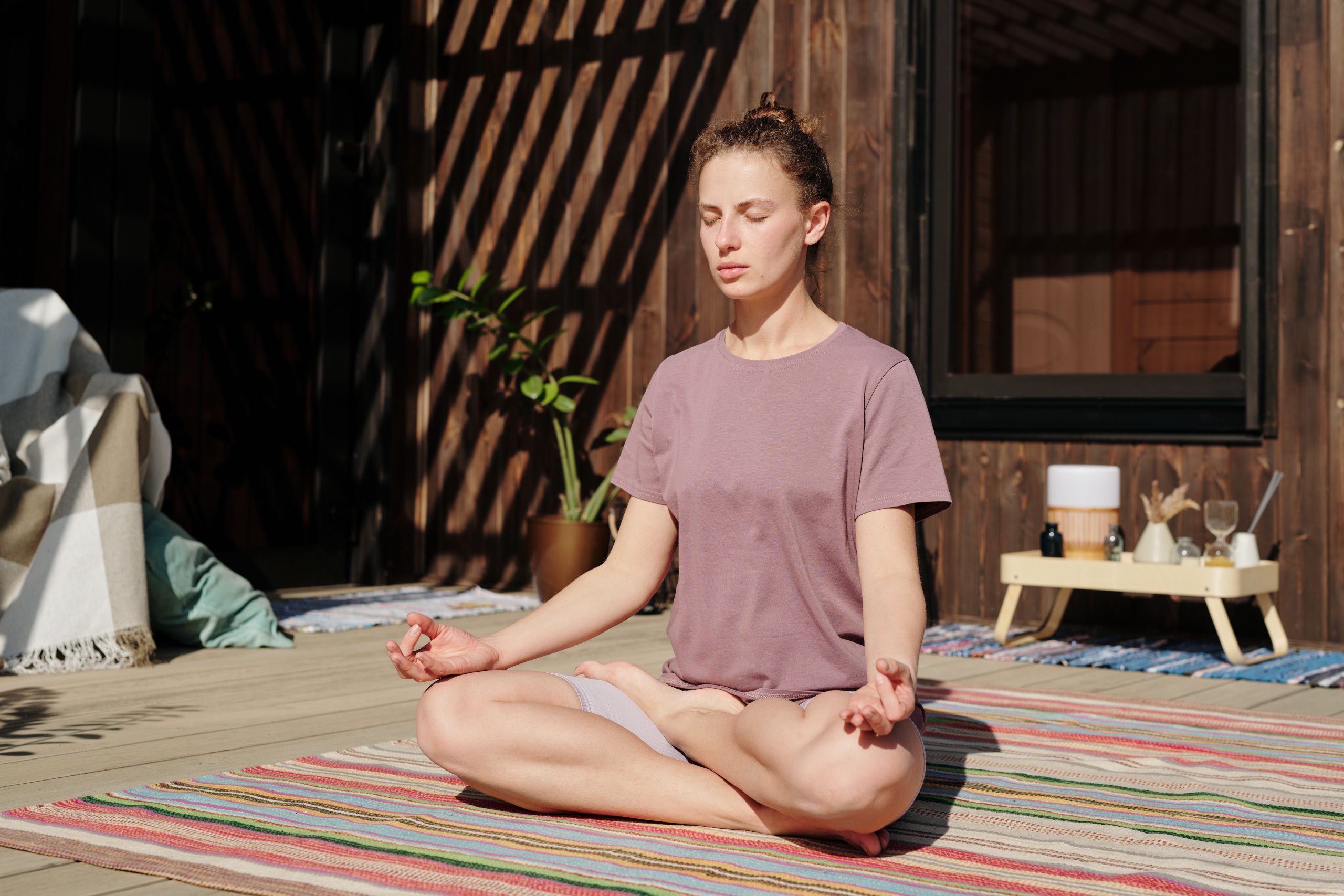
Open any meditation app for the first time and you hit a fork almost immediately: a library of guided sessions with a soothing voice, or a bare timer that just sits there waiting for you to sit there too. Nobody explains which one you’re supposed to pick. Most people guess, feel slightly wrong either way, and quietly wonder if they’re doing meditation “correctly” before they’ve even started.
So here’s the direct answer, then the reasoning behind it: for almost every true beginner, guided meditation is the better starting point, not because silent meditation is inferior, but because the research on attrition, anxiety, and skill-building all points the same direction for people in their first weeks of practice. Silence has real value – it’s just value that tends to arrive later.
Why your mind needs a leash before it can run free
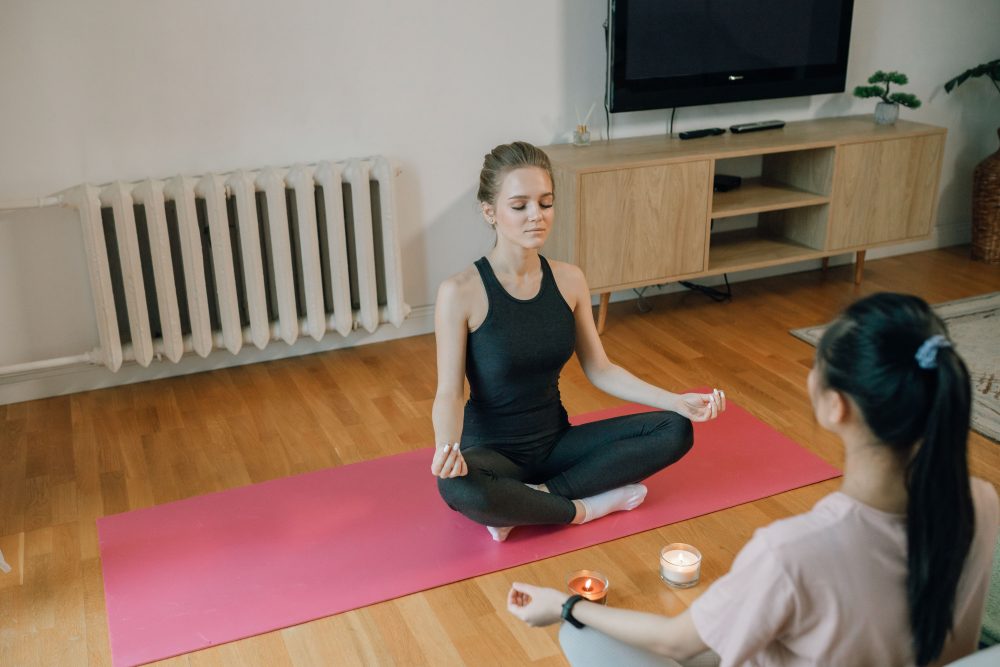
Guided and silent meditation are doing the same underlying job: notice when attention has drifted, and bring it back. The difference is who does the noticing. In a guided session, a voice periodically interrupts to say “come back to the breath,” which does a surprising amount of the cognitive work for you. In silence, that job belongs entirely to you, and you don’t get reminded until you happen to remember on your own.
This matters more than it sounds like it should, because minds wander constantly. In the most cited study on the subject, Harvard psychologists Matthew Killingsworth and Daniel Gilbert used an iPhone app to sample the real-time thoughts of thousands of people and found that minds wander during 46.9% of waking hours – just under half of conscious life spent thinking about something other than the present moment. A beginner sitting in silence isn’t fighting a personal failing when their attention drifts every few seconds. They’re fighting a default setting of the human brain, with no outside help to notice it’s happening.
That’s the entire case for guided meditation in one sentence: it lowers the amount of self-monitoring a total novice needs to do at the exact moment they have the least practice doing it.
Guided vs. silent meditation, side by side
| Factor | Guided meditation | Silent meditation |
|---|---|---|
| Attention anchor | External – a voice, app, or teacher | Internal only – breath, body, or sound, self-monitored |
| Learning curve for beginners | Low; instructions remove the “am I doing this right” guesswork | Steep at first; no feedback when attention drifts |
| What the evidence shows for novices | Larger short-term gains in anxiety, self-esteem, and self-compassion in a 2026 randomized trial (d = 0.88–1.05 across outcomes) | Real gains, but smaller and slower to appear in the same trial |
| Best suited for | The first weeks to months; high-stress periods; sleep and acute anxiety | Once basic attention skills are established; longer sits; independence |
| Main risk | Leaning on it so long it never gets tested without a script | Mistaking unstructured sitting-with-thoughts for meditation before the skill exists |
Effect sizes drawn from the 2026 POEBRA randomized controlled trial of 137 meditation novices, published in Frontiers in Psychology, comparing eight weeks of structured guided practice against unguided silent sitting.
That trial is worth sitting with for a second, because it’s a rare case of researchers actually testing guided against silent head-to-head in beginners, rather than testing “meditation” as a vague blob against no meditation at all. Both groups improved. The guided group improved more, on nearly every measure, with the largest gap showing up in trait anxiety (the effect size there was large enough – d = 1.05 – that it would be hard to dismiss as noise). The unguided group’s changes were, in the researchers’ own words, “more diffuse.”
The “silent is deeper” myth, and why it doesn’t hold up for beginners
Here’s the opposing view, and it deserves to be taken seriously rather than waved off: most contemplative traditions – Zen, Vipassana, Transcendental Meditation – treat guidance as scaffolding and silence as the real destination. The framing shows up everywhere in meditation writing: guided practice as “training wheels,” silence as the bicycle. Retreats in almost every lineage are built around long stretches of unguided sitting, with a teacher offering instruction only at the edges. There’s a real argument buried in that tradition: deep absorption states are hard to reach while parsing spoken instructions, and self-reliance is a skill that can only be built in silence, not narrated into existence.
I think that framing is basically right for people who already know how to meditate, and basically misleading for people who don’t. It quietly conflates two different questions – “which practice is more advanced” and “which practice should a beginner start with” – and beginners absorb the message that if they need the voice, they’re doing something lesser. As the Thai forest monk Ajahn Chah once put it, meditation is like “sitting by the side of a road, watching the traffic pass by” – a deceptively simple instruction that assumes you already know how to sit by the road without chasing every car. A rank beginner dropped straight into that kind of silence isn’t watching traffic calmly. They’re standing in the middle of the intersection.
The comparable-effects study in Mindfulness this year backs up a softer version of this: when researchers ran the same 7-week university mindfulness course with live teacher-guided sessions versus recorded audio and self-guided inquiry, both formats produced similar improvements in emotion regulation and trait mindfulness. The live-guided group showed one added benefit – a bigger drop in reported mental health problems – that the audio-only, more self-directed format didn’t match. Guidance wasn’t a training wheel here; it was doing something the self-directed version couldn’t quite replicate.
What actually kills a beginner’s practice (it usually isn’t the format)

Here’s a statistic that should worry anyone recommending silent meditation to a total beginner by default: in a 2026 study tracking 668 users of the Medito app across their first 30 days, published in JMIR mHealth and uHealth, half the users engaged for a total of 16 minutes or less across the entire month, and fewer than one in five were still using the app after two weeks. People didn’t fail because the app was bad. They failed because the gap between how much they intended to practice (an average of nearly 7 hours) and how much they actually did (about 70 minutes) was enormous, and unstructured practice makes that gap easier to fall into, not harder.
There’s a stranger wrinkle in the data, too. A 2026 first-party usage report from the meditation app StillMind found that 75% of users say, during onboarding, that they want guided or partly guided sessions. Once they’re actually using the app, 76% of completed sessions are self-guided timer sits, not guided ones. People say they want the voice and then quietly choose the blank timer anyway (the report’s authors don’t fully explain the gap, and neither can I – my best guess is that guided sessions require picking a topic and committing to a script, while a timer asks for nothing). That’s the most interesting number in this whole subject, and I don’t think it proves silent meditation is secretly what everyone prefers. It might just prove that friction, not format, decides what people actually do at 11pm when they’re tired.
My honest read on the format-versus-consistency question: the version of meditation that a beginner will still be doing in three months beats the theoretically “deeper” version they abandoned in week two, every time.
Live teacher or app: the choice inside the guided choice
Guided meditation isn’t a single thing. It ranges from a five-minute app recording to a live teacher leading a room full of people through the same instructions in real time, and the research suggests those aren’t interchangeable. The university mindfulness study mentioned above found the in-person, teacher-led version produced a mental health benefit that the recorded audio version didn’t. A voice on your headphones can anchor your attention. A person in the room can also notice when you’re struggling and adjust – something no app has managed yet.
If structure and reassurance matter more to you than convenience, in-person options are worth the extra effort of showing up somewhere. Group settings like meditation classes Sydney offer that live-teacher format directly, with the added benefit of being able to ask a real question when your mind does something an app’s script never anticipated – which, for a beginner, is often. It’s not the only valid starting point, but it’s the one closest to how meditation was actually taught for most of its history, long before anyone put it in an app.
When to actually start adding silence
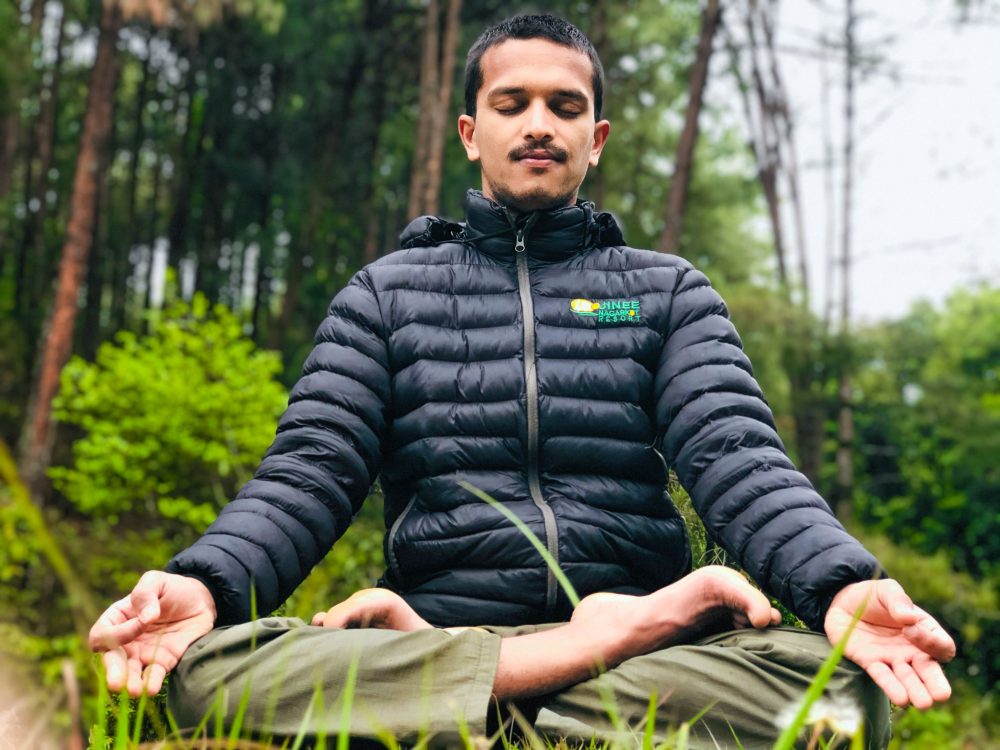
None of this makes silent meditation a lesser practice – it makes it a second stage rather than a starting line. The signal most teachers and researchers converge on isn’t a fixed number of weeks; it’s a specific felt shift. You’ll notice the guided voice starting to say “come back to the breath” a beat after you’d already noticed you’d wandered off on your own. When the instruction lags behind your own awareness instead of leading it, the scaffolding has done its job.
Practically, that usually means adding a few minutes of silence onto the end of a guided session rather than replacing it outright. Sit through your usual ten-minute guided practice, then let one more minute run with no voice at all. Notice what happens to the wandering without a prompt to catch it. Extend that silent minute gradually over several weeks. Most people find the transition unglamorous rather than dramatic, which is honestly the right sign – a jarring switch usually means it happened too early.
A two-week starting plan, if you want one
- Days 1–7: Ten minutes of guided breath-focused meditation daily, same time each day if possible. Pick one voice or app and stick with it rather than sampling five different ones.
- Days 8–10: Same guided session, but add 60 seconds of silence at the end before you get up.
- Days 11–14: Extend the silent portion to 2–3 minutes. If it feels like sitting with racing thoughts rather than meditating, that’s normal – it means the skill is still under construction, not that you’ve done something wrong.
- After two weeks: Keep whatever ratio of guided-to-silent time actually got used, not the one that sounds more impressive. Consistency beats ambition here by a wide margin.
Frequently asked questions
Where this leaves you
If you take one thing from all of this, let it be that “guided or silent” is a smaller question than it feels like standing in front of an app’s home screen. The bigger question is whether you’ll still be sitting down at all in eight weeks, and the evidence is fairly consistent that guidance makes that more likely for people who’ve never done this before. Silence isn’t a reward you have to earn through suffering; it’s a skill you build once the basics stop requiring your full attention. Start where the friction is lowest, and let the practice – not the format – decide how long you stay there.
How this article was put together: Claims here are drawn from a 2026 randomized controlled trial comparing guided and unguided meditation in novices (Frontiers in Psychology), a 2026 university mindfulness study comparing live and audio-guided formats (Mindfulness), a 2026 longitudinal engagement study of app users (JMIR mHealth and uHealth), a 2026 first-party usage report from the meditation app StillMind, and the original 2010 Killingsworth and Gilbert mind-wandering study published in Science, all reviewed in August 2026. Guided-versus-silent format comparisons in meditation research are still relatively rare compared to studies of meditation in general, so some conclusions here lean on the best available evidence rather than a large, settled body of head-to-head trials – worth keeping in mind as more direct comparisons get published.